

Aluminium Formwork Factory: Essential Considerations for Your Construction Project
2026-10-25
Every construction manager knows that formwork is where projects win or lose their precision. But not all aluminium formwork factories are built the same—and overlooking key factors can cost you more than time. Before you lock in a supplier, see what GETO brings to the table and why these considerations matter for your next build.
Why Your Aluminium Formwork Supplier's Extrusion Age Matters
The extrusion age of aluminium formwork often gets overlooked during supplier evaluations, yet it quietly shapes how panels behave on site. Freshly extruded profiles retain internal stresses from the manufacturing process, and without adequate natural aging, these stresses can surface as subtle warping or dimensional drift once the formwork is assembled and poured. This isn't a theoretical concern—contractors who have worked with both newly extruded and properly aged material notice the difference in joint alignment and the frequency of on-site adjustments.
There is a practical sweet spot that experienced suppliers understand: aluminium needs time to stabilize, but too much aging without proper storage can invite surface oxidation or handling damage. The best suppliers track batch extrusion dates and rotate stock so that panels reach your site within an optimal window—typically a few weeks to a couple of months after extrusion. This allows the metal's crystalline structure to settle, reducing the likelihood of twist or bow when the formwork is subjected to concrete pressure and repeated use cycles.
Ask your supplier not just for mill certificates, but for actual extrusion dates tied to the lot numbers on your panels. A supplier who hesitates or cannot provide this level of traceability may be pushing fresh stock through the pipeline faster than the material can stabilize. In high-rise or repetitive construction, where the same formwork gets struck and reset dozens of times, that extra bit of patience in the supply chain translates directly into better dimensional repeatability and fewer mid-project headaches.
Panel Flatness: The Tolerance You Can't See
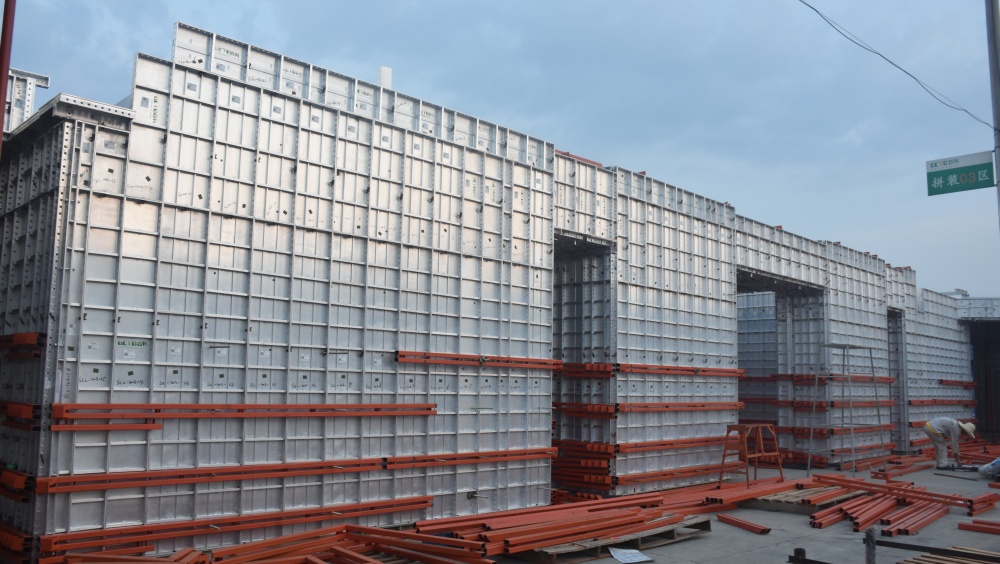
Panel flatness rarely crosses a buyer's mind until sunlight rakes across a wall and exposes a subtle wave or a shadow that shouldn't be there. Unlike color or texture, flatness is invisible in diffuse light, yet it dictates how a surface performs over time. A panel that's off by a millimeter over a meter can redirect stress unevenly, leading to premature cracking around fasteners or sealant lines. Builders learn to check flatness with a straightedge held at a low angle, but even then, the eye needs training to catch deviations that a level won't register.
Manufacturing tolerances for flatness are often tighter than they appear on a spec sheet. For example, a composite panel rated at ±0.5 mm per linear meter might look impressive, but that variance stacks across a facade. When panels bow slightly between attachment points, the cumulative effect can compromise drainage and allow moisture to pool in shallow depressions. That's why quality installers use shims and adjustable clips to correct flatness on-site, treating each panel as part of a larger plane rather than an isolated rectangle.
The real test comes after installation, when seasonal movement and thermal cycling begin. A panel that was perfectly flat in the factory may develop a gentle crown or cup as its core and skin expand at different rates. To manage this, designers often specify panels with a slight intentional camber or use backer rods that allow for minute flex without binding. In the end, flatness isn't about achieving a mathematical zero—it's about controlling the variation so that the surface reads as continuous and calm, even under the harshest raking light.
The Hidden Link Between Factory Layout and Your Deadline
Walk through any factory floor and you'll feel the rhythm of movement—forklifts sliding between aisles, workers reaching for parts, conveyors humming in steady beats. What you might not notice is how every misplaced workstation or awkward corner quietly steals seconds from each task. Those seconds pile up across shifts and weeks until suddenly a production deadline that once seemed comfortable now looms like a wall. Factory layout isn't just about fitting machines into a space; it's about how distance, flow, and accessibility shape the actual time it takes to get anything done.
Consider a simple example: a subassembly station placed thirty meters from its component shelves. Each trip costs a worker roughly forty seconds, and if that worker makes forty trips a day, you've lost nearly half an hour of productive time before lunch. Multiply that across ten stations and the hidden drain becomes staggering. Managers often respond by pushing people to work faster, never realizing the floor plan itself is the bottleneck. Even small changes—moving a tool crib closer, repositioning a staging area, reorienting a packing line toward the loading dock—can compress the distance between process steps and pull deadlines back within reach.
The real challenge is that layout inefficiencies hide in plain sight. They become part of the daily routine, accepted as "just how we do things here." But when a deadline slips and pressure mounts, the instinct is to add overtime or expedite shipping, not to redraw the floor plan. Wise operations leaders walk the floor with a stopwatch and a critical eye, watching where people pause, double back, or wait for space to clear. Because in the end, the factory layout doesn't just organize work—it quietly decides how fast work can happen. And that decision lands right on your deadline, whether you see it coming or not.
What a Good Anodising Line Tells You About the Factory
A well-run anodising line rarely gets the attention it deserves. Visitors tend to focus on shiny finished parts or the size of the machining centre, but the anodising area quietly reveals how a factory thinks about process control. Look at how the racks are loaded: evenly spaced parts, consistent contact points, no overcrowding. That alone tells you the operators understand current density and throwing power, not just how to hang metal on a jig. When a shop lets parts touch or ignores rack maintenance, you can be sure the same carelessness shows up in other departments.
The water rinsing stations are another honest signal. In a good line, rinse tanks are clean, water flows continuously, and there is a clear sequence from dirty to clean without cross-contamination. If you see cloudy rinse water, scum on the surface, or operators dipping parts from one tank into another without logic, the factory is probably fighting itself with adhesion failures and dye blotches. That kind of problem never stays in the anodising department; it leaks into assembly, packaging, and customer returns.
Finally, watch how the line handles chemistry. A factory that logs bath concentrations, temperature, and pH on a visible board or digital display is not just following a recipe—it is building a culture of repeatability. Even small things, like whether the acid bath is properly ventilated and whether operators wear the right gloves without being reminded, tell you whether management sees anodising as a cost centre or as a value-adding process. The best lines are not necessarily the newest or most automated; they are the ones where people understand that a consistent oxide layer is the difference between a product that lasts a decade and one that corrodes in six months.
Negotiating Lead Times Without Sacrificing Quality
When a supplier tells you the lead time is eight weeks, the first instinct is often to push back and demand faster delivery. But that approach can backfire if it pressures the factory into cutting corners on materials or skipping quality checks. A better starting point is to understand where the time actually goes. Ask for a breakdown of their production stages, from raw material sourcing to final inspection. Often you'll find that much of the delay sits in waiting for component approvals or batch testing. By offering to streamline your own side—such as faster sign-offs or consolidated order volumes—you can often shave days or weeks without touching the production process itself.
Another practical lever is to negotiate on flexibility rather than raw speed. Instead of insisting every item ships at once, propose partial deliveries that align with your actual inventory needs. A supplier may be far more willing to accept a compressed schedule for a smaller initial batch while the rest follows on the original timeline. This keeps their production load balanced and avoids overtime shifts, which are a common source of quality drift. In exchange, you might offer to lock in a longer-term contract or adjust payment terms to improve their cash flow. The goal is to make the shorter lead time attractive to them on their own terms, not just yours.
Finally, build lead-time discussions into the relationship before you ever need a rush order. When you're evaluating a new supplier, ask how they handle urgent requests without compromising standards. Look for signs of real capacity planning: do they have buffer stock for common components? Do they document their quality control steps even under time pressure? Suppliers that can show a track record of fast yet consistent deliveries are rarely the cheapest, but the cost of a failed quality audit or a recall will dwarf any premium you pay. Negotiating lead times without sacrificing quality is not about winning a one-off argument; it's about designing a partnership where speed and standards reinforce each other.
The After-Sale Call You Should Make Before Ordering
Many buyers assume the sales process ends once payment is sent, but a strategic after-sale call made before the order ships can prevent costly misunderstandings. Think of it as a final checkpoint: you confirm sizing, material details, delivery timelines, and any special instructions that might have been missed in the initial negotiation. This proactive step often reveals hidden gaps—like a supplier planning to substitute a component or a warehouse that needs an extra day for packaging—which are far easier to fix now than after the goods are already in transit.
A short, structured call after placing the order but before dispatch also signals that you are a detail-oriented buyer. Instead of relying on email threads that get buried, a live conversation lets you hear hesitation in the supplier's voice, double-check production status, and restate your quality expectations one last time. The goal is not to micromanage, but to close the loop on any open variables. For example, you might confirm the exact carton dimensions, verify the shipping address format, or ask about the batch code printed on the labels—details that prevent customs delays and returns.
Ultimately, this pre-shipment call is a low-cost insurance policy. It takes ten minutes, but it can save weeks of back-and-forth if something goes wrong after the goods leave the factory. Savvy importers treat the moment after payment and before dispatch as a final opportunity to align expectations, not as dead time. By making that call consistently, you build a reputation as a buyer who catches issues early—and suppliers respond by giving your orders extra care.
FAQ
Look beyond glossy brochures. A dependable factory usually has a track record with projects similar to yours, can walk you through their extrusion and welding processes, and doesn't hesitate to share tolerance test results. Ask how they handle sudden design changes mid-production; a clear, honest answer tells you more than any spec sheet.
Request the mill certificates for the alloy batch, not just the factory's claimed grade. 6061-T6 is common, but the tempering and heat treatment consistency matter just as much. A quick on-site check: panels should feel uniform in weight and show no pitting or rough edges that suggest recycled scrap mixed in.
More than most people expect. A factory close to major transport routes can shave days off delivery and makes returns or replacement panels less painful. If you're building in a remote area, ask how they pack and protect panels for long hauls; corner damage during transit is a frequent hidden delay.
Beyond standard wall and slab panels, they should be able to produce special corners, curved sections, and adjustable spandrel beams based on your structural drawings. The best factories assign an engineer to review your drawings before quoting, catching clashes between MEP openings and formwork joints early instead of on site.
Ask for the number of active extrusion lines and their weekly output for your specific panel type, not just total tonnage. Then ask for a sample schedule: if you need 3,000 square meters delivered in six weeks, can they show a day-by-day production and quality check plan? Vague answers usually mean they'll subcontract, which can hurt consistency.
Expect more than a phone number. A committed factory offers remote or on-site guidance for first assembly, a clear replacement policy for damaged panels, and a feedback loop for design adjustments on future phases. Test this early: call their support line before buying and see how quickly an actual engineer, not a salesperson, responds.
Yes. Watch for unusually low per-square-meter quotes that don't match alloy costs, reluctance to share past client contacts, or panels that are visibly lighter than the specified weight. Also be wary if they can't explain their welding procedure; proper aluminium welding requires controlled heat and filler rod matching, not just spot welds.
Very, if the project value justifies it. A visit reveals a lot: how raw materials are stored, whether extrusions are stacked safely, and whether the QC team uses calibrated instruments. If travel isn't possible, request a live video tour of the production floor at a time you choose, not a pre-recorded promo.
Conclusion
When you walk through an aluminium formwork factory, the age of the extrusion press tells you more than a spec sheet ever will. Older machines drift under load, and that drift shows up later as panel flatness problems you cannot see until concrete is poured. A good factory checks flatness with a straight edge and feeler gauge on every batch, not just samples, because even half a millimetre across a panel face can leave a visible step in the wall. The anodising line is another quiet signal: consistent film thickness and clean rinsing stations mean the oxide layer will survive repeated pours without peeling or staining.
Beyond the machinery, the way a factory is laid out often decides whether your deadline holds. If extrusion, welding, and finishing are stacked too close together, bottlenecks form and rush jobs get pushed into corners. Ask about material flow before you sign. When negotiating lead times, do not accept a shorter date without asking what gets skipped, such as post-weld straightening or full inspection. The better factories will show you how they compress time through better scheduling, not by dropping steps. Finally, call a past client before ordering. A five-minute conversation about whether the factory answered calls after delivery will reveal more than any audit checklist.
Contact Us
Contact Person: Quanhui Nian
Email: [email protected]
Tel/WhatsApp: 8618070545691
Website: https://www.getoglobal.com/