

Best 3 Axis Milling Center: Unlocking Precision and Efficiency for Modern Workshops
2026-07-19
Precision isn't just a goal in modern machining—it's the baseline. Yet many workshops still struggle to balance tight tolerances with demanding production schedules. That's where a truly capable 3 axis milling center changes the game. We're exploring how the latest advancements, led by innovators like WINNRUI CNC, are unlocking new levels of accuracy and efficiency. Whether you're prototyping intricate parts or running high-volume jobs, the right milling center can turn bottlenecks into breakthroughs. Keep reading to discover what separates ordinary machines from true precision powerhouses.
What Makes a 3-Axis Milling Center Indispensable for Today’s Workshops
A modern shop floor lives and dies by consistency. The 3-axis milling center eliminates the subtle variances that creep in with manual operations—tool deflection, thermal drift, operator fatigue. Once dialed in, it repeats the same cut within microns, job after job. That level of repeatability means you can run lights-out production without babysitting the machine, and the first part off the line matches the last.
It's not just about raw precision—it’s about how that precision expands what you can actually take on. With a 3-axis setup, complex contours, angled features, and tight-tolerance pockets become routine. You spend less time fighting setups and more time bidding on work that used to go to specialty shops. The spindle doesn't care if it's aluminum, tool steel, or a chunk of Inconel; once you've got the right toolpath, the machine chews through it predictably.
Then there's the quiet advantage of integration. Most shops already have CAM workflows and probing routines built around 3-axis logic. Adding a new machine doesn't mean retraining everyone or rewriting your entire process library. It slots right into the existing chain—design, simulate, post, cut—without introducing the complexity of additional rotary axes. Sometimes, the smartest upgrade is the one that just makes everything else work smoother.
Precision Engineering: How 3-Axis Mills Achieve Micron-Level Accuracy
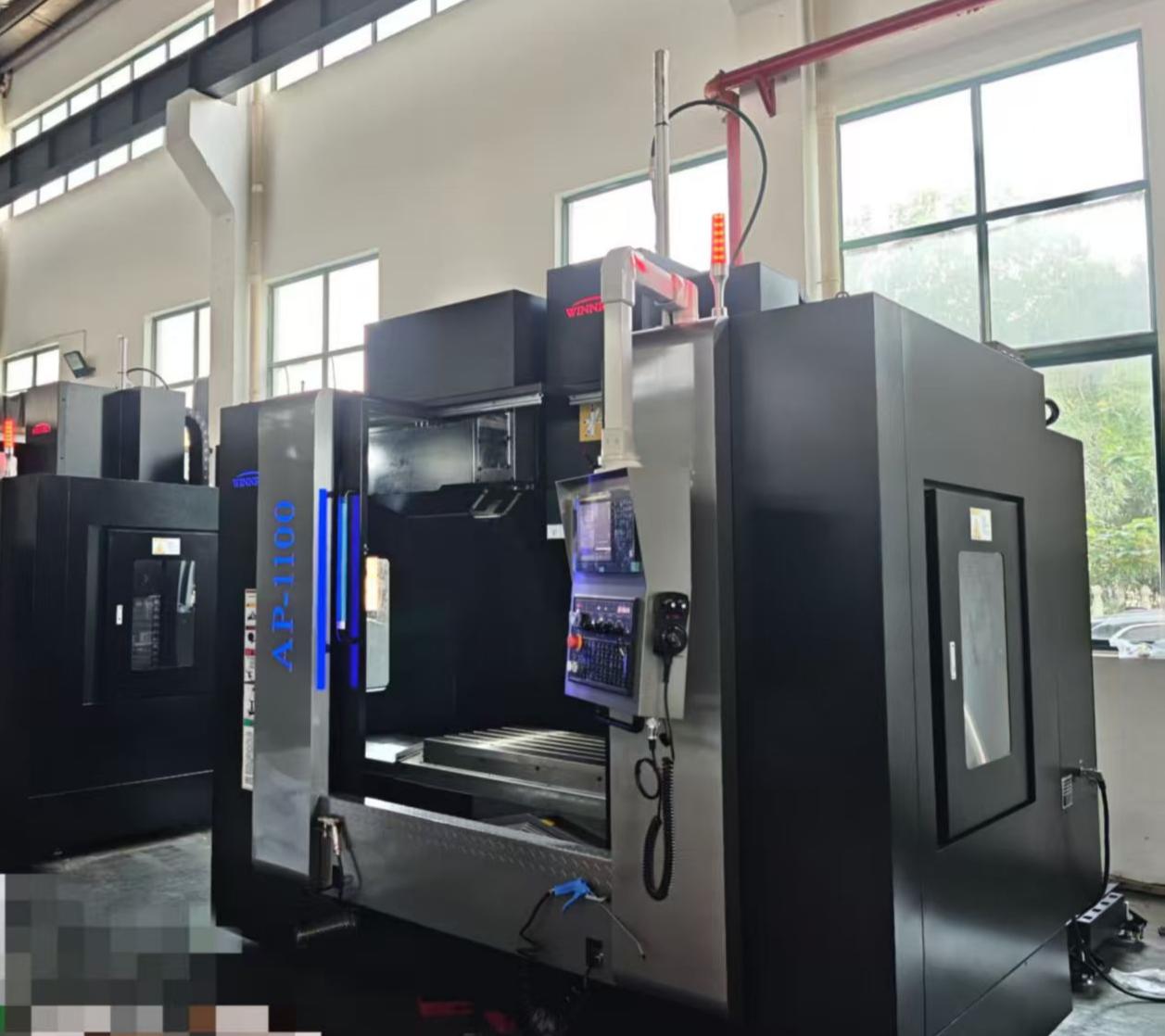
Hitting micron-level tolerances on a 3-axis mill starts long before the first chip is cut—it’s engineered into every structural element. The machine bed and column are typically cast from a polymer-granite composite or heavily ribbed, stress-relieved iron, materials chosen specifically to damp vibration and resist thermal drift. Linear guideways are preloaded to a micron’s precision, and ballscrews are ground with thread tolerances in the single-digit micron range, then fitted with double nuts to eliminate backlash entirely. These mechanical foundations are non-negotiable; no software can compensate for a machine that flexes or wobbles under load.
But rigidity alone isn’t enough—the feedback loop has to be near perfect. Most high-accuracy mills rely on direct-reading linear encoders mounted right at the table, offering resolutions down to 5 nanometers. This bypasses any inaccuracies in the ballscrew shaft or coupling, giving the control system an unvarnished view of true axis position. Meanwhile, laser interferometry is used during build and periodic recalibration to map the machine’s volumetric errors—straightness, squareness, angular pitch and yaw—and those compensation tables are baked directly into the CNC parameters. It’s this fusion of brute mechanical stiffness and sophisticated metrology that tethers the tooltip to its commanded path within a few thousandths of a millimeter.
Even then, environmental stability and cutting strategies tip the scale. Shops chasing microns typically maintain ambient temperature within a fraction of a degree, with coolant systems held at the same setpoint to avoid localized thermal gradients. Spindles are built with oil–air lubrication to minimize heat generation, and tools are balanced and measured with sub-micron presetters. In practice, operators also lean on tiny radial engagements and chip loads—micro-machining approaches that keep cutting forces low enough that the machine’s residual geometrical errors never get amplified. When all these layers align, a 3-axis mill becomes a quiet, almost obsessional instrument, repeating features across a production run with barely a micron of deviation.
Boosting Throughput Without Sacrificing Quality
In many operational environments, the pressure to deliver more often leads to a dangerous trade-off where excellence becomes the casualty. The real challenge isn't simply working faster—it's redesigning workflows so that speed and precision reinforce each other. This means scrutinizing every handoff, removing redundant approvals that don't add value, and building checkpoints that catch defects early rather than at the final review. When teams map out how work actually flows, they frequently discover that 30% of steps exist only because "we've always done it this way," creating a prime opportunity to boost throughput without touching the quality dial.
Technology can accelerate this shift, but only when deployed thoughtfully. Automation that blindly replicates manual steps often ingrains inefficiencies instead of eliminating them. A smarter approach uses machine intelligence to handle routine pattern matching and data extraction, while keeping human judgment exactly where it belongs—on nuanced decisions that require context and experience. The magic happens when you build feedback loops between these two worlds: automated systems flag anomalies in real time, specialists resolve them, and the system learns from every resolution. This tight coupling creates a self-improving cycle that ramps up output volume while steadily reducing the error rate.
Sustaining this balance demands a culture that treats throughput and quality as complementary, not competing, goals. Instead of measuring success by raw volume alone, forward-thinking groups track metrics like "clean completions per hour"—work that passes all quality gates without rework. By celebrating this blended metric, teams naturally start sharing micro-improvements: a better template, a quicker verification method, a script that catches silly mistakes. Over time, these small adjustments compound. The result isn't just more output; it's output that requires less correction, which ultimately frees up even more capacity for thoughtful, high-caliber work.
Smart Features That Simplify Complex Machining Tasks
Modern machining centers pack an array of intelligent capabilities that take the guesswork out of tricky jobs. Adaptive feed control, for instance, dynamically adjusts cutting parameters on the fly, responding to real-time feedback from the spindle and axis loads. This means you can confidently run unattended operations where varying tool engagement would otherwise cause chatter or breakage. Instead of manually tweaking speeds and feeds, the system optimizes itself, preserving tool life and delivering consistent surface finishes across complex 3D contours.
Then there’s collision avoidance, a feature that feels almost intuitive. By building a complete digital twin of the workspace—including fixtures, clamps, and the workpiece itself—the control can preemptively steer the toolpath away from potential crashes. This isn’t just about safety; it unlocks the ability to stage multiple parts in one setup without worrying about intricate obstacle courses. The machine’s own awareness of its envelope lets programmers push boundaries, exploring tighter clearances and more aggressive tooling strategies that would be too nerve-wracking to attempt with conventional safeguards.
Another standout is automated deburring and measurement integrated right into the cycle. After roughing and finishing, the same machine can switch to a probing routine or a dedicated chamfer tool to handle edge breaks and critical tolerances without moving the part. This eliminates the need for secondary operations and eliminates handling errors. The result? A single clamped setup yields a fully finished component, with the control verifying key dimensions in real time and adjusting offsets automatically. It’s this kind of end-to-end automation that transforms a CNC machine from a passive executor of G-code into an active problem-solver on the shop floor.
Adapting to Diverse Materials and Production Demands
Modern manufacturing environments rarely deal with just one type of raw material. From high-strength alloys and temperature-sensitive polymers to recycled composites, each material brings its own quirks. The real challenge isn’t just knowing how a material behaves under ideal conditions—it’s understanding how it reacts when production speeds shift, when humidity spikes on the factory floor, or when a supplier delivers a batch with slightly different properties. Without this kind of hands-on awareness, even the most advanced equipment can turn out inconsistent parts.
Production demands aren’t static either. A line might need to pivot from low-volume, highly customized orders to long runs of standardized components within a single shift. This requires tooling and workflows that can be reconfigured quickly without sacrificing precision. It also demands a workforce that knows when to lean on automation and when to rely on manual adjustments. The systems that handle this best aren’t the ones with the most sensors or the latest software on paper—they’re the ones built around a practical understanding of material behavior and the agility to shift gears without slowing down.
Future-Proof Your Shop With the Right Milling Investment
Investing in a milling machine isn't just about adding a piece of equipment—it's about laying a foundation that can adapt as your shop evolves. The machines you choose today need to handle not only your current workload but also the jobs you haven't even quoted yet. That means looking beyond basic specs and thinking about flexibility: quick-change tooling, expandable work envelopes, and controls that won't become obsolete in a few years. When you buy with tomorrow in mind, you avoid the costly trap of outgrowing your own investment before it's paid off.
One often-overlooked aspect of future-proofing is the software ecosystem. A mill that plays nicely with a wide range of CAM systems and supports open standards gives you the freedom to pivot when designs or customer demands shift. It's also worth considering how easily the machine can be integrated into automation—whether it's a simple bar feeder today or a robotic loading cell later on. The goal is to keep your options open so incremental upgrades don't force you into a full retooling.
Finally, think about serviceability and manufacturer support. Even the best-built machine will need parts and technical help eventually. A responsive supplier with a strong local presence shortens downtime dramatically. Ask about long-term parts availability and whether the control system receives regular updates that improve functionality without expensive hardware swaps. Protecting your shop's future is often less about the iron itself and more about the network and intelligence behind it.
FAQ
Premium machines integrate high-rigidity castings, direct-drive spindles, and advanced thermal compensation. This combination slashes vibration, maintains tight tolerances over long runs, and allows shops to handle exotic alloys without compromising surface finish.
Intelligent automation features like probing cycles and tool setting probes minimize manual intervention. An operator can queue up jobs, let the machine swap tools and measure offsets automatically, and focus on other tasks while the mill runs unattended.
For many prismatic parts, yes. Creative workholding setups and indexed fourth-axis rotary units expand capability without the steep learning curve or cost of full 5-axis. Shops often produce complex components just as effectively with smart fixturing.
Hard materials like Inconel and titanium cause rapid tool wear. The solution lies in through-spindle coolant delivery at 1,000 psi or more, paired with dynamic toolpath strategies that maintain constant cutter engagement and prevent heat buildup.
Absolutely. It's the backbone of any machining business. A well-kept 3-axis mill handles prototyping, repair work, and mid-volume production. As the business grows, it remains useful for secondary ops or dedicated production cells.
Conversational programming and CAD/CAM integration have transformed the workflow. Many controls now offer graphics that simulate the toolpath on the fly, letting an operator catch collisions or inefficiencies before metal is ever cut.
Conclusion
A top-tier 3-axis milling center transforms floor space potential into measurable output, combining rigidity, smart control, and adaptive machining to handle everything from prototyping to full production. Its value lies not just in removing material quickly, but in doing so with repeatable micron-level accuracy across aluminum, steel, and challenging alloys. Modern spindles, linear guides, and thermal compensation work silently in the background, yet the operator feels the difference when tool life extends and surface finishes require little post-processing. Real shops thrive because these machines shrink set-up cycles, interpret conversational programming, and integrate probing and tool monitoring without constant manual intervention. Rather than chasing tolerance, the best centers naturally maintain it, letting machinists focus on fixturing and workflow rather than constant adjustment.
Efficiency gains surface in less obvious ways: a CAM strategy that trusts the machine's volumetric accuracy can push roughing closer to finish stock, while high-pressure coolant and chip management prevent recutting that degrades both part and cutter. Shops handling diverse job mixes benefit from rapid material changeovers and feature-rich interfaces that simplify multi-step work. Investing in a 3-axis mill is not about keeping pace with trends but ensuring the shop floor can evolve with tighter standards, new materials, and the demand for just-in-time delivery without compromising on surface integrity. The right choice future-proofs daily operations by making complex work routine, boosting throughput quietly, and delivering parts that speak for themselves in the assembly tray.
Contact Us
Contact Person: Tim
Email: [email protected]
Tel/WhatsApp: +86 15522553731
Website: https://www.winnrui-cnc.com/