

Best CNC Lathe Machines for Precision Metalworking and Everyday Reliability
2026-11-21
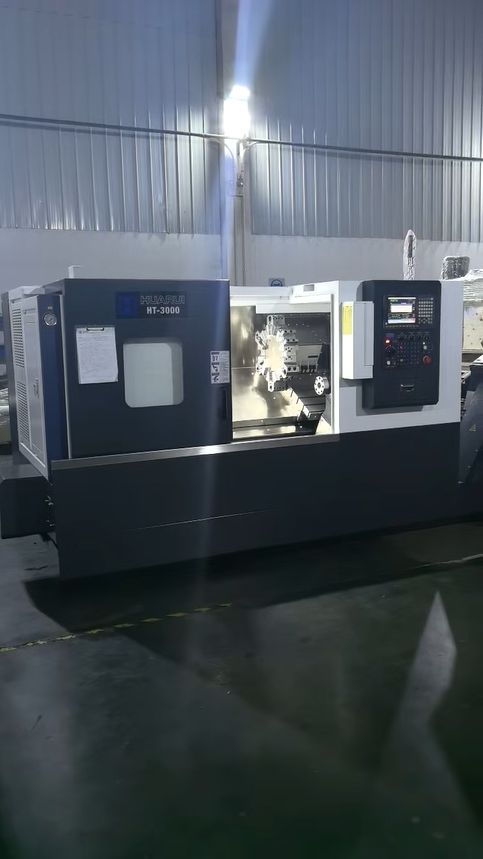
Precision metalworking rarely fails during the demo. It fails later—when coolant, chip buildup, and shift changes start testing a lathe's real limits. That's why this guide on the best CNC lathe machines for precision metalworking and everyday reliability focuses less on brochure numbers and more on how a machine behaves after it has been installed for a while. If you're comparing options, WINNRUI CNC deserves attention: their lathes are built around the idea that repeatable accuracy should not fade once the initial setup is over. Here's what to look for before you commit.
Tight Tolerances Start Before the Spindle Turns
Holding a couple of tenths across a batch has less to do with what happens during the cut and more to do with the quiet checks made before the cycle starts. Thermal growth in the spindle, toolholder runout, and even the way a part rests against a stop can shift a feature more than a toolpath adjustment ever will. The most reliable shops treat the idle machine as a measurement system, not just a waiting state, and verify that every dial, probe, and clamping surface is behaving before the first M03.
Workholding seldom gets the attention it deserves. A clean fixture face, consistent torque on each clamp, and a workpiece seated without residual stress are what keep a tight tolerance from drifting by mid-shift. If the part is pulled down against a chip or bowed by uneven pressure, the spindle can be perfectly balanced and the tooling brand new, and the bore will still come out oval. Those errors are locked in while everything is stationary.
Tool presetting and program origin checks close the loop. A tool measured offline with a known gauge length, a probe that has been calibrated against a reference sphere, and a work offset that reflects actual stock variation remove the guesswork that usually gets blamed on machine capability. When those details are handled before the spindle turns, the cutting process becomes a confirmation of the setup rather than a rescue mission.
What Daily Dependability Looks Like After the First Year
After the first year, daily dependability stops announcing itself. The sign that something has settled into reliable territory is that you no longer think about it while it quietly handles the small, unglamorous tasks. The morning sync has already finished before you sit down, the overnight update ran without a prompt, and the minor wear that used to need attention has been absorbed into the routine. It feels less like an achievement and more like a background assumption.
The edge wears off the small frictions too. A login that once asked for verification now recognizes the device without ceremony, backups happen in the gaps between other work, and alerts arrive only when they actually deserve a response. When something does briefly misbehave, it tends to be an isolated hiccup rather than the start of a long troubleshooting session. You start to notice the absence of noise more than the presence of any single feature.
What changes most is the nature of trust. Early on, trust is a decision you make with slight hesitation. A year in, it becomes the default posture. You reach for the tool, open the door, or rely on the process without mentally preparing for failure. That quiet, unforced confidence is what daily dependability actually looks like once the newness has faded and the routine has proven itself in ordinary, repeated use.
The Frame, the Ways, and the Parts Nobody Posts About
The frame gets all the credit because it looks inevitable by the time it arrives. A clean table, a patch of good light, a face turned just enough to catch the window. What the frame refuses to show is the clutter shoved two feet to the left or the conversation that stopped for the shutter. Every edge is a quiet argument about what matters and what gets erased.
The ways are less romantic. They are the seven attempts before the one that feels honest, the habit of moving the chair before the table is cleared, the slow noticing that happens only after the phone is put down. Nobody stages the process because it looks like ordinary repetition. But that repetition is where the eye learns to see the difference between a full scene and a true one.
The parts nobody posts about are mostly the pauses. The waiting for cloud cover to shift, the wiping of a lens with the edge of a shirt, the doubt about whether any of it was worth keeping. These moments never make the final cut, not because they are empty, but because they are too close to the actual living. They are the unedited middle where the frame loosens and the person behind the camera gets to stop performing.
Tooling Choices That Make or Break Repeatability
Repeatability rarely fails because a team lacks talent. It erodes when tooling quietly drifts—when a dependency resolver allows floating versions, when a build cache has no content hash, or when a linter runs only on someone’s laptop. The tools that matter most are the ones that pin exact inputs and make the environment disposable.
Much of the drift comes from how configuration is wrapped. A Makefile or Taskfile is useful, but if those wrappers rely on globally installed binaries, the same command works on one machine and fails on another. Version managers, containerized runtimes, and lockfiles read as overhead until someone has to rebuild an old release; then they look like the only sane choice.
The hardest part is usually not adopting a new tool but removing the exceptions. A manual patch applied directly inside node_modules, a local environment variable that no one documented, or a script that assumes a specific path can undo an otherwise solid setup. Repeatability tends to follow from boring, strict choices: explicit versions, clean separation between source and generated artifacts, and CI runs that refuse to proceed when the lockfile is out of date.
Why Setup Speed Matters More Than Rapid Traverse
On paper, a higher rapid traverse number looks impressive, but it rarely tells you much about how a machine will perform across a full workday. The axis speed only matters in the short bursts between cuts. Setup work, by contrast, happens every time a new job goes on the table, and in shops running small or mixed batches that overhead can quickly exceed the time saved by shaving a fraction of a second off each positioning move.
A machine that rapids from point to point a little faster still spends the same number of seconds holding a tool against the part. If a shop loses twenty minutes leveling a fixture, locating stock, and dialing in offsets, the accumulated gain from a faster traverse might be measured in seconds per cycle. Those seconds don't erase the minutes wasted during changeover, and over a week of varied jobs the gap becomes obvious.
Most experienced machinists will take a slightly slower rapid over a setup that fights them every time. Quick-release fixtures, preset tooling, and clear workholding references tend to have a bigger impact on throughput than another ten meters per minute of axis travel. When setup is consistently short and predictable, the machine spends more of its day making chips, which is where the real difference shows up.
Spending Where It Counts, Skipping the Rest
Most budgets go wrong the moment they treat every dollar as equal. They aren't. A good mattress, a pair of shoes that fits, a chair that doesn't wreck your back by noon—these change the texture of an entire day. The small, forgettable purchases that feel like treats rarely do. Spending where it counts starts with noticing what you touch, wear, or lean on every single day and being willing to pay more there.
The rest can usually go. Trendy kitchen tools, subscription boxes that pile up unopened, another candle for the shelf—none of these hold value the way a sharp knife or a reliable backpack does. The point is not to strip life down to nothing; it is to stop handing money to things that only decorate the moment and start funding the few objects that quietly do the real work.
A useful test is to track what you complain about for a week. The dull zipper, the flickering bulb, the pan that burns everything—these small frictions are signals. Fix the handful that keep showing up, and leave the rest alone. That is the whole trick: make the daily stuff excellent, and let everything else be ordinary.
FAQ
Focus on spindle runout, thermal stability of the frame, the quality of linear guides, and whether the control supports fine tool offsets. A heavier cast base usually helps damp vibration, which matters more than raw power when holding a few tenths.
They can handle far more than hobby work if you respect their limits. Many small shops use them for bushings, pins, fittings, and short-run prototypes. The key is matching the work envelope, tooling, and duty cycle to the machine rather than expecting production speeds.
Less than older manual equipment, but still regular. Way covers, coolant concentration, chuck lubrication, and spindle warm-up cycles all matter. A simple daily and weekly routine prevents most unplanned downtime.
Thermal management and build rigidity. Machines with temperature-stable spindles, properly finished mating surfaces, and correct bearing preload tend to stay consistent. Cheaper machines often cut fine initially but shift as components settle and heat cycles take their toll.
Yes, if it uses a quick-change tool post or turret and has enough Z travel to keep multiple tools set up. Program storage also helps: you can keep proven routines ready and switch between parts without re-teaching every tool offset.
It depends on part geometry. If you frequently drill off-center holes, mill flats, or tap in the same setup, live tooling eliminates secondary operations and improves consistency. For mostly round parts, a standard two-axis lathe remains the better value.
Aluminum, brass, mild steel, and many alloys cut easily with the right inserts and speeds. Stainless and tool steels push rigidity and coolant harder, so a heavier machine and good chip evacuation become more important. Exotics like Inconel require very stable setups and conservative cutting parameters.
Conclusion
Precision on a CNC lathe rarely begins with the spindle ramping up. It starts with how the machine is leveled, how the chuck and collet are seated, and whether the thermal growth of the headstock is understood before the first cut. Shops that hold tight tolerances consistently treat setup as part of the machining process, not a chore before it. Tooling decisions matter just as much as the iron they ride on: a repeatable turret, clean taper interfaces, and properly matched inserts can hold a few tenths even after hundreds of cycles. Fast rapids look good on a spec sheet, but being able to change jaws, touch off tools, and prove out a program in minutes is what actually keeps a lathe productive across short runs and repeat jobs.
After the first year, the machines that stay dependable are rarely the ones with the flashiest control options. They are the ones built around a rigid bed, hand-scraped or properly ground ways, and serviceable components that are not hidden behind plastic covers. The parts nobody posts about—way wipers, lube metering units, spindle belts, and chip management—determine whether a lathe still holds size on a Monday morning without constant fiddling. The best buys pair real mass in the frame with money spent where it matters: spindle bearings, ballscrews, and a control that is easy to use. Spending extra on features that rarely get touched adds little, while a simpler, well-built machine often earns its keep for years.
Contact Us
Contact Person: Tim
Email: [email protected]
Tel/WhatsApp: +86 15522553731
Website: https://www.winnrui-cnc.com/