

China 20-Inch Cutter Suction Dredger Manufacturer: Expert Guide to Quality and Performance
2026-07-18
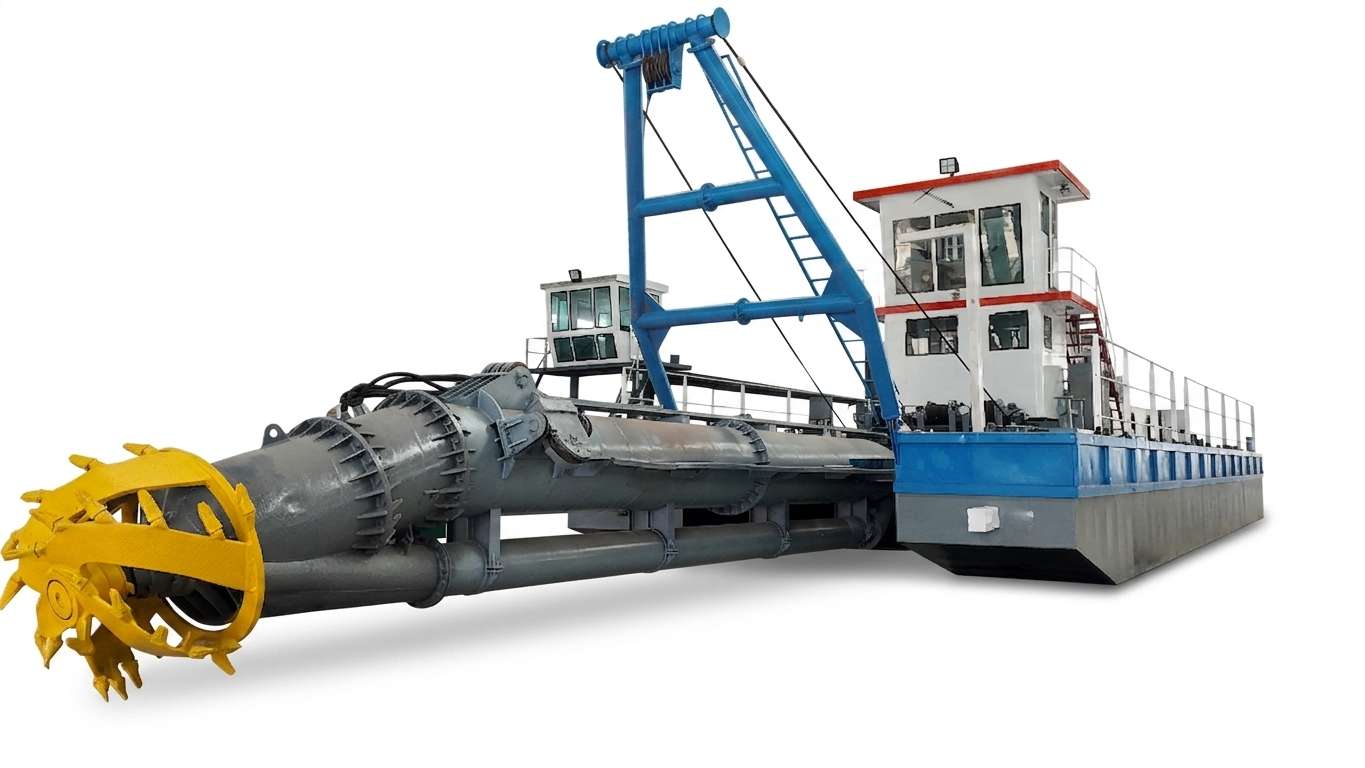
Selecting the right 20-inch cutter suction dredger is a critical decision that impacts project efficiency and long-term operational costs. As a leading China manufacturer, YaKai Dredger has built a reputation for delivering robust, high-performance dredging solutions tailored to demanding environments. But what truly sets a quality dredger apart? In this expert guide, we break down the key factors behind performance and reliability, drawing on YaKai Dredger’s decades of engineering experience. Whether you're tackling port maintenance, land reclamation, or mining operations, understanding these insights will help you invest with confidence.
Why 20-Inch Dredgers Dominate Mid-Scale Projects
Twenty-inch dredgers hit a sweet spot that larger and smaller equipment simply can't match. Their compact size allows them to slip into tighter work areas—narrow canals, marinas, or industrial ponds—where a 30-inch cutter suction dredger would struggle with draft or positioning. At the same time, they pack enough pumping power to move substantial volumes of sediment over decent distances, often handling production rates that keep mid-scale jobs on schedule and within budget. This balance between footprint and performance makes them the go-to choice when neither a portable 12-inch nor a full-sized heavy dredger fits the project's physical or financial profile.
Transport and mobilization costs often determine whether a mid-range project turns a profit, and here the 20-inch class shines. Most models can be broken down into truckable components without requiring specialized heavy-haul permits or crane barges, meaning they arrive on site faster and cheaper. Once on the job, their design typically allows for rapid assembly—sometimes in less than a day—using a small crew and standard tools. This logistical edge reduces downtime and lets operators respond quickly to short-notice contracts or seasonal windows, a critical advantage in competitive markets.
Beyond pure economics, operators appreciate how these dredgers handle real-world conditions. Their moderate depth capability covers the majority of maintenance dredging and environmental remediation tasks, while the 20-inch discharge line efficiently sends material to dewatering sites or shore containment without excessive plugging risk. Spare parts, consumables like cutter teeth, and repair expertise are widely available for this popular size, further cutting unexpected downtime. When combined with modern automation and GPS positioning, a 20-inch dredger consistently delivers dependable output that keeps contractors coming back for every mid-scale bid.
Decoding Build Quality: Materials and Engineering
The moment you pick up a well-crafted device, there's an unspoken conversation between your fingertips and the materials—a subtle flex of aluminum, the cool heft of precision-machined steel, or the confident snap of a polycarbonate shell. It's not just about durability, but how these choices harmonize with the product's purpose. A rugged outdoor tool might embrace textured elastomers, while a luxury timepiece finds its soul in the warmth of titanium. The alchemy is in the details: the way an anodized finish resists scratches without sacrificing feel, or how a ceramic bezel stays pristine through years of adventures.
Engineering is the silent partner that transforms good materials into something greater. It's less about flashy specs and more about solving quiet problems—like how internal reinforcement ribs can eliminate the hollow plasticky echo from a chassis, or how a carefully calculated curve distributes impact force away from a vulnerable display. Consider the unsung innovations: gasket channels that compress just so for water resistance, or thermal management pathways etched into the frame itself. These decisions rarely make headlines, but they define whether a product ages gracefully or becomes a frustration.
Ultimately, build quality is a promise you can hold. It's the reason a door closes with a reassuring thud, why a laptop hinge whispers consistency after years of use, or how a phone survives a half-dozen drops without a case. The best designs don't broadcast their toughness; they simply feel inevitable—as if no other combination of material and geometry could exist. That's when engineering stops being a checklist and becomes an experience.
The Production Line: How Top Manufacturers Ensure Consistency
Consistency on a production line isn't about luck—it's about control. Top manufacturers embed precision at every stage, from raw material inspection to final assembly. They standardize work instructions so clearly that even a new operator can follow them without guesswork, reducing variability. Real-time sensors and IoT devices track machine performance, temperature, and humidity, automatically adjusting conditions the moment they drift from set parameters. This level of vigilance means every unit rolls off the line mirroring the last, batched data confirming that tolerances are held within microns.
Yet rigid processes only go so far. The best factories blend discipline with adaptability. They deploy statistical process control (SPC) not as a buzzword but as a living practice—operators are trained to read control charts and stop production the instant a trend signals trouble, before defects occur. Root cause analysis isn't a once-a-year audit; it's a daily habit. When a machine shows a slight temperature spike, for instance, teams dig into whether it's a cooling system issue, a worn bearing, or a batch of raw material that behaves differently. This curiosity-driven approach turns small anomalies into learning opportunities, locking in consistency over the long haul.
Human skill underpins all of this. Top manufacturers don't just train workers; they create environments where experience is respected and shared. Veteran line operators often notice subtle sounds or vibrations that sensors miss, and their insights feed back into preventive maintenance schedules. Cross-training ensures that if someone is absent, the line doesn't suffer from a knowledge gap. Combining such tacit knowledge with digital tools creates a resilient system where consistency emerges naturally—not because machines are perfect, but because the people and processes are tuned to catch imperfections before they become products.
Performance Testing That Mimics Real-World Conditions
Simulating actual user conditions goes beyond lab environments to capture performance as experienced across diverse networks, devices, and usage patterns. Traditional benchmarks often fail to reflect slow load times caused by fluctuating mobile signals or regional latency, so integrating these real-world variables into tests avoids misleading peak throughput results that only hold up under ideal constraints.
Effective real-world testing means crafting scenarios that mirror typical customer behavior: abrupt traffic surges during a product launch, API calls from widely distributed endpoints, or streaming media over throttled connections. By replicating such conditions, teams can pinpoint where the system begins to degrade long before it hits theoretical limits—and fix bottlenecks that otherwise might only surface after deployment.
Beyond stress and volume checks, authentic simulation also uncovers subtle interaction failures that synthetic scripts skip. For example, testing with actual third-party service endpoints and real, anonymized production data often reveals edge cases like timeouts caused by upstream dependencies that idealized mock services overlook. This approach shifts focus from whether a system can handle load in a vacuum to how well it delivers a consistent, reliable experience to every real user, regardless of their location or device.
Post-Delivery: Maintenance, Spare Parts, and Technical Support
Once equipment leaves our facility, real commitment begins. We don’t view maintenance as a checklist but as a partnership that keeps your operations predictable. Our field teams combine deep product knowledge with hands-on troubleshooting, whether they’re performing routine inspections or responding to unexpected issues. By using live diagnostics and tailored service plans, we help you extend asset life and avoid costly surprises.
Downtime often hinges on one factor: part availability. We’ve structured our spare parts network to make waiting the exception, not the rule. Strategic stocking points, same-day dispatch for critical components, and transparent inventory tracking give you clear visibility and quick access. When exact matches aren’t on hand, our technical group can often identify compatible alternatives that keep processes moving without sacrificing safety or performance.
Technical support should feel like an extension of your own team. Beyond manuals and protocols, we offer direct access to engineers who understand your setup, not just the machine in isolation. Remote guidance, on-site intervention, and post-incident reviews are all part of how we close the loop—turning support calls into long-term reliability improvements.
Case Study: A 20-Inch Dredger in Challenging Environments
Operating a 20-inch dredger in harsh conditions reveals just how critical machine design and crew expertise become when every parameter is pushed to its limit. On a recent project along a silty river delta, this dredger faced relentless currents, abrasive sediment, and shifting sandbars that would cripple smaller equipment. The cutter head had to be adjusted frequently to maintain suction without clogging, while the pump system ran at peak capacity for extended periods. What stood out was the dredger’s ability to sustain production rates even when weather windows narrowed, thanks in part to real-time monitoring that allowed the team to adapt on the fly.
One of the less obvious challenges was fine-tuning the slurry density to balance throughput and wear. Too thick a mixture would overload the pipeline, while too thin would kill efficiency. The crew developed a rhythm of small, incremental changes based on vibration and flow readings, something no automation could fully replicate. In addition, the floating pipeline had to be reconfigured multiple times a day as the cut face advanced, demanding seamless coordination between the dredgemaster and the anchor barge operators. These adjustments weren’t just technical—they relied on a shared intuition built through years of similar jobs.
Despite the daily grind, the dredger consistently delivered over 3,000 cubic meters per hour, hitting project milestones that seemed ambitious at the outset. The real takeaway, however, wasn’t the output figure. It was how the machine held up mechanically: minimal unscheduled downtime, controlled wear on the impeller, and a fuel burn that stayed within the forecasted range. For contractors eyeing tough siltation or harbor deepening projects, the experience underscored the value of robust engineering paired with a crew that knows how to interpret the subtle signals the vessel sends out in heavy seas and dense sediment.
FAQ
A 20-inch cutter suction dredger is defined by its discharge pipe diameter of 20 inches, which directly influences its hydraulic transport capacity. This size typically handles a mixture flow rate of around 2,500 to 3,500 cubic meters per hour, allowing it to tackle medium to large-scale dredging projects such as harbor deepening, land reclamation, and river maintenance with substantial efficiency.
Chinese manufacturers often use high-tensile steel for the main hull and cutter ladder, combined with advanced welding techniques like robotic submerged arc welding. The structural design undergoes finite element analysis to simulate stress under extreme conditions such as heavy clay cutting or rough sea states, ensuring durability and long-term operational safety.
Premium models typically feature high-efficiency cutter heads with replaceable teeth designed for specific soil types, fully variable-speed electric or hydraulic drive systems for precise control, and an automated swing system with programmable logic controllers. They also incorporate cabin comfort upgrades, such as noise insulation and ergonomic controls, which improve operator performance during extended shifts.
The cutter head design is critical: for example, a basket-type head with widely spaced teeth excels in sticky clay, while a rock cutter with heavy-duty pick-shaped teeth and a reinforced rim is needed for breaking compacted soils or soft rock. The rotational speed and torque can be adjusted via the drive system to match these attachments, directly impacting cutting force and production rate.
Leading manufacturers conduct comprehensive factory acceptance tests, including running the complete dredger in a basin or dry-dock with actual water and simulated soil. They verify pump performance, swing torque, cutter speed, and electrical systems against design specifications. Hydraulic piping is pressure-tested, and all welds undergo ultrasonic or radiographic inspection. Sea trials for self-propelled units or operational demos for stationary ones are also standard.
Yes, customization is common. Common modifications include adjusting the dredging depth range by extending the ladder and increasing winch capacity, selecting a pump with a higher head for longer discharge distances, adding a booster station for extended pipeline lengths, and modifying the spud system for deep water or harsh conditions. Some projects also require custom cutter heads or an adapted automation package for precise grading.
Wear on the cutter teeth, pump shell, and pipeline is the primary challenge. Regular inspection and rotation of wear components, along with using hardened or ceramic-lined parts in high-abrasion zones, can extend intervals. The hydraulic system requires consistent oil analysis and filter replacement to prevent contamination. Manufacturers often provide a recommended spares kit and remote diagnostic support, enabling crews to address issues before they escalate.
Newer Chinese 20-inch dredgers often incorporate a frequency-controlled electric drive or high-efficiency diesel engines with SCR emission systems. Compared to older onshore diesel-driven pumps, these can deliver 15-20% lower fuel consumption per cubic meter of dredged material. Additionally, an optimized hull design and variable-speed pump operation reduce energy waste during idling or swing maneuvers, contributing to overall operating cost savings.
Conclusion
A 20-inch cutter suction dredger represents the sweet spot for mid-scale dredging operations, balancing ample power with manageable logistics. China's top manufacturers have refined these machines to dominate projects like port maintenance, river deepening, and land reclamation, where larger equipment becomes overkill and smaller units lack efficiency. The key lies in build quality—high-strength steel hulls, wear-resistant pump components, and precisely engineered cutter heads allow continuous operation in abrasive conditions. Advanced production lines with robotic welding and rigorous stage inspections ensure each dredger leaves the factory with consistent structural integrity and dimensional accuracy. Performance testing goes beyond standard bench trials, replicating real-world challenges such as high-density slurry and fluctuating water depths, confirming that the dredger can sustain its rated output of 4,000–6,000 cubic meters per hour with minimal downtime.
Beyond the initial delivery, the manufacturer’s support network becomes critical. Comprehensive maintenance protocols, readily available OEM spare parts, and remote technical assistance keep these dredgers productive in the field. A notable case involved a 20-inch dredger deployed in a Southeast Asian estuary with unpredictable currents and heavy sedimentation; its dual-pump system and hardened cutter blades maintained performance where other units clogged. The operator received real-time guidance from the manufacturer’s engineers, turning potential delays into a scheduled maintenance window. This blend of robust design, consistent manufacturing, realistic testing, and responsive after-sales service defines what to look for in a quality Chinese 20-inch dredger supplier—delivering not just equipment but a partnership that ensures long-term project success.
Contact Us
Contact Person: Nancy
Email: [email protected]
Tel/WhatsApp: (+86) 13869631558
Website: https://www.yakaidredger.com/