

China CNC Parts for Precision Custom Manufacturing Needs
2026-09-24
Every custom manufacturing project hinges on one quiet detail: the precision of its CNC parts. For teams sourcing from China, the difference between a seamless fit and a costly rework often comes down to who machines your components. That is where Peak Fasten enters the picture—pairing rigorous process control with deep experience in complex geometries. In this post, we explore how to evaluate China CNC parts suppliers without falling for hollow promises.
Finding the Right CNC Partner in China for Tight-Tolerance Parts
Sourcing tight-tolerance parts from China isn't about finding the cheapest quote—it's about finding a shop that actually understands what ±0.005 mm means on a real drawing. Start by asking for their inspection equipment list and calibration records, not just their machine list. A partner worth keeping will show you CMM reports, surface finish data, and material certifications without being asked twice.
Before committing to a production run, send a small batch of challenging test parts that include the tightest features you need. Pay attention to how the shop handles dimensional deviations: do they flag issues early, or do they ship and hope you won't measure? The right partner will push back on unrealistic tolerances, suggest alternative geometries, and document every process decision.
Finally, look for stability in their engineering team and a clear point of contact who can discuss process capability, not just pricing. A reliable CNC partner in China should be able to walk you through their fixture strategy, tool wear compensation, and in-process inspection steps. That level of transparency is what separates a vendor from a long-term manufacturing partner.
Custom Machining Workflows That Actually Match Your Specs
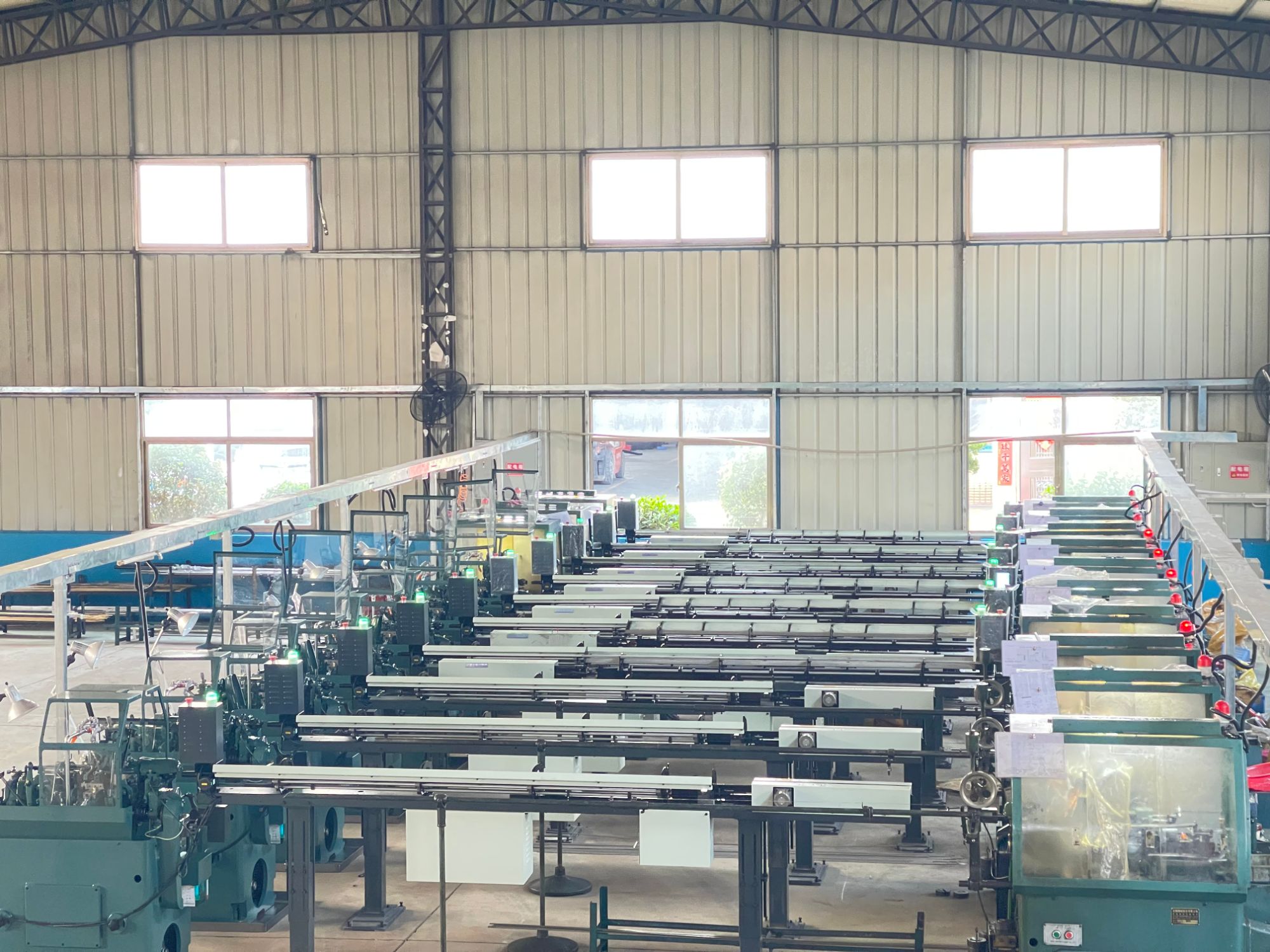
Most machine shops claim they can handle custom work, but what they really mean is they'll force your part into their existing process and hope for the best. That's where things go sideways—tolerances drift, finishes don't hold up, and you're stuck re-explaining the same drawing for the third time. A workflow that actually matches your specs starts with treating your print as the rulebook, not a suggestion. It means pausing before the first cut to map out every critical dimension, every material quirk, and every inspection point you'll care about later.
The difference shows up in the details. Instead of running your part through the same generic sequence they use for everyone else, a proper custom workflow might involve a different toolpath strategy for that thin wall, a slower feed rate near the tapped holes, or switching to a dedicated fixture that holds the part without distorting it. It's not about inventing a new process for the sake of being fancy—it's about respecting the fact that your part isn't identical to the last one that rolled through the shop. When the workflow bends to the spec instead of the other way around, you stop getting those "close enough" surprises.
Of course, this only works if the shop is willing to ask questions before quoting. What's the actual function of this surface? Is that radius purely cosmetic, or does it need to hold a bearing? Can we adjust the stock size to avoid a tricky internal corner? Those conversations feel like a delay at first, but they're what keep your project from ending up in the scrap bin or, worse, in a box of parts that technically measure fine but don't fit the assembly. A custom machining workflow isn't just about the CNC code—it's about building the process backward from your final requirement, not forward from the machine's default habits.
Materials, Finishes, and Tolerances: What Chinese Shops Offer Today
The range of materials available from Chinese machine shops has grown well past basic aluminum and mild steel. 6061 and 7075 aluminum, 304 and 316 stainless, titanium grades, engineering plastics like PEEK and Delrin, and even common tool steels are usually stocked or sourced within a few days. Many shops don't list every option on their website, so sending a quick inquiry with your part drawings often uncovers more choices. Material certificates for traceability are common, but it's worth asking whether the certificate matches the exact heat or lot used on your job.
Finishes are where expectations can drift the most. Standard anodizing, bead blasting, powder coating, electropolishing, passivation, and nickel or zinc plating are all routine. Color matching on anodized aluminum tends to shift slightly between batches, so shops that handle anodizing in-house or rely on a single subcontractor generally produce more consistent results. If a part has a cosmetic surface, spell out the inspection standard and whether small rack marks or touch-ups are acceptable before production starts.
Tolerance claims deserve a closer look. A capable CNC shop can hold ±0.005 in for general machining and ±0.001 in on individual features when called out, but not every surface needs that level of precision. Over-tolerancing drives up cost and lead time without adding much function. Shops with CMM inspection, in-process probing, or grinding and EDM work can hit ±0.0002 to ±0.0005 in on selected features, though those numbers depend heavily on geometry and material. Always request a first article report or dimensional inspection data before committing to a large batch.
From One-Off Prototypes to Repeat Production Runs
Moving from a single prototype to a repeat production run isn't just about making more copies. The processes that work for a one-off build often break down when you need consistency across hundreds or thousands of units. Tolerances that were acceptable for a hand-fitted prototype can cause assembly slowdowns or field failures in volume. That's why the transition starts with a hard look at your design for manufacturability: simplifying part counts, standardizing fasteners, and locking down material specs before tooling is cut. It's less glamorous than the first prototype, but it's where real reliability is born.
A common trap is assuming that scaling means simply running the same CNC program longer or printing more parts on a bigger bed. In reality, repeat production demands different tooling strategies, fixture designs that allow quick changeovers, and quality checks at defined intervals rather than end-of-line inspection. You might need to switch from 3D-printed jigs to machined aluminum fixtures, or from manual deburring to vibratory finishing. These aren't minor tweaks—they're the difference between a run that meets spec once and a run that meets spec every single time.
Finally, think about documentation and traceability long before the first production batch ships. Prototypes can live in a shared drive with informal revision notes; repeat production requires controlled BOMs, clear work instructions, and a supplier pipeline that can handle reorders without heroics. Building that infrastructure early feels like overhead, but it prevents the costly firefighting that happens when a key component goes out of stock or a shop floor operator improvises a workaround. The goal is a process that runs without you, not one that depends on your memory of how the prototype was built.
Avoiding Common Pitfalls When Ordering CNC Parts from China
Many issues start long before a single chip is cut. Suppliers in China often work from the exact files and annotations you send, not from assumptions about how a part will be used. If your drawing leaves out edge break requirements, thread class, or a specific surface finish callout, those details will be guessed at—or ignored. Include a complete 3D model plus a PDF drawing with critical dimensions clearly marked, and don’t rely on verbal descriptions over chat or email. When a tolerance is not critical, say so explicitly, because a shop may apply a tighter standard than needed and drive up cost or scrap rate.
Material substitution is another frequent trap. A request for “aluminum” might result in 6063 instead of 6061, or a steel part might arrive with a different hardness than expected. Ask for a mill certificate or material test report for any structural or safety-related component, and consider sending a sample to a local lab for verification if the part will see heavy use. Surface treatments like anodizing and plating also vary widely between shops; specify the exact standard you need—such as MIL-A-8625 Type II or Type III—and request photos of reference samples before committing to a production run.
Finally, resist the urge to skip prototyping. A small batch of first articles can reveal misunderstandings in threading, fits, or packaging that would be expensive to fix after hundreds of parts arrive. Also plan for shipping and customs delays, and agree on a clear inspection procedure before payment is released. If the parts are sensitive to moisture or shock, request vacuum sealing or foam-in-place packaging, and confirm the courier’s handling practices rather than assuming standard export packing will be enough.
Realistic Lead Times and Cost Drivers for Precision Components
Lead times for precision components rarely follow a single formula. A simple turned part in 6061 aluminum might ship in two to three weeks, while a 17-4 stainless steel housing with tight true position callouts and a mirror finish can easily stretch past ten. Much of the delay comes from material availability, especially for niche alloys or small-diameter bar stock, plus the queue for secondary operations like wire EDM, cylindrical grinding, or passivation.
Cost drivers are often hidden in the details that are easy to overlook at the design stage. Tolerances below ±0.005 in. usually force slower feeds, dedicated fixtures, and in-process inspection, which multiplies machine time. Surface finish requirements under 16 Ra can add polishing or honing steps. Small batch sizes also hurt because setup, toolpath programming, and first-article verification get spread across very few parts, making each unit disproportionately expensive.
A practical way to keep both lead time and cost in check is to challenge every spec before releasing a print. If a bore does not actually mate with a bearing, opening its tolerance from ±0.0005 in. to ±0.002 in. can remove a grinding operation. Similarly, asking your supplier which raw material sizes are stocked locally can avoid weeks of waiting for a special order. Early conversations about which features are functional versus cosmetic often cut more time and money than any machining strategy.
FAQ
You'll find a broad range, including 6061 and 7075 aluminum, 303 and 316 stainless steel, brass, copper, titanium, and even engineering plastics like PEEK and Delrin. Most shops stock common alloys and can source specialty grades quickly.
For critical features, many Chinese CNC shops routinely hold ±0.005 mm, and with careful setup they can push down to ±0.002 mm on certain dimensions. It really depends on part geometry, but precision is not a compromise.
Prototypes often ship within 3 to 7 days after design approval. Production runs usually take 2 to 3 weeks, though complex parts with multiple setups or special finishes may need a bit longer.
Reputable shops use CMM inspection, optical comparators, and in-process checks. They provide material certifications, first article inspection reports, and often run statistical process control for production batches.
Yes, most China CNC facilities are set up for low-volume prototyping and scale easily to thousands of units. This means you can validate a design and then move to production without switching vendors.
Common options include anodizing (clear or colored), bead blasting, electropolishing, passivation for stainless steel, powder coating, and even plating like nickel or chrome. Finishing can be tailored to corrosion resistance, wear, or aesthetics.
Many suppliers accept orders as small as one piece, especially for rapid prototyping. For production, MOQs are often flexible and can be negotiated based on part complexity and material.
Medical device, aerospace, automotive, robotics, and consumer electronics companies frequently rely on Chinese CNC machining for tight-tolerance components, housings, brackets, and custom fixtures.
Conclusion
Finding a reliable CNC partner in China for tight-tolerance work isn't about picking the biggest shop or the cheapest quote. It comes down to how clearly a shop maps your tolerances, material calls, and surface finishes before any metal is cut. The best Chinese suppliers now walk through custom machining workflows step by step, flagging potential trouble spots in geometry or heat treatment instead of promising perfection. Materials range from 6061 aluminum and 303 stainless to engineering plastics like PEEK, and finishes like anodizing, bead blasting, or passivation are handled in-house more often than not. This matters when you need one-off prototypes that behave like production parts, not pretty samples. Shops that ask about end use, assembly fit, and metrology reports tend to deliver parts that match the drawing instead of just looking close.
Ordering precision CNC parts from China also means understanding what actually drives cost and lead time. Small features, deep pockets, and very tight parallelism or runout specs add machine time faster than overall size does. A well-run shop will tell you that a 0.005 mm true position tolerance on a stainless bracket costs differently than ±0.1 mm on an aluminum cover plate. Repeat production runs benefit from fixture reuse and process tuning, but only if the first article inspection is done properly. Common pitfalls include vague notes on threads, unspecified edge breaks, or assuming a generic 'machined finish' will look like a photo from a website. Requesting a pre-production sample and a simple dimensional report prevents most surprises. Realistically, expect 2–3 weeks for prototypes and 4–6 weeks for medium batch production once tooling and programming are locked in.
Contact Us
Contact Person: Mason Lv
Email: [email protected]
Tel/WhatsApp: +86 13027998452
Website: https://www.peakfastentech.com