

China Pressure Vessel Industry: Essential Insights for Global Buyers
2026-10-02
Every year, countless pressure vessels ship from China to industrial sites worldwide, but few global buyers can confidently tell a certified, long-lasting vessel from one that will fail inspection. That knowledge gap is exactly what this guide closes. Drawing on years of on-the-ground sourcing experience, DYE breaks down China's pressure vessel landscape—from material standards and welding certifications to the hidden factory-level details that affect lead times and total cost. Whether you're buying reactors, storage tanks, or heat exchangers, the insights ahead will help you avoid the common pitfalls and negotiate with clarity. No fluff, just the essential facts you need before your next order.
Mapping China's Pressure Vessel Manufacturing Hubs and Their Specialties
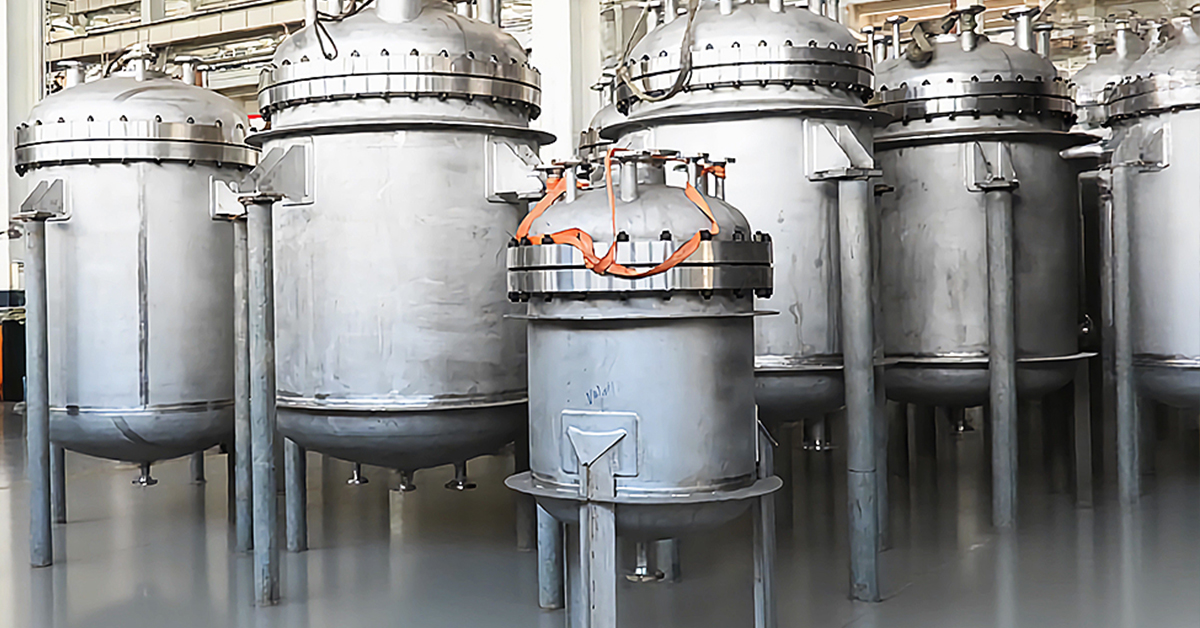
Jiangsu province, especially the Nanjing-Zhenjiang-Yangzhou corridor, has become the default destination for high-end alloy pressure vessels. Workshops here routinely handle stainless steel, duplex steel, and nickel-based cladding for petrochemical crackers and polysilicon plants, with many fabricators holding ASME U and U2 stamps for export orders. The real differentiator is not just welding skill but the network of nearby forging mills and heat treatment shops that allow tight control over plate thickness and post-weld stress relief.
Shandong operates at a different scale. Around Zibo, Qingdao, and Dongying, yards specialize in heavy-wall reactors, coke drums, and ammonia converters destined for local refineries and coal-to-chemicals projects that no longer fit into crowded eastern ports. These manufacturers compete on lifting capacity and quayside access rather than exotic metallurgy, often delivering vessels that weigh over a thousand metric tons by barge to the Bohai coast.
Further north, Liaoning's old industrial base still services refinery maintenance and revamp work, while inland hubs in Hubei and Sichuan focus on smaller high-pressure gas storage spheres and modular skids that can be trucked into mountainous gas fields. A quieter but growing cluster around Suzhou and Shanghai has moved toward ultra-clean pressure equipment for semiconductor fabs, where surface finish and documentation matter more than raw tonnage.
Decoding Certification and Compliance for International Orders
Navigating the maze of international product certifications can feel like learning a new language for every market you enter. A device that sails through approval in one country might hit a wall in another because of differing voltage requirements, wireless frequency bands, or even labeling rules. Take the CE mark in Europe versus FCC certification in the United States: both aim to protect consumers, but the testing paths and documentation demands rarely overlap. For any business shipping across borders, ignoring these differences isn't just risky—it's often a fast track to customs delays or returned shipments.
Compliance goes beyond electrical safety or radio emissions. Environmental regulations like RoHS and REACH in the EU restrict hazardous substances, while packaging laws in places like Germany require registration for disposal. Meanwhile, some countries demand in-country testing or local representative agreements before goods can clear. Small details, such as the exact placement of a certification logo or the language of user manuals, can trip up even experienced exporters. Keeping track of updates is its own challenge, since standards rarely stay static for long.
A practical approach is to treat certification not as a one-time hurdle but as an ongoing part of product design. Building compliance checks into the development cycle—rather than bolting them on at the end—saves time and reduces rework. Many companies also lean on specialized labs or local partners who understand regional nuances. While the process can be tedious, the payoff is smoother logistics, fewer surprises at the border, and a reputation for reliability in every market you serve.
Cost Structures That Shape Your Final Quote
Your final number rarely comes from a single line item. It's the quiet accumulation of material choices, labor realities, and operational overhead that often gets buried in the fine print. When a supplier quotes you a price, they're not guessing—they're layering in raw material volatility, skill level required for the job, and the hidden cost of machine downtime or rework. These elements don't always show up as separate charges, but they shape the ceiling and the floor of what you'll pay.
What surprises most buyers isn't the direct cost of goods—it's the proportional weight of things like setup fees, minimum order quantities, and shipping logistics tailored to fragile or oversized items. A quote that looks cheap on the surface may carry a heavier structure in the back end, especially if the production run is small or the tolerances are tight. The more you understand how these layers stack, the better you can negotiate from a position of clarity rather than reacting to a single headline figure.
Smart procurement means asking not just "how much" but "what's driving this number." Is it a high-grade alloy, a specialized finish, or a rushed lead time that forces overtime? Cost structures differ wildly between a local artisan workshop and a high-volume overseas plant. Knowing which structure you're actually being quoted against lets you compare apples to apples and avoid paying for flexibility you never needed.
From Material Selection to Welding: Where Quality Is Won or Lost
The real fork in the road shows up long before an arc is struck. A plate with a nominally acceptable carbon equivalent can still misbehave if its sulfur content sits at the upper end of the spec, making the puddle sluggish and prone to centerline cracking. Similarly, a stainless filler chosen mainly for corrosion resistance may not tolerate the dilution from a high-carbon base metal, leaving a brittle transition zone that passes visual inspection but fails under load. Material selection, in other words, isn't a box-ticking exercise; it's a prediction of how chemistry, thickness, and surface condition will interact with heat.
Once welding begins, the gap between a qualified procedure and the actual joint decides most outcomes. Preheat that looks adequate on a chart can be meaningless if the plate was stored outdoors and carries residual moisture into the root pass. A small change in travel speed or torch angle might not alarm anyone during the shift, yet it alters penetration shape just enough to trap slag at the toe. These aren't dramatic failures; they accumulate as weld toes with inconsistent wetting, hydrogen pickup from damp flux, or interpass temperatures that let martensite form where it shouldn't.
Where quality is won or lost, then, is not in the final radiograph alone but in the series of small decisions made before and during welding. A filler metal that matches the base material's thermal expansion can prevent stress corrosion cracking in service, while a poorly timed interpass cleaning can embed oxides that later show up as lack of fusion. The difference between a weld that holds and one that fails often comes down to whether someone checked the actual carbon equivalent, measured the joint angle, and adjusted the shielding gas for the day's humidity—rather than trusting that the paperwork was close enough.
Navigating Lead Times, Logistics, and After-Sales Support
Lead times can derail even the most carefully planned project. Instead of treating them as a fixed constraint, we map out every variable: raw material availability, production bottlenecks, and regional shipping hubs. This lets us give you a realistic window upfront, not an optimistic guess that falls apart later.
Logistics is where many suppliers quietly fail. We track every shipment with real-time updates, handle customs documentation proactively, and choose routes based on your actual deadlines—not just the cheapest option. If a port closes or a truck breaks down, you hear from us before you have to ask.
After-sales support shouldn't mean waiting on hold for a week. Our team assigns a single point of contact to your account, with direct access to spare parts inventory and technical engineers. Whether it's a quick troubleshooting call or a full replacement part shipped overnight, we treat post-delivery issues with the same urgency as the initial order.
Emerging Innovations Reshaping Chinese Pressure Vessel Exports
The shift toward modular, skid-mounted pressure vessel systems is quietly altering how Chinese manufacturers approach overseas projects. Instead of shipping bare vessels that require extensive on-site assembly, exporters now deliver pre-tested, plug-and-play units that cut installation time by up to 40%. This change reflects a deeper understanding of client pain points in regions with limited skilled labor or tight project schedules. One notable example is the growing use of duplex stainless steel and advanced composite wrap technologies, which allow vessels to operate at higher pressures while reducing wall thickness and overall weight, directly lowering freight costs for long-haul routes.
Digital traceability is another understated yet powerful driver. A growing number of Chinese fabricators embed QR-code-linked data plates on each vessel, giving buyers instant access to material certificates, weld maps, and hydrostatic test records via a smartphone. This transparency addresses long-standing concerns about quality documentation, especially in markets where third-party inspection is mandatory but local resources are stretched thin. Combined with remote monitoring sensors that track cyclic fatigue in real time, these vessels are no longer static equipment but data-generating assets that help operators predict maintenance windows and avoid unplanned downtime.
Perhaps most striking is the rise of localized design adaptation. Rather than exporting a one-size-fits-all product, leading Chinese firms now co-develop vessel specifications with regional engineering partners, accounting for local seismic codes, ambient temperature extremes, and even port crane limitations. This consultative approach has proven particularly effective in Southeast Asia and the Middle East, where a 20-ton lift restriction at a secondary port can make or break a project. By folding these constraints into the initial pressure vessel design—rather than treating them as afterthoughts—Chinese exporters are reshaping their reputation from low-cost suppliers to problem-solving collaborators.
FAQ
Request a copy of the manufacturer's special equipment production license (typically A1 or A2 for pressure vessels), verify ASME U or U2 stamps if the vessel will be installed in a jurisdiction requiring them, and ask for ISO 9001 certification records. Look for documented welding procedure qualifications and ask about past export projects to your region. A quick on-site or third-party audit before deposit transfer can reveal a lot about plate storage, rolling capacity, and heat treatment furnaces.
GB/T 150 shares many calculation approaches with ASME Section VIII Division 1, but material designations differ. For example, Q345R is roughly comparable to SA-516 Grade 70, yet tensile values and allowable stress tables are not identical. Most export-oriented workshops can design and fabricate to ASME, PED, or a dual-certification package. The key is to specify the governing code clearly and ensure the manufacturer has an authorized inspector sign-off before shipment.
Yes, many larger fabricators regularly build vessels with design pressures above 100 bar and minimum design metal temperatures down to -196°C for LNG, liquid oxygen, or nitrogen service. They work with stainless steel, duplex, nickel alloys, and occasionally titanium or zirconium. Expect finite element analysis reports for unusual nozzle loads or fatigue cases, and ask for a design review meeting before cutting steel.
For a typical carbon steel separator or air receiver, plan on 10 to 16 weeks of fabrication after drawing approval. Add another 4 to 8 weeks if the vessel requires thick-wall alloy plate, post-weld heat treatment, extensive non-destructive testing, or a long-distance inland transport from a western province. Ocean freight to Europe or the Americas usually adds 4 to 6 weeks depending on the port and sailing schedule.
Require full material traceability from mill certificates to the actual stamped plate and nozzle forgings. Witness the hydrostatic test via live video or have a third-party inspector present. Specify 100% radiographic or ultrasonic testing on main seams rather than spot checks. Make partial payment milestones conditional on passing independent NDT review, and include a clause for random destructive testing of production test coupons.
The deliverable package should include design calculations, general arrangement and fabrication drawings, material certificates, welding map, WPS and PQR records, NDT reports, hydrostatic test certificate, heat treatment chart, pressure relief valve sizing if applicable, nameplate rubbing, and a declaration of conformity to the specified code. For PED markets, also request the module or category assessment documents and the notified body certificate.
Wall thickness after corrosion allowance, alloy content of the shell and internals, the extent of non-destructive examination, whether post-weld heat treatment is required, surface preparation and coating system, internal demister or packing supports, and the number of nozzles with reinforcement pads all move the price. Complex nozzle orientations or tight dimensional tolerances for skid-mounted installations also increase fabrication hours.
Many Chinese fabricators now offer integrated modular packages: vessel, pumps, valves, instrumentation, and a local control panel pre-piped on a structural steel skid. This reduces field welding and alignment work at site. However, ask for a detailed interface list before order confirmation, especially for electrical classifications, hazardous area ratings, and client-approved instrument brands, to avoid later change orders during assembly.
Conclusion
For global buyers evaluating China's pressure vessel sector, the landscape is far from monolithic. Manufacturing capabilities are clustered in distinct hubs, each with its own technical focus: Jiangsu and Shanghai lead in high-end alloy and cryogenic vessels, while Shandong and Liaoning dominate large-scale carbon steel and refinery equipment. Understanding these regional specializations helps buyers match project requirements with the right supplier instead of chasing the lowest bid. Certification is another decisive factor. Reputable Chinese fabricators now routinely hold ASME U/U2 stamps, PED compliance, and API 510 inspection credentials, but verifying the actual scope of a certificate remains critical; some shops subcontract welding or heat treatment, which can invalidate compliance without proper documentation.
Cost structure in China goes beyond raw steel price. Labor, energy, and factory utilization vary by province, and hidden charges often arise from design revisions, third-party inspection, and export packaging. Quality hinges on material traceability and welding procedure qualification; buyers who demand full mill test certificates, welder continuity logs, and post-weld heat treatment charts tend to avoid the rework and delayed shipments that plague cheaper suppliers. Lead times for custom vessels now stretch 120 to 180 days, and inland factories face longer port transit than coastal plants. After-sales support is improving but uneven, so a binding service agreement covering spare parts and remote diagnostics is recommended. Finally, Chinese manufacturers are rapidly adopting automated welding, digital radiographic testing, and modular skid-mounted designs, which can lower lifecycle costs for overseas buyers willing to audit these innovations on-site before committing to a purchase order.
Contact Us
Contact Person: Ada Xu
Email: [email protected]
Tel/WhatsApp: 0577-86806088
Website: https://www.dayuwz.com/