

China Rocker Switch Factory: Your Trusted Partner for Quality Rocker Switches
2026-10-22
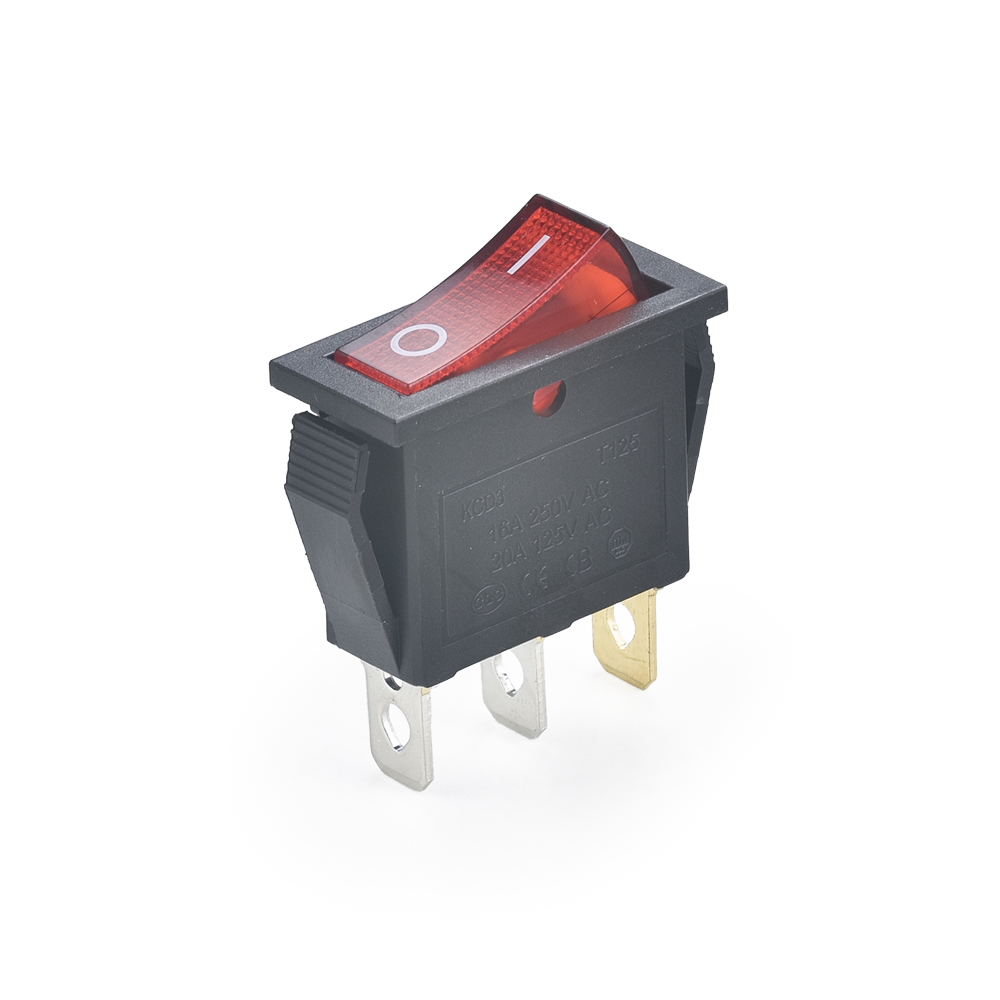
If you’ve ever had a rocker switch fail in the field, you know the real cost isn’t the switch—it’s the downtime, the returns, the reputation hit. KEJIAN ELECTRONICS takes a different approach as a China rocker switch factory, treating every contact, actuator, and housing as a detail worth obsessing over. Here’s what that means for your next product design or replacement order.
Inside the Factory: Where Rocker Switches Come to Life
Step onto the production floor and the first thing you notice is the rhythm—punch presses tapping out brass contact arms, injection molds hissing open to reveal fresh thermoplastic housings, and a faint smell of warm lubricant mixed with ozone from the test stations. Here, a rocker switch isn't just assembled; it's coaxed into existence through a dozen small, deliberate gestures. Workers at inline stations snap springs into place, thread actuator paddles onto pivots, and run a thumbnail along the seam to check for flash. Each switch passes through at least seven human hands before it ever meets a testing jig.
Midway down the line, a bank of automated testers cycles every unit through ten thousand on-off toggles while monitoring contact resistance in milliohm increments. But the real magic happens at the tuning bench—an old wooden table scarred with decades of screwdriver slips. There, a veteran operator adjusts the rocker's fulcrum screw by feel, listening for the exact click that separates a premium switch from a rattly one. It's a sound you can't spec on a drawing, only learn after your ears have been trained by a thousand imperfect units.
Toward the end, the switches are laser-etched with their ratings, then shipped in reusable trays that get returned, cleaned, and sent back through the same route. What leaves the factory isn't just a component; it's a small argument for tactile certainty in a world of soft buttons and touchscreens. And somewhere down the line, a user will flip one without thinking, never knowing it was born from a dance of springs, thermoplastics, and patient hands.
The Materials Behind a Switch That Lasts
Keyboard switches that survive tens of millions of presses aren't just well-designed—they're built from materials chosen for very specific reasons. The housing, often made from polyoxymethylene (POM) or polycarbonate, needs to resist wear and friction. POM is particularly favored because it's self-lubricating, meaning the stem glides smoothly against the housing even after years of use. Polycarbonate, while slightly less slick, offers excellent dimensional stability and a brighter sound profile.
The stem and leaf, the parts that actually move and make contact, rely on different properties. Stems are usually POM or a nylon blend, balancing strength with low friction. The contact leaf, often a phosphor bronze or beryllium copper alloy, must maintain its springiness through millions of cycles. Gold plating on the contact points prevents oxidation and ensures a consistent electrical connection, which is why even budget switches often include a thin gold layer.
Finally, the spring itself—typically stainless steel or a music wire alloy—needs to resist fatigue and corrosion. Some premium switches use gold-plated springs, but the real difference comes from the wire's tensile strength and heat treatment. A well-chosen spring material keeps its return force consistent, so the switch doesn't feel mushy or become unreliable after heavy use.
Custom Rocker Switch Solutions Without Long Lead Times
Many suppliers treat custom rocker switches as special orders, which usually translates to long queues and even longer lead times. We avoided that by keeping a modular inventory of actuators, housings, terminals, and contact mechanisms. Custom legends, circuit configurations, and mounting tweaks are applied to pre-qualified base components instead of triggering a new production batch. As a result, samples often ship in under two weeks without sacrificing repeatability.
A shorter timeline doesn't help if the first build misses the mark. That's why our quoting process includes a fast technical review rather than a generic confirmation. If a requested switch rating or environmental seal won't hold up in your application, we flag it immediately and suggest an alternative that still keeps your panel layout intact. This reduces the back-and-forth that normally eats up weeks.
Low-volume custom runs are handled on separate assembly lines designed for quick changeover. Because the subcomponents are already certified and tested, there's no need to repeat full qualification for every new legend or terminal style. You can order a few dozen for a bench trial or a few thousand for a pilot build and get the same factory-backed consistency without the large-order wait.
Every Switch Tested: Our Approach to Consistency
We don't take any switch for granted. Every single unit that leaves our facility is tested individually before it gets boxed up. No batch sampling, no spot checks. One by one, each switch is actuated hundreds of times while we monitor its travel, sound, and reset point. If it falls outside our narrow tolerance band, it never makes it out the door.
This isn't about hitting a specification on paper. It's about how the switch feels under your fingers at hour three of a long session. Consistency means the ninety-ninth press matches the first. We measure actuation force with a calibrated load cell, then cross-check it with a manual tester who has been doing this for over a decade. Their hands catch what instruments sometimes miss.
Our approach grew out of frustration with keyboards that felt great in a demo unit but random in the box. So we built a dedicated test bench in the corner of our workshop. It runs through a checklist that hasn't changed in four years. The result is simple: open any box, pick any switch, and it will behave like the one next to it. That predictability is the whole point.
How We Earned Trust from Global Manufacturers
Early on, we realized that trust isn’t demanded—it’s built one shipment at a time. We started by placing modest trial orders and paying exactly on the agreed date, even when currency swings worked against us. That surprised a few factory owners, but it set a clear tone: our word on a purchase order means something. Over time, those same manufacturers began asking for our input on production schedules and material sourcing, not because we pushed, but because we showed up consistently and treated their constraints as our own.
The turning point came when a key supplier faced a sudden component shortage that threatened to delay three of our orders. Instead of penalizing them, we sent our own logistics coordinator to help rework the shipping plan and split deliveries across two ports. That gesture, more than any contract clause, cemented our reputation. Today, several manufacturers hold capacity for us before we even ask, and a few call us directly when they develop new product lines. That’s the kind of trust you can’t buy with volume—it’s earned through shared problem-solving and a refusal to walk away when things get messy.
Support That Continues After Your Order Ships
Your shipping confirmation email is not the end of our conversation. From the moment the carrier picks up your order, our support team keeps an eye on the tracking details and stays ready for anything that comes up. If the parcel gets delayed, arrives with damage, or simply doesn't match what you expected, you can reply to any of our emails and a real person will step in to sort it out.
We don't hand you off to an automated phone tree once the package leaves our warehouse. A couple of days after delivery, we send a short follow-up to make sure everything arrived safely and that the product is doing what it should. If you've already run into a snag, our team can walk you through setup, send a replacement part, or arrange a return without asking you to repeat your order number five times.
That ongoing support also covers questions that come up weeks later, like when you need a different size, want to reorder, or realise a spare component would help. You'll get an answer from someone who knows your original purchase, not a generic script. It's the kind of backup that makes buying from us feel less like a gamble and more like having a neighbour who happens to be an expert.
FAQ
We cover a wide selection including mini, sub-mini, and full-size rocker switches, along with illuminated models, waterproof versions, and custom actuator styles.
Custom work is a big part of what we do. Share a drawing or even a rough idea, and our engineers can help with terminal configurations, markings, colors, and voltage ratings.
Every order goes through incoming material checks, in-process testing, and a final electrical and mechanical inspection before shipment. We also keep records for each production lot.
Common certifications include UL, CQC, CE, and RoHS depending on the switch type. We can also provide test reports for specific customer requirements.
For standard samples, we usually ship within a few days. Bulk orders generally take a few weeks, but actual timing depends on quantity and customization level.
Yes, many of our rocker switches are available with IP-rated sealing, rubber boots, or weather-resistant bodies for marine, automotive, and outdoor equipment use.
It varies by model, but many standard switches have a low MOQ to support prototyping. For heavily customized versions, the MOQ may be higher because of setup costs.
Absolutely. We provide datasheets, dimensional drawings, and direct access to our engineering team to help with circuit fit, panel cutouts, and wiring questions.
Conclusion
If you spent a morning on our floor in China, you'd see why the process feels less like a typical assembly line and more like a carefully choreographed handoff. Raw polyamide enters one end, gets molded into rocker bodies and bezels, then moves to stations where silver-alloy contacts are riveted, springs seated, and actuators snapped into place. We don't rush any of it. A switch rated for 10,000 cycles gets built with the same care as one rated for 50,000, because the materials, heat-stabilized nylon and tinned copper terminals, are chosen to outlast the warranty period. When a buyer comes to us with a non-standard actuator color, a custom legend, or an odd panel cutout, our tooling department quotes it fast and runs it without padding the lead time. We keep dedicated mold bases and a library of past designs, so many 'custom' jobs are really just variations we've already proven.
Before a single carton is sealed, every production lot passes through a gauntlet that includes dielectric withstand testing, contact resistance checks, and mechanical endurance runs on sampled units. The numbers get logged, not guessed at. That consistency is why purchasing managers in Germany, the U.S., and Japan treat us as an extension of their own quality departments rather than a distant vendor. After the order ships, the support doesn't go quiet. If a switch needs re-terminating for a new harness layout, we send drawings and samples within days. If a field issue appears, our engineers join the call with your team instead of hiding behind a ticket system. For a part that costs pennies, the real cost is downtime, so we act like your line is running on our floor.
Contact Us
Contact Person: Anna lin
Email: [email protected]
Tel/WhatsApp: +86 13567768885
Website: https://www.kjele.com/