
Concrete U-Shaped Water Channel Equipment Manufacturer for Durable Infrastructure Projects
2026-08-13
Imagine a concrete channel that cracks within five years. Now imagine one that outlasts the road above it. The difference often comes down to the equipment that forms it. As a specialized concrete U-shaped water channel equipment manufacturer, Qianfeng Electromechanical Equipment knows this better than anyone. Our machines are built for one purpose: turning raw concrete into precision-shaped, load-bearing water channels for infrastructure that can't afford to fail. In this article, we'll break down the engineering choices behind our equipment—and why they matter for your next project.
U-Shaped Profiles That Keep Water Moving
Unlike boxy channels that trap sediment in corners, a U-shaped cross-section lets water glide along a single continuous curve. The smooth bottom and gently sloping sides remove the low-velocity zones where debris typically settles. As flow volume changes, the profile maintains enough depth to keep particles suspended, so silt and leaves don't accumulate and block the path.
This shape also handles variable rainfall without creating turbulence. Water entering the channel follows the curve rather than slamming into flat walls, which preserves energy and reduces erosion at the inlet. Installers often notice fewer callbacks for clogs because the self-cleaning action does most of the work between routine maintenance visits.
Molds Engineered for the Long Haul
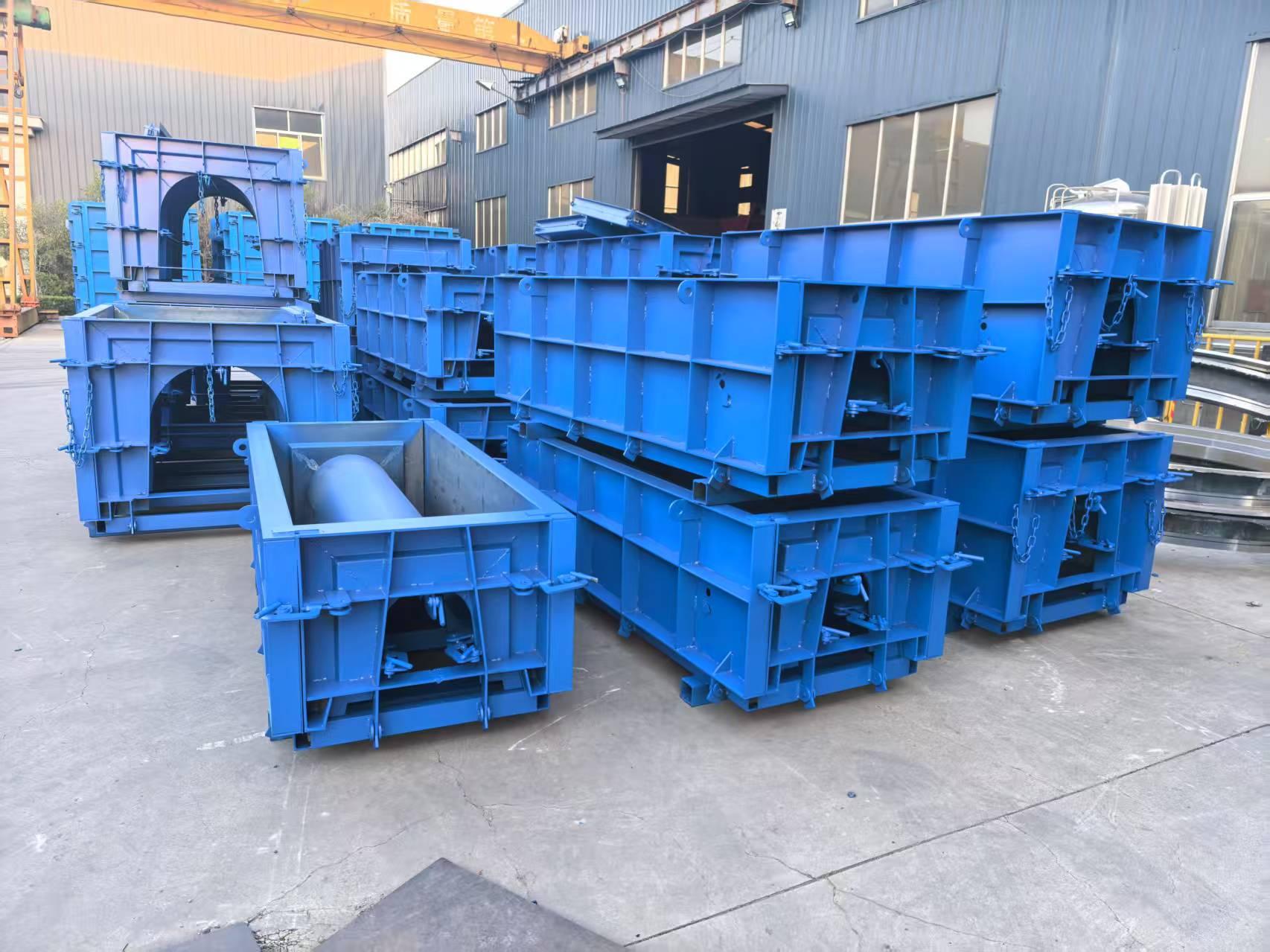
The difference between a mold that holds tolerance for a decade and one that drifts after a few thousand cycles is rarely visible from the outside. It lives in the grain structure of the steel, the depth of the heat treatment, and how evenly the cavity sheds thermal load. We select alloys for compressive strength and thermal conductivity together, because a mold that resists wear but traps heat will still crack under cyclic stress. The goal is not just hardness on paper, but a tool that stays dimensionally stable when the press runs hot and fast.
Long-haul molds are also built to be serviced without a fight. Wear plates sit on registered surfaces so they can be swapped without re-machining the entire block. Cores are replaceable in minutes, not days, and cooling lines are sized to stay clear even with less-than-perfect water quality. That means the tool spends more time in the press and less time on a bench being nursed back to health.
We treat longevity as something you verify, not something you hope for. Every tool goes through a break-in cycle that pushes it past normal operating pressure, and critical surfaces are checked for hardness at multiple points. If a dimension moves more than a few microns after the first ten thousand shots, we know there is a problem before it turns into scrap. That kind of early warning is what keeps a mold running year after year.
From Concrete Mix to Finished Channel
Every batch starts with a careful balance of cement, aggregate, sand, and water. Small adjustments to the water-cement ratio change how the mix flows into the formwork, so the operator watches the slump closely. The aim is a blend stiff enough to hold its shape yet fluid enough to fill every corner without trapping air.
Once poured, the wet concrete is vibrated along the channel walls. This step drives out air pockets and settles the material against the mold surfaces, giving the finished channel a dense, even skin. The top edges are then struck off and troweled lightly to remove any ridges left by the screed.
Curing follows immediately, usually with a fine mist or damp cover, to slow moisture loss and build strength. After several days the forms are stripped away, and each section is inspected for cracks, straightness, and surface smoothness before it moves to storage or delivery.
Custom Sizing Without the Custom Wait
Finding a piece that's almost right but not quite—sleeves an inch too long, a waist that gaps, a hem that drags—used to mean either settling or waiting weeks for a tailor. We've cut that wait out entirely by building size flexibility into the design itself. Instead of starting from scratch when you need a tweak, our patterns are pre-adjusted across a wider range of proportions, so the fit you need is already in stock.
You won't get a generic small, medium, or large that pretends to fit everyone. You'll choose from combinations that reflect real body differences: shorter torso, longer rise, broader shoulder, narrower hip. Then we pull from ready-to-ship units rather than cutting a one-off. That means your order leaves the warehouse in days, not months, without the back-and-forth of traditional custom work.
The result is the same tailored confidence you'd expect from made-to-measure, minus the lag and the premium price tag. No forms to fill out, no waiting for a confirmation call, no tracking a package that hasn't moved in two weeks. Just a better-fitting piece that shows up before you've had time to second-guess the color.
Field-Proven Forming Systems
Field-proven forming systems earn their reputation through years of exposure to actual pour conditions, weather swings, and rough handling that controlled tests can't fully replicate. The best ones incorporate adjustments made after observing repeated stress points, such as corner gussets that resist racking, tie spacing that accounts for real concrete pressure, and face materials that hold up after dozens of uses. These are not just brochure claims; they show up in the way panels lock together after a hundred cycles and how little patching is needed on the finished wall.
Practical job sites reveal which details actually matter. A forming system that has been refined through field use tends to have fewer small parts that can get lost, more forgiving alignment guides, and a stripping sequence that works even when the crew is short-handed. Over time, the hardware develops predictable wear patterns, and replacement parts become easier to source because the system is widely used. This reduces downtime and keeps concrete pours moving without constant improvisation.
Specifiers and contractors often favor field-proven systems because the risks are already known. Load capacities, deflection limits, and bracing requirements have been verified across different soil types, weather conditions, and placement rates. That documented history means less guesswork during planning, shorter learning curves for new crew members, and fewer surprises when the forms are stripped.
Support That Extends Past Installation
Once the installation is done, we don't just pack up and disappear. The first few weeks are when small questions tend to pop up—maybe a setting doesn't feel quite right, or you want to confirm you're getting the most out of the setup. Instead of leaving you to figure it out alone, we stay reachable through a direct line, and the person who answers already knows the specifics of your project. No repeating your story from scratch, no generic scripts—just practical answers from someone who was there when it was installed.
We also check in on our own, not with a sales agenda but with a simple question: is everything still working the way it should? Some issues only appear after the system has been running under real conditions—changes in load, unexpected environment shifts, or just the wear of daily use. When we spot something, we reach out with a concrete suggestion or offer remote assistance to adjust things before they turn into a bigger headache. It's the kind of proactive attention that keeps you from having to watch for warning signs yourself.
Beyond troubleshooting, we want you to feel confident using what was installed. If you're curious about a feature you haven't tried yet, or you need a quick walkthrough to fit the system into a new workflow, we can set up a short session or share a few targeted tips. The goal isn't just to fix things when they break—it's to make sure the installation keeps paying off for you months down the line, without any friction or confusion.
FAQ
We make both slipform pavers and stationary mould systems for U-channels, covering widths from 300 mm up to 2,400 mm. Most of our recent orders include automated batching and vibration control so operators can switch profiles without rebuilding the whole line.
The frames are hot-dip galvanized and the hydraulic circuits use sealed cartridge valves, which cuts down on corrosion and dust ingress. We've had units running on coastal road projects for over seven years with only routine grease intervals.
Yes, the side form plates and mandrel are interchangeable, and we supply CAD profiles matching project drawings. A single machine can run straight sections, curved alignments down to a 5-meter radius, and tapered transitions by swapping two inserts.
We usually suggest a zero-slump mix with 25 to 30 MPa compressive strength and a superplasticizer dosage around 0.6 to 0.8 percent by cement weight. That gives enough green strength for immediate demoulding without surface tearing.
Our engineers stay on site for the first production week. That includes aligning the machine, dialing in vibration frequency, and training two or three local operators on daily cleaning, wear-part inspection, and profile changes.
Daily checks are mostly visual: wear plates, hopper seals, and vibrator mounts. Every 200 hours we recommend replacing the hydraulic filter and greasing the guide rails. Major wear parts like auger flights last around 80,000 linear meters before resurfacing.
Recent deliveries went to a highway drainage upgrade in Queensland, an irrigation corridor in central Turkey, and a stormwater bypass in northern Chile. The common thread was a need for continuous pouring with minimal joints and fast demoulding.
Instead of casting individual segments and curing them in a yard, our slipform machines pour the U-shape directly in place or on long-line beds. That eliminates joint leakage points and lets a small crew produce 400 to 600 meters per shift, which is hard to match with precast.
Conclusion
For contractors and infrastructure agencies that depend on reliable water management, investing in concrete U-shaped channel equipment from a focused manufacturer pays off in every phase of a project. The U-shaped profiles are designed to keep water moving with minimal turbulence and sediment buildup, which reduces long-term maintenance on canals, drainage networks, and irrigation systems. Behind that performance are molds engineered for the long haul—built from heavy-gauge steel and precision-machined surfaces that hold their shape through thousands of casting cycles. The manufacturer also streamlines the entire process, from concrete mix to finished channel, with batching and forming systems that minimize waste and speed up production. When a project calls for unusual dimensions, custom sizing is available without the long lead times that often stall infrastructure work; the production line adjusts quickly, so you get the exact cross-section you need without waiting months for new tooling.
What really sets this equipment apart, though, is how it performs outside the controlled environment of a factory. The forming systems have been proven on actual job sites, where uneven terrain, variable concrete consistency, and tight deadlines are the norm. Operators appreciate that the equipment doesn't demand constant adjustment—once set, it produces consistent U-shaped channels day after day. And the relationship doesn't end at delivery. Support extends past installation, with technical guidance on mold alignment, concrete mix optimization, and troubleshooting that keeps downtime to a minimum. For agencies planning durable infrastructure, that kind of ongoing partnership means the equipment remains productive for years, not just for the first few pours.
Contact Us
Contact Person: Bill
Email: [email protected]
Tel/WhatsApp: 8615063653526
Website: https://www.qianfengjd.com