

Custom Industrial Heating and Cooling Systems Designed for Your Needs
2026-10-28
Every industrial facility has its own thermal fingerprint, the precise balance of heating and cooling that keeps production running smoothly. Off-the-shelf systems rarely match that fingerprint, leaving you with wasted energy, inconsistent output, or costly workarounds. At Tongbaote, we start from your process requirements and design custom heating and cooling solutions that fit like a glove. Here's what makes that approach different.
Exact Temperatures, Even When Demand Spikes
Imagine a shower that never flinches when the washing machine kicks on mid-rinse, or a commercial kitchen where the oven holds its set point even as every burner roars to life. That's the reality of demand-spike temperature stability, and it's built on a control loop that samples conditions dozens of times per second rather than waiting for a noticeable drift. Instead of reacting after the fact, the system anticipates sudden draw-offs and adjusts burner modulation or compressor speed before the outlet temperature can waver. The result isn't just a number on a display—it's the absence of that familiar cold shock or steam burst.
The key lies in decoupling thermal mass from response time. Traditional units rely on a large tank or bulky heat exchanger to buffer changes, which makes them sluggish and energy-hungry. Our approach uses a compact, high-surface-area exchanger paired with a variable-speed pump and a self-learning algorithm that maps your usage patterns. When demand spikes—say three showers, a dishwasher, and a washing machine all at once—the algorithm already knows the likely load profile and pre-stages the heat source. The temperature sensor at the outlet confirms the result within a half-degree band, even during the first few seconds of the surge.
This isn't about chasing an ideal number under perfect lab conditions. It's about holding 120°F (or your chosen set point) while the real world throws its worst at the system. No more warning guests to wait for the hot water to recover. No more juggling laundry and bath time. The unit simply delivers the same outlet temperature from idle to full capacity, and does it without audible strain or excessive cycling. That kind of quiet consistency changes how a space feels—and it's exactly what we engineered for.
Fewer Moving Parts, Less Unplanned Downtime
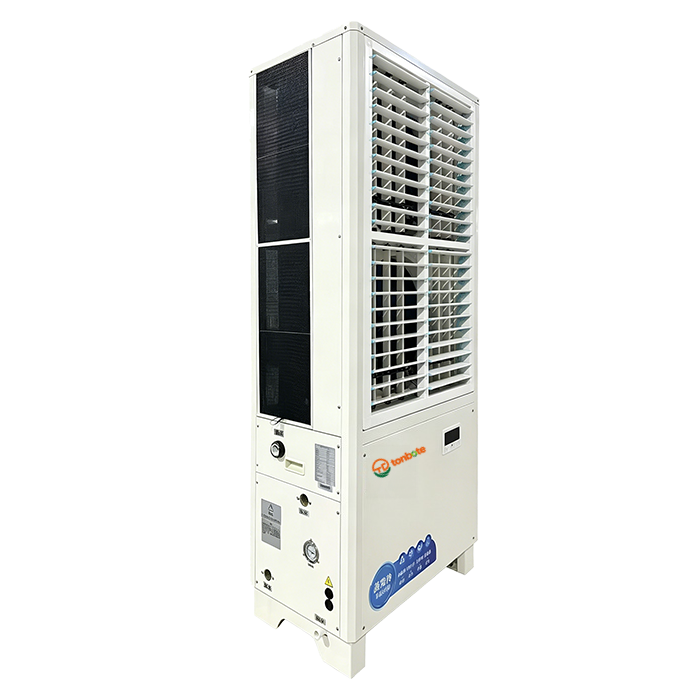
Every extra hinge, gear, or sliding assembly in a machine is a future failure waiting for the right moment. By designing equipment with fewer moving parts, those failure opportunities are stripped out before they reach the production floor. The result is not just a simpler mechanism, but a fundamentally quieter risk profile where unplanned downtime becomes an exception rather than a constant threat.
Maintenance teams often spend most of their time chasing wear in places that are hard to reach or easy to overlook. A reduced part count changes that dynamic. Routine checks become shorter, spare part inventories shrink, and repairs that used to stop a whole line for hours can often be handled in a planned window. The freed-up time goes back into improvement work instead of firefighting.
There is also a compounding effect. Fewer moving parts mean less friction, less heat, and less vibration spreading through the surrounding structure. Over months of continuous operation, that lower stress translates into longer service intervals and a much smaller chance of a sudden breakdown at the worst possible moment.
Retrofit Options That Don't Shut Down Your Line
Retrofitting a running production line usually calls for surgical planning rather than a full stop. One approach is to install new sensors, brackets, or auxiliary conveyors alongside the existing equipment while it keeps cycling. Technicians can mount hardware, pull cable runs, and pre-wire junction boxes during normal shifts, then make the final cutover during a brief tool change or scheduled pause. The key is designing the upgrade as a parallel path—new components are tested with bypass switches or temporary logic before they carry live product.
For controls and software, a shadow mode works well. The new PLC or vision system reads the same signals as the current system but does not issue commands until the logic is verified against weeks of real production data. Once confidence is high, operators flip the selector to the new controller between cycles. This avoids the risky all-at-once startup that often follows a full line shutdown, and it lets maintenance teams fall back to the legacy setup in minutes if something drifts.
Mechanical retrofits can use the same principle. Add a parallel lane, an indexing dial, or a quick-change fixture that fits the existing footprint without removing the old tooling. Run both old and new paths at reduced rate for a day or two, comparing rejects and cycle times side by side. The overlap period reveals misalignments, false rejects, or feed issues that only appear under real line pressure—long before the old equipment is decommissioned.
How Custom Coils Handle Corrosive or Dirty Air
Custom coils built for corrosive or dirty air don't just rely on thicker materials—they rethink the entire flow path. Instead of standard fins that trap debris, many designs space the fins wider or use a completely flat, plate-style surface. This keeps particulate matter from packing into the coil, which is the usual silent killer of heat transfer. When air is heavy with salt spray, chemical fumes, or fine dust, the coil needs to shed that contamination as fast as it picks it up. Some custom builds even add a slight vibration or a wash-down-friendly coating so maintenance crews can rinse the coil without pulling the whole unit apart.
Another trick is choosing alloys that don't just resist corrosion—they actively ignore it. For example, a custom coil in a coastal wastewater plant might use a cupronickel or titanium tubing instead of copper. These metals form a stable oxide layer that actually blocks further attack, whereas copper would start pitting within months. For dirty air, epoxy or phenolic coatings on the fins prevent wet dust from turning into a concrete-like crust. The coating doesn't increase thermal resistance much, but it makes the difference between a coil that lasts three years and one that lasts fifteen.
Finally, custom coils often include a modular header design. That sounds boring, but in a dirty-air scenario it means you can isolate one section for cleaning while the rest of the system keeps running. Standard coils make you shut down the entire air handler. With custom designs, you get removable panels, sloped drain pans, and even built-in spray nozzles that periodically wash the coil. That kind of thinking turns a corrosion problem into a simple maintenance schedule—not a replacement project.
Controls That Talk to Your Existing PLC
Many facilities assume upgrading controls means ripping out the PLC they've trusted for years. That's rarely necessary. Modern controllers can speak the same language as your legacy hardware, reading and writing registers without forcing a full replacement. You keep the logic that works while adding smarter features on top.
The key lies in protocol support. Whether your PLC uses Modbus, Ethernet/IP, Profinet, or something more obscure, a well-designed control layer can bridge the gap. It polls data, maps tags, and pushes commands directly into the existing program—no middleware headaches, no duplicate configuration.
The payoff is measurable. Downtime drops because operators see real-time status from every connected device. Maintenance gets easier when one interface talks to both old and new equipment. And scaling up doesn't mean starting over; you just add nodes to the conversation your PLC already understands.
Performance Tests We Run Before Shipping
Before any build leaves our hands, we hammer the product with scenarios drawn from real user behavior rather than synthetic benchmarks alone. A release candidate gets pushed through long session tests, memory-leak monitoring, and rapid context switching across core workflows. If a feature slows down after repeated use, it goes back to the team before anyone outside sees it.
We also measure cold start times and background refresh behavior under constrained network conditions, because most performance regressions show up when the device is not sitting on fast Wi-Fi. Tests run on both fresh installs and heavily used profiles, and we compare the numbers against the previous two stable versions, not just absolute thresholds. Any metric that trends in the wrong direction blocks the release.
Finally, every performance test includes a manual pass by at least one engineer who uses the product as a daily driver for a week. Automated numbers catch obvious issues, but the human pass catches jank, delayed feedback, and battery drain that scripts often miss. Only after both automated and hands-on checks are clean does the build move to shipping.
FAQ
We start by mapping your thermal load profile, including peak demand, ambient conditions, and any process fluctuations. Then we calculate the required BTU/hr or kW output and select components that can handle a safety margin without oversizing. The goal is steady temperature control under real operating conditions, not just a generic rating.
Yes. Many of our designs combine both functions through a reversing valve or separate circuits in a single skid. This is useful for processes that need rapid temperature cycling or seasonal switching. We configure the controls so the transition is automatic and doesn't require manual valve changes.
We build for water, glycol mixtures, thermal oils, and some specialized heat transfer fluids. The wetted materials are matched to the fluid's chemistry and operating temperature. For aggressive or high-temperature oils, we use stainless steel piping and high-temp seals as standard, with optional exotic alloys if needed.
We use variable-speed compressors, modulating burners, and electronic expansion valves where appropriate. The control logic anticipates load changes rather than simply reacting to them, which reduces short-cycling. Heat recovery options, like using waste heat from cooling to preheat another process stream, can cut overall energy use significantly.
You get a touchscreen HMI with trend logging, alarm history, and remote access via Ethernet or Modbus. We typically pre-program setpoint recipes for different product runs, so operators don't have to adjust PID parameters manually. The interface shows real-time COP or efficiency data if that's helpful for your energy team.
Depending on complexity, most projects run 14 to 20 weeks. The design phase takes about 3-4 weeks, including thermal calculations and approval drawings. Fabrication and testing take the bulk of the time, followed by on-site commissioning and operator training. We can expedite if you have a shutdown window.
Every unit includes redundant high-limit switches, pressure relief valves, and flow proving devices. For flammable heat transfer fluids, we add purge systems and gas detection interlocks. Electrical panels meet UL 508A, and we can provide hazardous-area ratings if the installation site requires it.
Yes, we offer startup assistance, preventive maintenance contracts, and remote monitoring packages. Our engineers can log in to diagnose issues before they cause downtime. We also keep a stock of critical spare parts for each custom build, so lead times for replacements are short.
Conclusion
Every industrial facility has its own thermal personality—tight temperature bands during sudden production surges, corrosive exhaust streams, or legacy PLCs that can't be replaced overnight. Custom heating and cooling systems are built around those realities, not the other way around. By matching coil metallurgy to the exact air chemistry, we prevent premature corrosion and maintain stable output even when demand spikes. The design intentionally reduces moving parts, so unplanned downtime loses its favorite failure points. And for lines that can't afford a shutdown, retrofit options slide into existing ductwork and hydronics without interrupting operation, keeping production alive while the upgrade happens.
Control integration is where most off-the-shelf units fall short, but a custom system speaks the same protocol as your current PLC, reading sensors and adjusting outputs without forcing a control room overhaul. Before any unit ships, it undergoes performance tests that simulate your actual load profile—pressure drops, temperature swings, coil face velocities—so what arrives on the dock already behaves like it has been running in your plant for months. The result is not a generic heater or cooler, but a thermal system shaped by your process, your air quality, and your uptime targets.
Contact Us
Contact Person: Wanshu Chen
Email: [email protected]
Tel/WhatsApp: +86-13662871206
Website: https://www.mbcee.com