

Custom Tilt Up Garage Door Designs That Elevate Your Home
2026-10-28
Curb appeal often comes down to the details you notice first, and your garage door is impossible to ignore. Custom tilt-up designs from NORTON turn that everyday feature into a standout design element. Whether you want clean lines, bold textures, or energy-efficient insulation, the options can genuinely elevate your home. Let's dive into the styles that make a real difference.
The Case for a Single-Slab Door on a Mid-Century Home
A single-slab door quietly refuses to compete with the clean lines of a mid-century home. Where paneled doors break a surface into busy rectangles, the flush slab keeps the wall plane intact, letting the architecture speak first. That restraint is exactly what many mid-century designers intended—door as discreet plane, not decoration.
There is a practical argument too. Older mid-century houses often have narrow hallways or tight entryways, and a slab doorâs slim profile saves precious inches. Replacement is straightforward: many companies still make hollow-core or solid-core flush doors that match the original look, whether you are restoring a 1950s ranch or a 1960s split-level.
The material choices tell the real story. Birch, walnut, or even painted Masonite—each slab door reflects the eraâs love of honest surfaces. Unlike a fussy six-panel door, the slab accepts wood grain or bold paint without visual noise. For anyone trying to keep that mid-century calm, a single-slab door is not a compromise; it is often the more faithful choice.
Reclaimed Wood and Black Steel: A Pairing That Works
There's a reason this material duo keeps showing up in modern homes, restaurants, and workshops. Reclaimed wood brings warmth, history, and a soft, organic grain that invites touch. Black steel, on the other hand, adds a crisp, industrial edge with clean lines and a matte finish that feels quietly confident. Alone, each has character. Together, they create a balance that feels both grounded and contemporary—like a well-worn leather jacket paired with a machined watchband.
What makes the pairing work so well is the contrast in texture and tone without fighting for attention. The dark steel frames and legs give the wood a defined silhouette, letting the natural knots, nail holes, and color variation stand out rather than feel rustic or unfinished. In return, the wood softens the steel's coldness, making a piece feel approachable instead of purely utilitarian. It's a give-and-take that works in everything from dining tables and shelving to bar stools and accent walls.
This combination also ages beautifully, unlike many trend-driven finishes. Over time, the steel may develop a subtle patina or surface wear that complements the wood's deepening tones. Each scratch or scuff tells part of a shared story, so the furniture doesn't just hold up—it gets more interesting. Whether you lean toward a farmhouse look or a more urban loft aesthetic, reclaimed wood and black steel offers a flexible foundation that never feels overdone.
Two-Tone Paint Ideas That Flatter a Tilt-Up Door
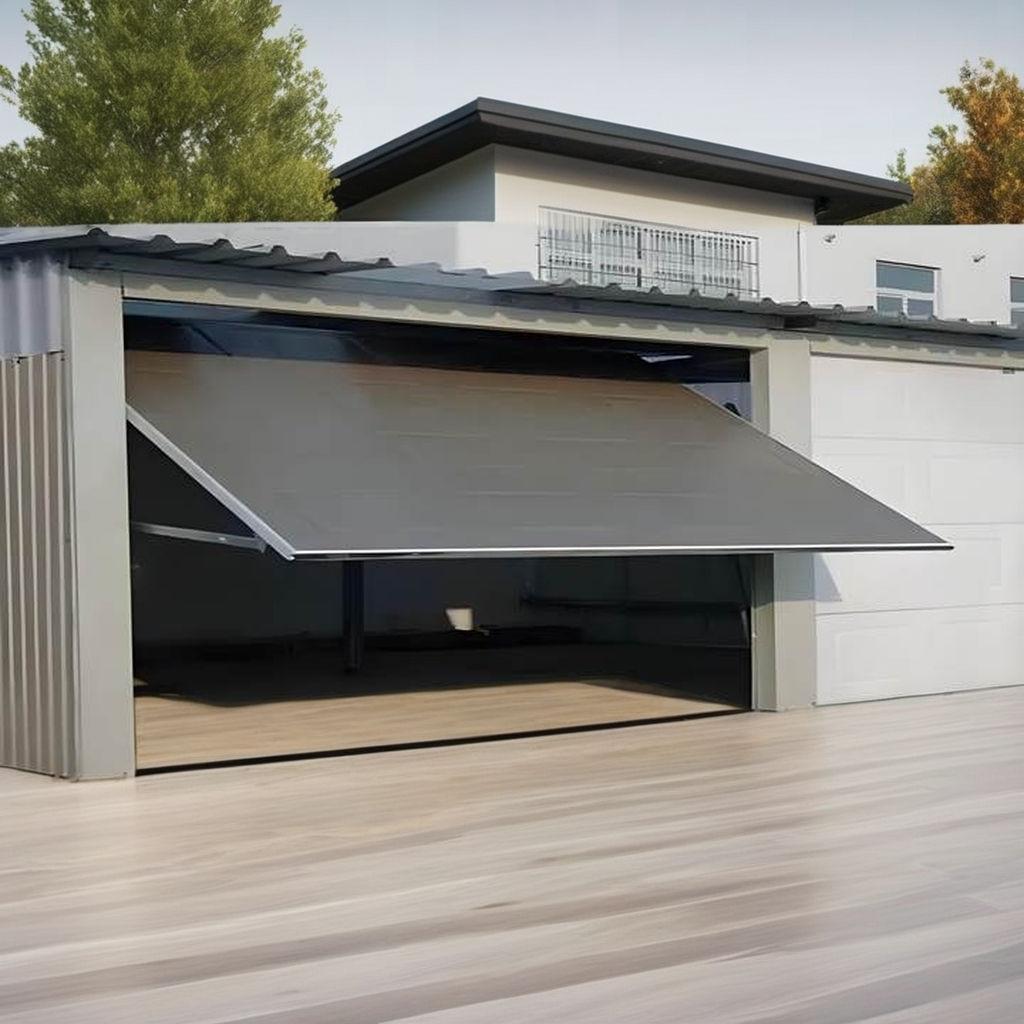
A tilt-up door has a single, unbroken face that swings out and up, so paint placement matters more than panel lines that don’t exist. One way to add depth is to paint the outer frame and any hardware one color, then use a lighter or deeper tone across the main slab. That contrast tricks the eye into reading the door as more structured, even without actual recessed panels.
For a look that feels grounded, try a deep charcoal body with a soft off-white border, or reverse it with a pale sage field and a dark forest green edge. If the door is flanked by brick or stone, pulling a muted tone from those materials for the lower third while keeping the upper portion neutral can soften the overall mass. High-gloss and flat versions of the same hue also give a subtle two-tone effect that changes with daylight.
Don’t ignore the swing arc. Since the door tilts outward, the top edge becomes visible from the street when open—painting the top edge a different shade can create a pleasant reveal. Matte finishes hide fingerprints around the lower grip area, while a semi-gloss trim stays cleaner near the weather seal. Keep the two tones within the same color family if you want restraint, or lean into a sharp contrast like ink blue and warm sand to make the door feel like a deliberate focal point.
Adding Slim Windows Only Where You Need Them
Slim windows don't need to run across every wall. In fact, they work best when you're choosy about placement. A narrow vertical pane at the end of a hallway or beside a staircase brings in daylight without eating up usable wall space. It also keeps the focus on the wall itself, not the opening.
Think about where a full-size window would feel like too much. Next to the stove, above a bathtub, or behind a bed's headboard—those are spots where a slim window can frame a sliver of outdoors while maintaining a sense of enclosure. This approach turns the window into a deliberate design gesture rather than a default hole in the wall.
There's a practical side too. Slim windows often require less structural support and can slip between studs or around pipes and wiring. You get the benefit of natural light without having to tear open an entire facade. Pick two or three key moments, and let those narrow openings do the work.
Quiet Hinges and Hidden Automation for a Clean Look
The first thing you notice is what you don’t hear. A door glides shut without a click, a drawer eases back with a whisper instead of a slam. Quiet hinges do more than reduce noise—they remove the mechanical personality from a room. When soft-close dampers are tucked inside the hinge cup and the adjustment points disappear behind the mounting plate, the hardware stops calling attention to itself. That single change makes a wall of cabinetry read as one calm surface rather than a grid of moving parts.
Hidden automation pushes the idea further. Touch-to-open mechanisms and servo-driven lift systems can be buried inside the cabinet body, leaving no handles, no finger pulls, no protruding rail. A light press on the door front triggers a silent release, and the panel floats open as if it had a mind of its own. Because the electronics are concealed inside the frame, the exterior stays uninterrupted—just the grain of the wood or the smoothness of the lacquer meeting the eye. It turns everyday storage into something closer to a piece of furniture than a utility box.
What makes the combination work is restraint. The goal is not gadgetry but absence: fewer visible seams, fewer sharp sounds, fewer objects jutting into the sightline. In a kitchen or wardrobe designed this way, your attention lands on the material and the light, not on the mechanics. The more the hinges and automation disappear, the more the room feels composed, as if every movement were part of the space’s own quiet rhythm.
How to Size Your Tilt-Up Door for a Wider Opening
When you're planning a wider opening, the first thing to check is the door's maximum width rating from the manufacturer. Most standard tilt-up doors top out around 10 to 12 feet because the single panel becomes heavy and prone to sagging. If you need to go wider than that, you'll likely have to step up to a reinforced steel frame or switch to a multi-panel design that still tilts but uses a truss system.
Height also plays a role in how the door balances. A wider door puts more leverage on the pivot arms and springs, so you can't just scale up the width without adjusting the counterbalance. Measure the clear opening width, then add at least 4 to 6 inches on each side for the track and mounting hardware. That gives you the rough opening size you need before framing.
Finally, think about the driveway approach angle. A wider tilt-up door swings outward as it opens, so the space in front of the opening has to be clear for the full panel arc. If the driveway slopes up toward the building, the bottom edge may scrape. Dry-fit the dimensions with a chalk line on the floor to make sure the arc clears any obstructions before you commit to the opening size.
FAQ
Think beyond basic panels. Recessed grooves, asymmetrical window placement, and a mix of wood and metal can make the door feel bespoke. Adding a continuous handle or hinges with a blackened steel finish creates a furniture-like quality. For a more striking effect, use a single oversized panel with vertical grain cedar and let the natural knots show through a clear sealer.
Absolutely, but the panel proportions matter. Choose a door with horizontal V-groove siding in a muted sage or warm gray, and pair it with minimal aluminum glazing. Avoid decorative overlays; instead, emphasize clean lines and a low-profile track. The tilt-up mechanism actually suits the era because it echoes the clean, functional geometry of mid-century architecture.
A durable combination is a steel frame with an exterior skin of vertical tongue-and-groove cedar, sealed with a marine-grade finish. For coastal areas, fiberglass skins with a wood-look texture resist salt air without warping. Aluminum frames with frosted glass inserts can give an industrial edge but need thermal breaks to prevent condensation in colder months.
Use a row of narrow, horizontally oriented clerestory-style windows near the top of the panel. These let in daylight while blocking sightlines from the street. Alternatively, install sandblasted or reeded glass in a single upper section; it diffuses light and adds a subtle texture that reads as custom rather than off-the-shelf.
Yes, and modern operators handle the weight well if you use a side-mount jackshaft opener. The key is balancing the door properly—custom panels often weigh more than standard ones, so spring tension must be calculated for the exact panel material and window glass. A smart controller with soft-start and soft-stop is worth the extra cost to avoid jarring the tilt mechanism.
Instead of paint, consider a ceruse finish on white oak, which leaves a pale, almost smoky effect while highlighting the grain. For painted surfaces, a matte finish in deep charcoal with a subtle bronze fleck looks more handcrafted than flat black. If you want texture, a wire-brushed surface with a low-sheen clear coat gives the door a tactile quality that catches raking light.
Use a panel made from reclaimed barn wood with a natural clear finish, but reinforce the back with a steel frame to prevent sagging. Add black iron strap hinges and corner brackets for an authentic carriage-house feel. A full-length pull handle with a footed base in matte black iron ties the door to other exterior hardware like light fixtures and house numbers.
Conclusion
A custom tilt-up garage door does more than close off a space—it shifts the whole front elevation. For mid-century homes, a single-slab design keeps the lines honest: no panel breaks, no fake carriage hardware, just one clean plane that lets the original architecture breathe. Pair that restraint with reclaimed wood and black steel, and you get a door with real texture and weight. The wood brings warmth and history; the steel frame sharpens the edges and handles the daily grind. If you want color without losing that simplicity, two-tone paint can work surprisingly well. Keep the outer frame or recessed channel in a darker shade and the main slab in a softer neutral, so the door reads as intentional, not flat.
Placement of slim windows matters more than quantity. A narrow vertical strip near the latch side or a short horizontal band at eye level adds daylight without turning the door into a glass wall. Quiet hinges and hidden automation keep the look clean—no exposed tracks or bulky operators interrupting the facade. For wider openings, sizing is not just about width. You need to account for ceiling clearance, spring tension, and how far the slab travels when tilted up. A wider door often benefits from a slightly thicker panel or reinforced steel edges to avoid flexing over time. All of these choices work together to make the door feel like part of the house, not an afterthought.
Contact Us
Contact Person: Cyril He
Email: [email protected]
Tel/WhatsApp: 8613969697307
Website: https://cqyqgd.en.alibaba.com/