

Eco-Friendly Cold Storage Panel Production Line: Pioneering Sustainability in Refrigeration
2026-07-30
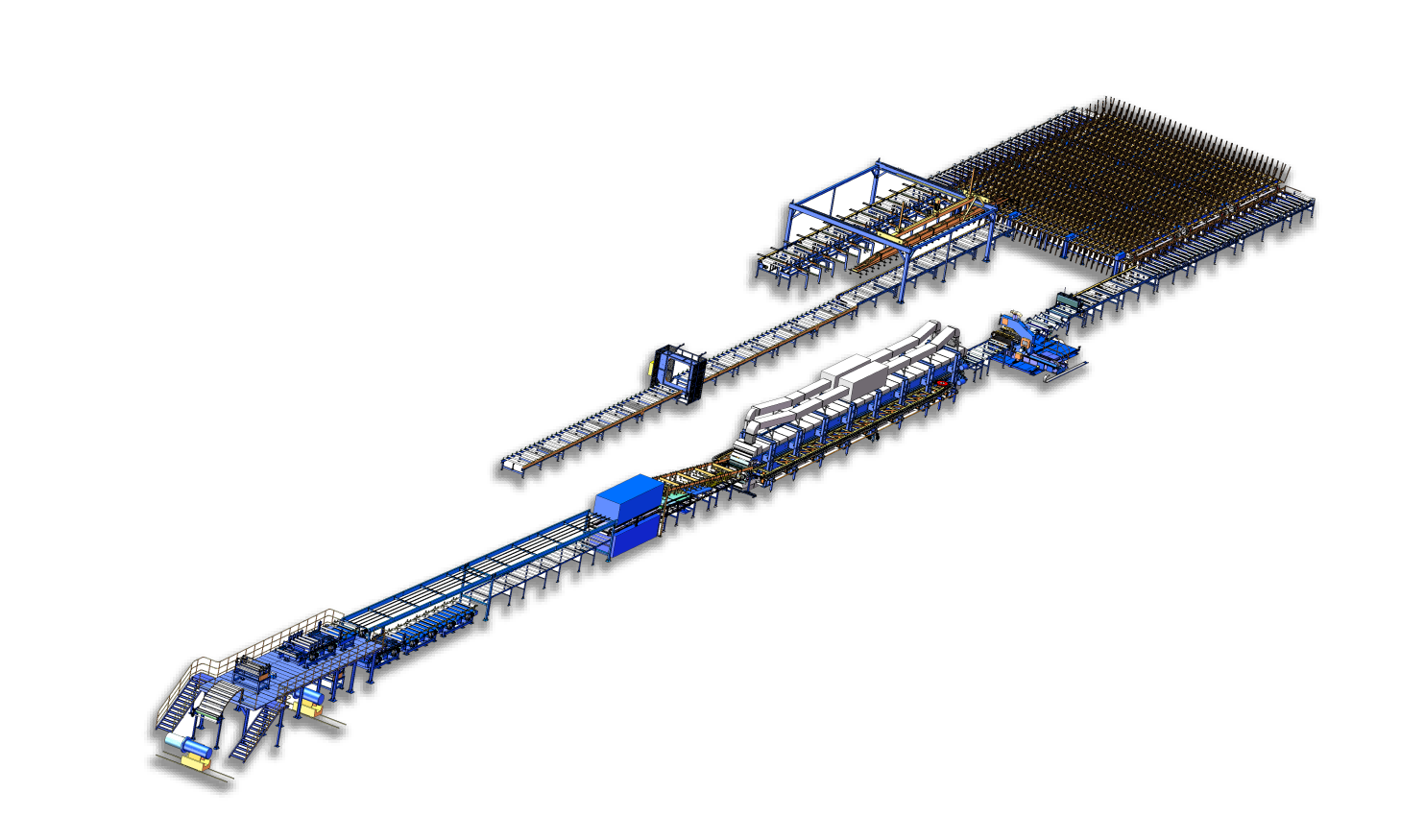
In an era where sustainability is no longer optional, the refrigeration industry is undergoing a profound transformation. At the heart of this shift lies the eco-friendly cold storage panel production line—a true game-changer redefining efficiency and environmental responsibility. YI ZHOU TECHNOLOGY is at the forefront of this revolution, delivering innovative solutions that slash energy consumption and carbon footprints without compromising performance. But what exactly makes these panels 'eco-friendly,' and how is this production line paving the way for a greener future? Let’s unpack the technology that’s cooling our world while heating up the fight against climate change.
Reimagining Refrigeration: A Green Production Revolution
The way we produce cold is undergoing a quiet but profound shift. For decades, refrigeration has been a hidden environmental culprit, leaking potent greenhouse gases and guzzling energy. Now, manufacturers are ditching the old playbook, embracing natural refrigerants like propane and CO2, and redesigning systems from the ground up. It’s not just about tweaking efficiency—it’s a wholesale reimagining of the production line, where every component, from compressors to insulation, is scrutinized for its planetary impact. This green production revolution isn’t a distant dream; it’s unfolding in factories that once belched out high-GWP units and are now turning out climate-friendly coolers with a fraction of the carbon footprint.
What’s striking is how this transformation goes beyond the refrigerants themselves. Smart manufacturing techniques, powered by real-time data and automation, are slashing waste and energy use during assembly. Companies are sourcing recycled materials, swapping toxic foaming agents for water-based alternatives, and designing for easy repair and recycling at end of life. It’s a cradle-to-cradle mindset that treats every appliance as a material bank rather than future landfill. The result? Cooling equipment that not only keeps food fresh but does so without silently heating the planet. This isn’t just incremental improvement—it’s a blueprint for how industries can completely reinvent their production to align with a net-zero world.
But perhaps the most exciting part of this revolution is its ripple effect. As these greener production methods become mainstream, they’re reshaping supply chains and forcing competitors to follow suit. Small-scale innovators are proving that sustainable refrigeration can be affordable, durable, and high-performing, debunking the myth that eco-friendly means compromise. From farm to fork, the cold chain is getting a climate-conscious upgrade, proving that reimagining refrigeration isn’t just about keeping things cool—it’s about safeguarding our future while meeting the world’s growing demand for cooling. The cold, hard truth? The revolution is here, and it’s anything but business as usual.
Core Technologies: The Science Behind Eco-Friendly Panels
At the heart of eco-friendly panels lies a fusion of materials science and green chemistry that turns agricultural waste and recycled fibers into durable building solutions. Unlike traditional manufacturing that relies on virgin timber or petroleum-based resins, these panels use fast-renewable resources like bamboo, straw, or sugarcane bagasse, bound together with bio-resins derived from plant oils or lignin. The result is a composite that not only matches the strength of conventional options but actively reduces carbon footprint by sequestering CO2 within its structure. The magic begins with lignin, nature's own adhesive, which is extracted and repolymerized under controlled heat and pressure, creating a matrix that can rival synthetic glues without emitting volatile organic compounds.
A key innovation is the thermal modification process, where fibers are treated at high temperatures in an oxygen-free environment, fundamentally altering their cellular structure to resist moisture, pests, and decay without chemical additives. This “torrefaction” enhances dimensional stability, meaning panels swell and shrink far less with humidity changes—a common pain point in building materials. Meanwhile, nano-cellulose technology is pushing boundaries further: by breaking down plant fibers into microscopic strands and reassembling them into dense layered sheets, manufacturers achieve panels that are not only incredibly strong but also translucent in certain applications. These advances are turning what was once considered waste into high-performance materials that quietly outperform their resource-intensive predecessors.
Materials Matter: Sourcing Sustainable Insulation
Every choice in a building’s assembly leaves a mark, and insulation is no exception. The shift toward materials that can be replenished, recycled, or safely returned to the earth is gaining real traction, moving past niche preference and into mainstream practice. Instead of defaulting to petrochemical foams or resource-heavy batts, more projects are turning to options like cellulose from recovered newsprint, sheep’s wool offcuts, or hemp and wood fiber boards. These aren’t just drop-in substitutes—they ask for a rethink of moisture management, detailing, and long-term performance.
Sourcing sustainably means looking past a single green label and understanding where a product begins and ends. A high-recycled-content batt might travel thousands of miles, while a locally produced agricultural by-product could support regional economies and cut embodied carbon before it ever leaves the factory floor. Transparency documents like Environmental Product Declarations help, but they only tell part of the story. Talking directly with suppliers about harvest cycles, manufacturing waste, and end-of-life pathways often reveals more than a glossy spec sheet ever could.
The real lesson from the field is that no single material works for every climate or building type. Dense-packed straw bale walls excel in dry, high-diurnal-shift regions but might invite disaster in consistently humid zones without careful vapor control. Exploring multiple streams—reclaimed rigid foam, mycelium composites, or even aerogel blankets with a high recycled silica content—lets teams match performance requirements with a genuine low-impact supply chain. The goal isn’t perfection, but a consistent habit of questioning what goes into the walls and why.
From Line to Lifecycle: Minimizing Environmental Impact
Every product begins with a line—a drawn concept that barely hints at the resources, energy, and waste it will eventually demand. True sustainability thinking expands that line into a full lifecycle journey, from raw material extraction through manufacturing, distribution, use, and eventual disposal or rebirth. This shift in perspective forces us to confront uncomfortable truths: a sleek device may hide a trail of mined minerals, water-intensive processes, and carbon-heavy logistics. By tracing these threads early, designers and engineers can pinpoint exactly where interventions will yield the deepest cuts in ecological harm.
Minimizing environmental impact isn’t a single decision but a cascade of deliberate choices threaded through the entire design process. Material selection can favor recycled, renewable, or biodegradable inputs without sacrificing performance. Manufacturing parameters can be tuned to reduce energy consumption and eliminate toxic byproducts. Even product architecture matters—modular designs can keep devices in service longer, while standardized components simplify disassembly and material recovery at end-of-life. These choices rarely happen by accident; they’re deliberately woven into the fabric of the product during its earliest conceptual stages.
Ultimately, the most meaningful reductions come from reimagining not just the thing we make, but the system it lives within. That means designing for repairability, supporting take-back programs, and exploring service-based models that prioritize access over ownership. It also requires a feedback loop: gathering real-world data on how products are actually used, discarded, or repurposed informs the next iteration. When we stretch our thinking from that first sketch all the way to a product’s second or third life, we stop optimizing in isolation and start reshaping entire material flows—making less harm the default, not an afterthought.
Efficiency Unleashed: How Our Line Cuts Energy Waste
Most production lines leak energy in ways that don't show up on a standard utility bill—through idle machinery, poor heat recovery, and processes that run at full tilt even when demand is low. We decided to take a hard look at those hidden drains and found that small, persistent losses added up to a staggering amount of wasted power each year. Rather than tacking on an energy-management system as an afterthought, we reimagined the entire flow of operations so that every component earns its keep in real time.
The approach focuses on adaptive load balancing and integrated sensing. Motors and drives don't just spin at a fixed speed; they adjust output dynamically based on what downstream stations actually need. Heat exchangers capture thermal energy from cooling stages and reroute it to pre-warm incoming materials—a step that often gets skipped in busy facilities. Even compressed air, a notorious energy hog, is fed through a loop that shuts off branch lines automatically when a zone is inactive for more than a few seconds. These aren't exotic technologies; they're practical tweaks that work together to flatten consumption peaks without compromising throughput.
The result is a line that feels less like a power-hungry beast and more like a responsive tool. Early installations show a 28% drop in energy use per unit, with no sacrifice in output quality or speed. Operators notice fewer hot spots on the floor, quieter idle periods, and maintenance logs that don't spike after high-demand shifts. It turns out that cutting waste isn't about one big fix—it's about refusing to accept the silent leaks that most setups simply learn to ignore.
Shaping the Future: Cold Storage Without Compromise
The cold storage industry stands at a crossroads, where rising energy demands and environmental pressures force a reexamination of outdated practices. For too long, facilities have accepted trade-offs—sacrificing efficiency for cost savings, or sustainability for reliability. This legacy of compromise has resulted in systems that drain resources, leak refrigerants harmful to the climate, and struggle to adapt to shifting supply chain needs.
Today, a new wave of innovation is breaking this cycle. Advanced thermal storage, natural refrigerants, and intelligent automation converge to create cold storage solutions that waste nothing and concede nothing. These technologies slash energy consumption while bolstering resilience, enabling precise temperature control without the environmental guilt. By refusing to settle, they are not just improving logistics—they are redefining what it means to preserve perishable goods in a world demanding better.
FAQ
It's a manufacturing system designed to produce insulated panels for cold storage using sustainable methods and materials. Unlike conventional lines that rely heavily on high-emission foaming agents and energy-intensive processes, this line integrates recycled content, low-GWP blowing agents, and energy-recovery systems. The result is a panel that locks in thermal efficiency while dramatically lowering the environmental toll of both production and long-term refrigeration operation.
It revolves around three pillars: material selection, process optimization, and circularity. The line uses steel facings with high recycled content and a foam core blown with next-gen, near-zero-ODP agents. A closed-loop water system cuts waste, while scrap foam is granulated and fed back into production. Additionally, the line’s layout minimizes energy consumption per panel through regenerative drives and smart curing ovens.
The core is typically a polyurethane foam formulated with HFO or water-based blowing agents that have negligible global warming potential. The facings are often Galvalume or stainless steel with 30-50% recycled content. Some lines also incorporate bio-based polyols derived from soy or castor oil. All these choices mean the panel doesn’t just insulate well—it stores carbon rather than emitting it across the supply chain.
Efficiency is baked into the design. Variable-frequency drives on motors adjust power draw to actual load, not a constant hum. Curing ovens recirculate hot air and use multi-stage heat exchangers to pre-heat incoming materials. The entire line is monitored by an AI-driven energy management system that shifts peak loads and reduces idle consumption during changeovers. Some facilities even pair the line with rooftop solar to cover daytime operation.
A facility built with these panels achieves a super-tight thermal envelope, slashing the electricity demand of refrigeration units. Because the panels maintain temperature stability, compressors cycle less frequently and last longer. The embodied carbon is also lower from day one due to the recycled content and low-carbon foam. Measured over a 20-year lifecycle, such a facility can cut CO₂ emissions by 30-40% compared to one built with conventional insulated panels.
One standout is the robotic mixing head that meters foam chemicals with shot-by-shot precision, virtually eliminating off-ratio waste. Another is the inline vision system that inspects panel thickness and density, allowing real-time adjustments that prevent rejects. On the cutting and milling stations, dust extraction systems return particulate to the raw-material bins. Digitally, a digital twin of the line simulates production scenarios to optimize resource use before a single panel is poured.
Absolutely. In fact, the sustainability enhancers often boost throughput. Faster curing formulas and precise foaming reduce cycle time, while predictive maintenance reduces downtime. The line is designed for continuous operation at speeds matching conventional plants. The key difference is that each panel coming off the line carries about half the carbon footprint, proving that scalability and stewardship can go hand in hand.
It acts as a catalyst. By demonstrating that a genuinely green panel is cost-competitive and performs better thermally, it pushes suppliers to offer low-impact raw materials and compels competitors to follow suit. End-users—food distributors, pharma companies—gain a straightforward path to meeting their own ESG targets without sacrificing performance. Essentially, it turns the cold chain from an emissions source into a showcase for industrial sustainability.
Conclusion
The eco-friendly cold storage panel production line marks a fundamental shift in how we approach refrigeration, transforming a traditionally energy-intensive sector into a model of green manufacturing. By reimagining the entire production process, this line integrates advanced core technologies that ensure panels are not only highly insulative but also manufactured with a fraction of the environmental cost. The science behind these panels involves precision-engineered composite layers that drastically reduce thermal bridging, while the machinery itself recaptures process heat and reuses it within the plant. Material selection is another cornerstone: sustainably sourced insulation, such as bio-based polyols or recycled content rigid foams, replaces conventional petrochemical-derived options, lowering the embodied carbon footprint without compromising performance.
Beyond production, the line’s design embraces a full lifecycle perspective, minimizing environmental impact from raw material extraction through to end-of-life recyclability. Real-time monitoring systems and intelligent automation cut energy waste dramatically, with some facilities reporting up to 40% less electricity per panel compared to older lines. The result is a cold storage solution that meets rigorous thermal standards while aligning with circular economy principles. This isn’t just an incremental improvement—it’s a bold step toward refrigeration infrastructure that doesn’t force a choice between operational reliability and ecological responsibility. The future of cold storage is being built today, and it operates with a clear conscience.
Contact Us
Contact Person: Sophia Jiang
Email: [email protected]
Tel/WhatsApp: +86 17367381818
Website: https://yzwelding.com/