

Energy Storage Cabinet Manufacturer: What to Look for in a Reliable Partner
2026-08-30
When choosing an energy storage cabinet manufacturer, it’s easy to focus on specs alone. Yet a truly reliable partner brings far more than hardware—think engineering depth, responsive support, and a track record that survives real-world demands. That’s where a name like Chang Song enters the picture. But what exactly should you look for beyond the datasheet? In this guide, we’ll unpack the often-overlooked signals that separate dependable manufacturers from risky ones, so your next energy storage project starts on solid ground.
In-House Cell Testing Beyond the Spec Sheet
A datasheet only tells part of the story. We treat printed numbers as a starting point, not a verdict. In our lab, incoming cells are cycled on a matrix of charge and discharge rates plus temperatures that mirror how they will actually be used, not just the single 0.5C at 25°C condition shown in most catalogs. That means cold-soak starts at -10°C, sustained high-current draws in a 40°C enclosure, and partial state-of-charge cycling instead of full 100% depth of discharge. The result is a much clearer picture of usable energy, voltage sag, and heat buildup before the first pack prototype exists.
We also track AC and DC internal resistance over hundreds of cycles, along with physical changes like cell thickness and tab temperature. When a cell underperforms, we open it in a glove box to inspect electrode alignment, electrolyte wetting, and separator integrity. This kind of data rarely appears on a spec sheet, but it is exactly what prevents field failures and lets us match cell selection to actual load profiles rather than relying on published claims.
Enclosure Engineering for Harsh Environments
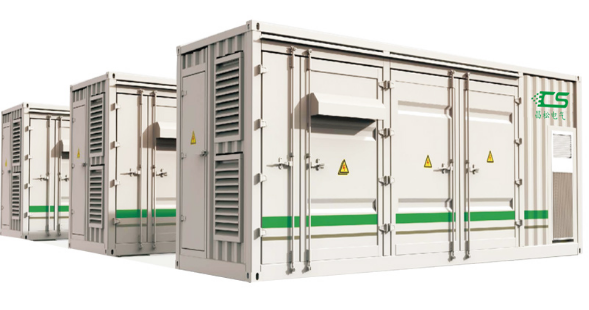
Coastal installations and chemical plants punish standard enclosures quickly—carbon steel can show rust bloom within a few months of exposure to salt spray or acidic vapors. Swapping to 316L stainless or marine-grade aluminum with a chromate conversion coat and powder topcoat buys years, not months. But material choice alone misses the details: mixed metals at fastener points create galvanic couples, so either match the hardware to the shell or isolate them with nylon washers.
Dust and water rarely force their way through flat panels; they find door seams, cable glands, and breather openings. Closed-cell neoprene or silicone gaskets work well if the compression is even, but the real trick is managing pressure differentials. As internal temperatures swing, a sealed box tries to breathe through its own gaskets, pulling moisture past the seal. A small breathable vent with a PTFE membrane lets air equalize without letting in fine particulates or driven rain.
Extreme heat and cold shift the design from a simple metal box into an active system. In desert or furnace-adjacent locations, passive cooling fails and either an air-to-air heat exchanger or a closed-loop air conditioner becomes necessary—just make sure the condenser coil is coated for the same corrosive atmosphere. For arctic or cryogenic settings, strip heaters and insulation keep electronics above dew point, but condensation risk moves to cable entries, so each entry needs a properly torqued compression fitting or sealed conduit.
Custom Battery Management Software, Not Just Hardware
It’s easy to treat a battery pack as a collection of cells and busbars, but the intelligence that keeps it safe, efficient, and long-lived lives in software. Off-the-shelf battery management systems often lock you into fixed thresholds and generic algorithms that ignore your specific load profile or chemistry mix. Custom firmware and control logic, on the other hand, can be tuned to the exact voltage curves, temperature gradients, and aging patterns of your cells. That means the hardware becomes a platform, while the software defines how the battery actually behaves under real-world conditions.
A truly tailored approach goes beyond simple voltage monitoring. We can embed state-of-charge and state-of-health estimators that learn from cycle history, adjust balancing strategies on the fly, and coordinate thermal management with the rest of the vehicle or stationary system. Communication interfaces can be built around your existing CAN, Modbus, or proprietary protocols, so the battery doesn’t just report data — it participates in the system’s decision-making. This level of integration is rarely possible with a one-size-fits-all BMS.
Instead of forcing your application to adapt to a hardware-defined battery, the software layer lets the battery adapt to your application. Whether you're dealing with aggressive peak shaving, cold-start cranking, or overnight solar storage, the control parameters can evolve as field data accumulates. That shift from rigid hardware defaults to adaptive, application-specific code is what turns a good battery pack into a dependable, long-term asset.
End-to-End Supply Chain Visibility
Real end-to-end supply chain visibility goes beyond tracking shipment milestones. It connects raw material movements, production schedules, warehouse capacity, and customer demand signals into a single operational picture. When a purchase order slips or a line runs low, that change should immediately adjust downstream plans without someone having to chase updates in spreadsheets.
Teams that operate with this level of visibility tend to spot problems while they are still manageable. A delayed container from one supplier can be matched against safety stock levels and upcoming production orders to see whether a stockout is actually imminent, or whether a simple re-sequencing of work orders buys enough time. The same logic applies to demand shifts: if a major customer reduces an order, the system should flag the excess inventory exposure and let procurement pause related inbound deliveries.
What makes this approach different is not the volume of data, but the way it connects decisions across functions. A transportation delay is not just a logistics issue; it has cost implications for finance, service implications for sales, and planning implications for operations. The more these interdependencies are visible in real time, the less time teams spend reconciling conflicting reports and the faster they can respond as one unit.
Production Line Redundancy to Avoid Single Points of Failure
When a single conveyor motor seizes up, the entire assembly line grinds to a halt unless you have a spare already bolted in place and wired to the same control circuit. Redundancy in production isn't about duplicating every nut and bolt—it's about identifying the components whose failure brings the most expensive consequences and quietly building a second path around them.
The practical approach starts with mapping every dependency, from pneumatic valves to barcode scanners, then asking what happens if each one dies mid-shift. A redundant design might mean running two smaller air compressors in parallel instead of one large unit, or installing dual ethernet switches so a network card failure doesn't blind the whole line. The trick is making the backup engage automatically, without an operator noticing anything beyond a warning light.
But redundancy only earns its keep if it is exercised regularly. A standby pump that hasn't spun in nine months may fail the moment you need it, usually due to seized bearings or dried-out seals. Schedule monthly switch-over tests, log the results, and treat any hiccup during failover as seriously as a full production stop. Otherwise, the redundancy you paid for becomes little more than expensive decoration bolted to the floor.
Post-Installation Remote Diagnostics and Updates
Once the system is live, the real test begins. Remote diagnostics let us pull performance logs, error traces, and usage patterns directly from the installed environment without needing physical access or screen-sharing sessions. If a module starts misbehaving in a specific customer setup, we can often isolate the fault to a particular configuration or network condition before the user even files a ticket.
Updates follow the same path. Rather than shipping a monolithic patch that forces downtime, we roll out incremental changes behind the scenes. The device or application checks in on a schedule, compares its state against a signed manifest, and applies only what's missing. Failed updates are cached and retried at the next low-activity window, so a flaky connection doesn't leave the installation half-patched.
What makes this approach stick is the feedback loop. Every diagnostic snapshot feeds back into the update logic, adjusting rollout speed and flagging devices that behave unusually after a new version lands. Teams can pause a distribution instantly if an unexpected spike appears, limiting impact to a handful of installations instead of the entire fleet.
FAQ
Beyond basic ISO 9001, focus on UN38.3 for battery transport safety, IEC 62619 for industrial battery safety, UL 9540 for energy storage system safety, and UL 9540A for thermal runaway fire testing. If the cabinets will connect to the grid, look for IEEE 1547 or local grid code compliance. CE and FCC marks also signal regional conformity. Don't just accept a list of certificates—ask for certificate numbers and test report summaries to confirm they're current and not borrowed from another company.
Ask whether they use air cooling, liquid cooling, or phase change materials, and request temperature control data under extreme ambient conditions. A competent manufacturer will provide temperature difference curves within battery clusters (ideally below 5°C) and show thermal simulation models or third-party test results. Also inquire about thermal runaway propagation suppression, such as aerosol fire suppression, explosion vents, and thermal barriers. If they only say they use good materials without concrete data, be wary.
A reliable partner typically offers at least a 5-year product warranty and a 10-year performance guarantee (e.g., remaining capacity not less than 70%). Check whether the warranty covers core components like batteries, PCS, and BMS, or only the cabinet enclosure. Also look at response time commitments: Can they provide on-site support within 48 hours? Do they have local spare parts depots? Avoid vague phrases like lifetime maintenance and insist on clear contractual terms.
Different projects have different requirements for dimensions, voltage, communication protocols, and protection ratings. A strong manufacturer can deeply customize electrical design, structural layout, and software protocols, not just change the paint color. To test this, submit a non-standard request (such as a specific altitude or anti-corrosion requirement) and see if they respond with a feasibility analysis, cost impact, and delivery timeline instead of just saying no problem.
Ask if they use fully automated laser welding, air tightness testing, end-of-line (EOL) testing, and aging tests. The key is whether they perform 100% capacity testing and insulation withstand voltage testing on every cabinet, not just sample inspection. Request a factory visit or production video, and observe whether they have a material traceability system like QR codes linking to cell batches. If they lack even a basic MES, quality control may be left to chance.
Directly ask which cell supplier they use—first-tier brands like CATL, BYD, or EVE are more dependable—and request cell datasheets and cycle life data. For the BMS, check for third-party validation of SOC/SOH estimation accuracy, balancing strategy, and protection functions (overcharge, over-discharge, over-temperature, short circuit). Also ask whether the BMS supports remote monitoring and OTA updates, as this affects long-term maintenance efficiency.
Don't just rely on website case studies. Ask for contactable customer references and request operational data from at least three similar-scale projects, such as annual failure rate and system availability. If possible, visit a project that has been running for over two years. Also check public industry reports or tender award records to confirm they have actually delivered large-scale storage projects, not just sold a few prototype units.
Prices far below market average, inability to provide original third-party certifications, vague answers to technical details, unrealistic delivery promises, refusal to allow factory visits, and ambiguous contract terms (especially regarding liability allocation and compensation caps). Another warning sign is frequent changes of brand name or legal entity, which may indicate legal disputes or avoidance of after-sales obligations. If the conversation is dominated by marketing talk instead of technical substance, proceed with caution.
Conclusion
Finding a storage cabinet partner who only touts datasheet numbers is a red flag. You want a manufacturer that runs its own cell-level testing under load, temperature swings, and partial state-of-charge cycles—because real-world performance rarely matches the spec sheet. Equally important is how the enclosure handles the ugly stuff: salt spray, dust, thermal shock, and UV exposure. A robust cabinet isn't just a metal box; it's an engineered barrier that protects cells and electronics when deployed near coastlines, deserts, or industrial sites. And don't overlook the software layer. Custom battery management logic, tuned to your specific use case, can extend cycle life and prevent failures that off-the-shelf hardware alone won't catch.
Beyond the product itself, a reliable partner shows you the entire supply chain—from cell sourcing to final assembly—so you know there are no hidden bottlenecks. Production line redundancy matters too: if one line goes down, another should pick up the slack without delaying your order. After installation, the relationship shouldn't end. Look for a manufacturer that offers remote diagnostics, firmware updates, and performance tuning over the air. That kind of post-deployment support turns a one-time purchase into a long-term asset, and it separates true partners from vendors who disappear once the invoice is paid.
Contact Us
Contact Person: Tonglun Chen
Email: [email protected]
Tel/WhatsApp: 8618906642555
Website: https://www.cncsele.com