

Formwork Systems Factory Production Standards That Ensure Reliable Concrete Structures
2026-11-16
Most contractors never see the factory floor where their formwork is made—but that’s exactly where concrete structures either gain their strength or inherit hidden flaws. Production standards for formwork systems are more than quality control; they’re the blueprint for reliability. GETO has built its reputation by treating every weld, tolerance, and surface finish as a load-bearing decision. This article explores the factory standards that keep concrete structures standing decades later.
Production Jigs That Hold Every Panel to the Same Coordinates
Getting every panel to sit in the exact same spot used to mean a lot of fiddling with tape measures and carpenter's pencils. A production jig changes that completely. Once the jig is built and locked down, it takes the guesswork out of the equation—each panel drops into place against the same stops and rests, with no drifting between runs.
The real trick is in the fixed reference points. Instead of aligning each workpiece from scratch, the jig provides physical edges and pins that match the panel's geometry perfectly. Even a small locating block or a spring-loaded clamp can force consistency down to a few thousandths of an inch. That kind of repeatability matters when you're assembling dozens of identical units or pre-drilling holes that need to line up later.
Beyond accuracy, these jigs save a surprising amount of mental energy. Workers don't have to re-interpret drawings or second-guess their measurements—the jig already encodes the correct coordinates. The result is less scrap, faster changeovers between batches, and a final product where every panel lines up exactly as designed, from the first piece to the last.
Batch-Level Steel Certification Instead of Generic Mill Reports
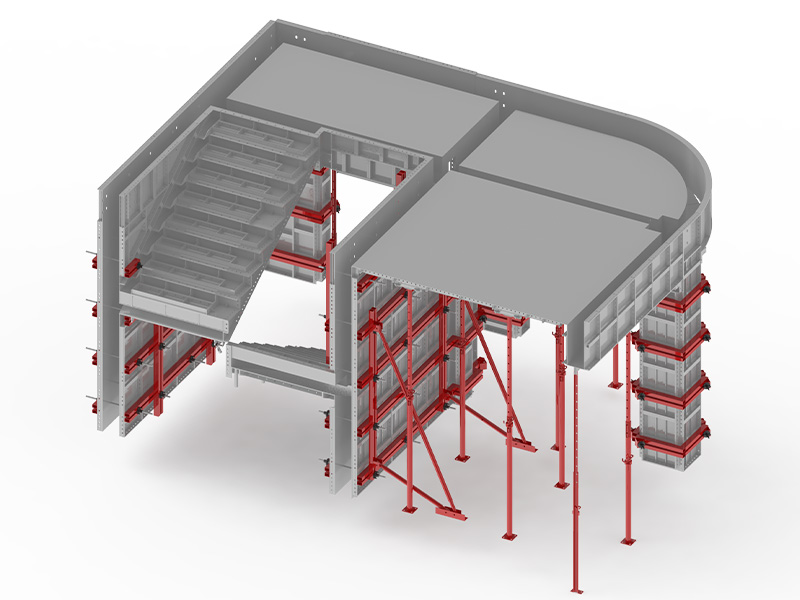
Batch-level steel certification changes the conversation from “this should be fine” to “here is exactly what you received.” Instead of a generic mill report that covers an entire production window, the documentation follows a specific heat or lot number. That means the chemical composition, tensile strength, yield point, and elongation values all correspond to the actual bars, plates, or sections sitting on the delivery truck.
The practical benefit shows up during fabrication and inspection. A welder can check the heat number stamped on a beam, pull the matching batch certificate, and confirm the carbon equivalent before striking an arc. An inspector can verify impact test results for a particular batch rather than relying on a broad range printed in a catalog. This direct link between paperwork and physical material removes much of the guesswork.
For projects where traceability is a contractual requirement, batch-level certification also simplifies the audit trail. Every piece can be traced from the mill, through the service center, and into the final assembly without digging through stacked generic documents. It costs a bit more to request and store these records, but the confidence they provide is worth far more than the administrative effort.
Weld Seam Inspection Routines Applied After Cooling, Not Before
Waiting until the weld has fully cooled before running inspection routines changes what you actually see. Thermal contraction can mask or mimic discontinuities while the metal is still hot, so checking too early often leads to false readings or missed flaws. By letting the joint return to ambient temperature first, inspectors get a stable baseline where cracks, porosity, and undercut stand out without the noise of residual heat distortion.
Many shops build this cooling period directly into their workflow, treating it as a mandatory pause rather than an optional delay. The exact hold time depends on material thickness and alloy, but the principle stays the same: do not trust a weld seam inspection that happens while the part is still warm. Once cooled, the inspection tools—whether ultrasonic, dye penetrant, or visual—can operate under conditions they were calibrated for, giving repeatable results that hold up in later audits.
Controlled Shot Blasting to Give Formwork a Bond-Breaking Texture
Controlled shot blasting is often associated with heavy surface prep, but on formwork it takes on a quieter role. By firing fine angular grit at a shallow angle, the blast head skims the form face just enough to break the skin tension. The result is a matte, slightly open texture that no longer locks onto fresh concrete the way a polished or chemically sealed surface does.
The key difference comes from restraint. Instead of chasing deep profile readings, operators keep air pressure low and pass speed steady. A light, uniform etch works as a mechanical bond-breaker, so stripping relies less on release agents and more on the physical separation created by the texture. That shift reduces residue buildup on the forms and keeps the concrete face clean, without the oily sheen that chemical-only systems can leave behind.
On steel or high-density overlay plywood, this method is repeatable if the blast pattern is mapped before production starts. Overlapping passes, consistent standoff distance, and a fresh batch of grit all contribute to a texture that feels identical from one panel to the next. Over time, crews learn to read the surface by touch more than by gauge, which turns a rough preparatory step into a predictable part of the pour cycle.
Full Assembly Dry Runs Before Panels Receive Protective Coating
Before any protective coating touches a panel, the entire assembly is put through a complete dry run. This means every bracket, fastener, cable, and adjacent module is temporarily fitted together without adhesives, sealants, or the final coating itself. The goal is to expose any hidden interference, misalignment, or tolerance stack-up that would otherwise be masked once the coating is applied. By catching these issues now, the team avoids costly rework after the panels are already finished.
The dry run is not just a quick visual check. Technicians torque fasteners to spec, route wiring harnesses through their intended channels, and cycle any moving parts through their full range of motion. Because there is no protective layer yet, it's easy to mark adjustment points, trim excess material, or swap out a bracket that sits a millimeter too high. Every change is logged and verified before the assembly is disassembled again for coating.
Once the dry run passes without a single binding point or loose connection, the panels are released for their protective coating. This sequence might seem like extra work upfront, but it prevents the far more expensive scenario of discovering a fit problem after the coating has cured. Coated panels are not only harder to modify without damage, but any scratch or rework means the entire protective layer must be stripped and reapplied. The dry run keeps that from ever happening.
Load Deflection Limits Set Tighter Than Code Minimums
Many engineers choose to impose deflection limits that go well beyond the baseline requirements found in model codes. A common example is setting a live-load deflection ceiling of L/480 or L/600 for floor beams supporting brittle partitions, even when the applicable code permits L/360. This tighter threshold reduces the chance of visible cracking in gypsum board and keeps door frames from binding under everyday use.
The reasons often stem from serviceability problems that building codes leave untouched. Code minimums primarily target safety and collapse prevention, not occupant comfort or long-term aesthetics. By limiting total load deflection to a smaller fraction of the span, designers can control floor bounce, reduce the perception of vibration, and avoid callbacks related to sagging ceilings or misaligned cabinetry.
In practice, tightening deflection limits adds only a modest increase in member depth or reinforcement and usually pays for itself through fewer post-construction complaints. For long-span steel beams or concrete flat plates, specifying L/600 for superimposed dead load plus live load may change the governing design condition from strength to stiffness, leading to sections that are deeper but more predictable in service.
FAQ
Panel flatness is held to tight limits in production—often within ±0.5 mm per meter. That prevents bulging or lippage at joints, so the concrete surface comes out even and needs less patching after stripping.
Load-bearing steel frame joints are welded with certified full-penetration processes. Each batch goes through visual checks and ultrasonic spot testing to catch undercut or porosity before assembly.
Exposed panel edges take repeated impact during handling and pouring, so edge protection is built into the production line rather than left as an afterthought. Machined edge profiles or protective coatings keep panels dimensionally stable over dozens of pours and reduce chipping that would mark the concrete.
Surface coatings are applied in controlled indoor conditions, with specified dry film thickness measured on every production lot. This gives a uniform release surface so concrete doesn't stick unpredictably and color variation stays low.
Panels and connecting components are checked against master jigs rather than relying only on drawings. Diagonal measurements, tie-hole positions, and stacking lugs are verified, and any deviation beyond 1 mm on critical interfaces triggers rework or scrap.
Production samples undergo static and cyclic load tests that simulate concrete pressure, including worst-case pour rates. Deflection and residual deformation are recorded; only designs that stay within allowable limits are released for series production.
Every batch of steel, plywood, and coating carries a heat or lot number linked to the final panel serial. If a defect appears on site, the factory can isolate the affected range quickly and adjust the process, keeping recurring failures rare.
Connections and tie points are designed for repeated assembly loads, and factories run accelerated wear tests on hinges, wedges, and clamps. Replacement intervals are set from test data, so panels remain safe and accurate through their intended service life.
Conclusion
At the heart of reliable concrete structures is a factory floor where dimensional drift is simply not tolerated. Dedicated production jigs lock every panel into the same coordinate set, so a formwork face poured in one shift mirrors the next without accumulated variation. The steel feeding those jigs carries batch-level certification, not a generic mill report; each heat is traceable to its actual mechanical and chemical properties, which matters more than most engineers realize when panels are expected to survive repeated reuses. Weld seam inspection, too, follows a stricter rhythm—checks happen only after the metal has cooled and stabilized, catching micro-fractures and residual stress that a hurried post-weld glance would miss.
Surface preparation gets equal attention. Controlled shot blasting imparts a uniform, bond-breaking texture that lets concrete release cleanly without scarring the panel or leaving patches behind. Before any protective coating is applied, full assembly dry runs expose misalignments, binding corners, or tolerance stack-ups that would otherwise hide under paint. Finally, load deflection limits are set considerably tighter than baseline code minimums. This means fewer visible deformations under fresh concrete pressure, sharper edge lines on the finished structure, and a longer service life for the formwork itself. Together these production habits add up to something simple: concrete that comes out straight, dense, and trustworthy—poured from forms built with the kind of precision that codes alone cannot demand.
Contact Us
Contact Person: Quanhui Nian
Email: [email protected]
Tel/WhatsApp: 8618070545691
Website: https://www.getoglobal.com/