Galvalume Company: Your Partner for Durable Steel Roofing and Cladding
2026-10-01
Every roof eventually meets the weather. The question is whether it fights back or quietly gives in. For architects and builders tired of premature rust and peeling coatings, the search for durable steel roofing and cladding often leads to one name: LANYUN. As a Galvalume company that treats corrosion resistance as a science, not a slogan, we do things a little differently. Here's a look at what that means for your next project.
How Galvalume Steel Stands Up to Coastal Salt and Industrial Fallout
Coastal salt spray and industrial fallout attack metal through different chemistries, but both tend to concentrate at the same weak points: cut edges, fastener holes, and scratches. Galvalume handles this by pairing a dense aluminum-rich top layer with a zinc-rich base. The aluminum portion forms a tightly bonded oxide film that resists chloride penetration from sea air and slows the acidic attack common near heavy industry. The zinc underneath stays reactive enough to provide sacrificial protection where the coating is breached, so corrosion does not tunnel under the surface as quickly as it does with conventional galvanized steel.
At a cut edge or deep scratch, galvanic current shifts toward the exposed steel because the zinc in the nearby coating is more active. That means the coating sacrifices itself in a controlled, lateral pattern rather than allowing deep pitting to take hold. The small amount of silicon in the alloy helps the coating remain uniform during hot-dip processing and reduces brittleness at the steel-coating interface, which is valuable in coastal areas where temperature swings and salt-laden winds combine to stress roofing and cladding.
In long-term coastal and industrial exposure, Galvalume typically shows shallow, widespread white rust rather than the dark, pitting red rust that signals structural loss. The aluminum barrier keeps the surface from developing the thick, flaking zinc corrosion products often seen on galvanized panels in marine environments. Still, no coated steel is immune. Fastener selection, drainage design, and avoiding contact with copper or treated lumber have a noticeable effect on how long the coating remains protective once airborne salt and industrial particulates settle on the surface.
Roofing and Cladding Panels Cut to Fit Your Building, Not a Stock Size
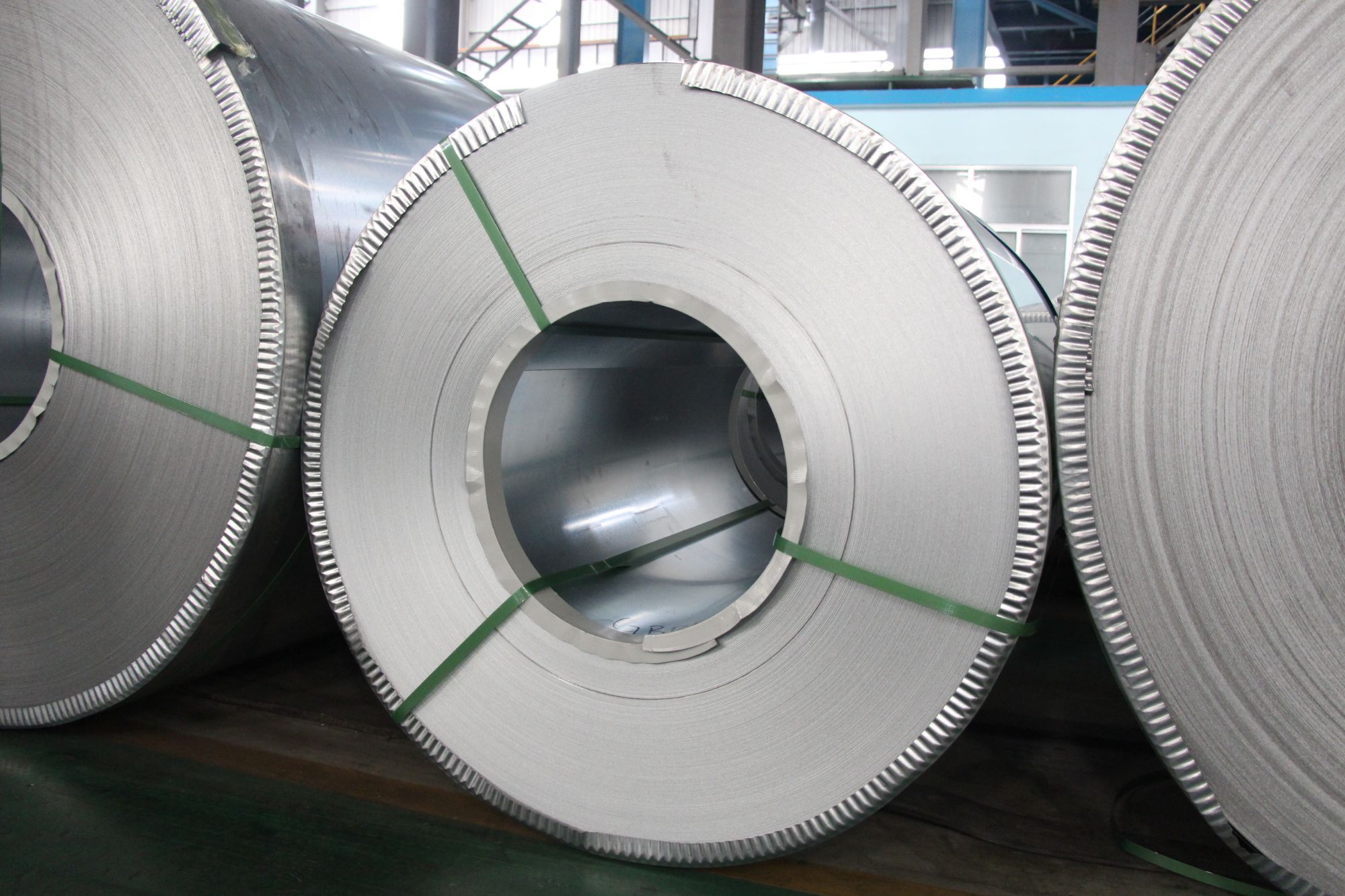
When you order panels from us, we don't expect your building to match a predetermined dimension. Each sheet is measured and cut specifically for your roof or wall profile, so the pieces arrive ready to place.
That means fewer gaps, less on-site trimming, and a cleaner finish across the entire envelope. You also avoid the compromise of working with off-the-shelf lengths that rarely align with your actual structural grid.
From complex eaves to stepped facades, the cutting process follows your drawings directly. Nothing is forced into a generic module, and the result is a tighter fit with fewer exposed edges and a more intentional look.
The Coating Chemistry That Keeps Rust From Getting a Foothold
Most people assume a coat of paint stops rust simply by keeping water and oxygen away from the steel underneath. That physical barrier matters, sure, but it's rarely enough on its own. In a high-performance anticorrosion coating, the chemistry does the heavy lifting. Compounds like zinc phosphate or calcium-exchanged silica are milled into the resin. When moisture seeps through microscopic pores, these inhibitors slowly dissolve and migrate to the metal surface. There they react with the first traces of iron ions to form an extremely thin, insoluble passive film. This film blocks the anodic half-reaction—the step where iron atoms lose electrons and slip into solution as rust. Without that electrochemical foothold, the corrosion cycle stalls before it can spread under the paint film.
Zinc-rich primers take a different route. Instead of trying to pacify the steel, they make the coating itself sacrificial. The primer is loaded with a high volume of metallic zinc dust, often above 80 percent by weight in the dry film. Because zinc is more electronegative than iron, it corrodes preferentially whenever moisture bridges the gap between coating and substrate. The steel becomes the cathode and stays protected even at scratches or small pinholes. As the zinc corrodes, it also produces dense corrosion products—zinc oxide, zinc hydroxide, and zinc carbonate—that pack into the coating's pores. Over time, this self-sealing effect reduces the primer's permeability far below what the original resin could achieve alone.
There's also a quieter layer of chemistry working at the interface. Organosilane adhesion promoters bond covalently to both the metal oxide surface and the organic resin, forcing water out of the boundary layer where delamination usually begins. In newer formulations, rare-earth salts and organic inhibitors replace older chromate pigments, offering similar passivation without the toxicity. Some coatings now embed these inhibitors inside pH-sensitive microcapsules. When corrosion starts, local pH shifts trigger a controlled release exactly where the damage is occurring. It's a shift from passive barrier to responsive system—one that waits for the first sign of rust chemistry and answers it before a visible blister ever forms.
Why Builders Choose Galvalume for Low-Maintenance, Long-Life Envelopes
Builders who have dealt with rust bleeding through painted steel or edge corrosion on standard galvanized panels know that maintenance costs can quietly eat into margins. Galvalume changes that equation. The coating is roughly 55% aluminum, 43.4% zinc, and 1.6% silicon by weight, and that mix creates a dense, tightly bonded barrier that resists oxidation far longer than conventional galvanized coatings in the same thickness. On roofing and wall panels, cut edges and fastener penetrations stay stable for decades, which means fewer warranty callbacks and less time spent chasing surface rust after the first few seasons.
The low-maintenance argument is not just about corrosion resistance—it is also about how the material behaves under thermal movement. Galvalume panels hold their shape well, and the coating does not form the same kind of thick, flaky zinc carbonate layer that can dull or streak a building’s exterior. Builders in coastal, agricultural, or high-humidity regions often choose it because the aluminum-rich layer resists chloride and ammonia attack better than zinc alone. A rinse from normal rainfall is usually enough to keep the surface looking clean, so property owners are not locked into an aggressive wash-and-recoat schedule.
For long-life envelopes, the real payoff comes after year ten. Many standard galvanized panels start showing visible edge rust or paint adhesion loss by that point, especially where panels were field-cut. Galvalume’s silicon content helps the coating flow evenly over sheared edges during manufacturing, giving a measure of cut-edge protection that zinc-only coatings struggle to match. That translates into a building skin that can easily last 40 years or more without major refurbishment. For builders, that is a selling point that holds up on paper and on the jobsite—fewer repairs, less repainting, and a consistent finish that does not fade into a patchwork of touch-ups.
Designing Steel That Stays Put Through Snow Loads and Heat Waves
Designing steel that stays put under both snow loads and heat waves means treating thermal movement and gravity loads as a single, interacting problem. On a hot day, roof beams and columns expand; when a winter storm dumps wet snow on the same structure, the added weight tries to push those expanded members into new positions. If the connections are too rigid, the combined stress can crack welds or tear bolt holes. Engineers often counter this by detailing slotted connections at beam ends, letting the steel breathe through daily temperature swings while still transferring the full snow load downward.
Material choices also play a quiet but critical role. Steels with a lower coefficient of thermal expansion, or coatings that reflect solar radiation instead of soaking it up, reduce the peak temperature a frame will reach during a heat wave. That lowers the expansion force before any snow ever lands. At the same time, roof purlins and girts are upsized or spaced more closely in regions with heavy, drifting snow, so that a single overmatched member cannot start a progressive collapse when the next thaw refreezes into ice.
The goal is not to make the structure perfectly rigid, but to give it controlled places to move. Sliding bearings under roof decking, bolted clips with oversize holes, and braced bays that resist lateral drift while allowing vertical slip are common details. By accepting that steel will expand in a heat wave and deflect under snow, the design keeps both forces from working against the connections. The result is a building that stands through a summer scorcher and the snowiest week of the year without needing constant repairs.
A Supplier Who Treats Your Project Like Their Own Reputation Depends on It
When a supplier's name is on the line, every decision shifts from "good enough" to "exactly right." That's the standard here. Your project isn't just another order in the queue—it's treated as a direct reflection of the team behind it. Delays get flagged before they become surprises. Materials are checked twice, not because a checklist says so, but because someone in the workshop genuinely cares how the final product speaks for them.
This mindset changes how problems are handled. Instead of pointing fingers, the supplier digs in and fixes the issue fast, often before you've even noticed it. Communication stays honest; if a specification needs adjusting, you'll hear a clear recommendation with reasoning, not a vague promise. That level of ownership is rare, and it's the reason clients keep coming back for the next build.
At the end of the day, your project's success is the only proof that matters. No flashy mission statements—just work that would pass the "would I put my own reputation on this?" test. That's the filter every order goes through, from first sketch to final delivery.
FAQ
Their panels use a 55% aluminum-zinc alloy coating that resists corrosion up to four times longer than standard galvanized steel. The company also runs in-house salt spray testing and thickness checks on every batch, so you get consistent performance without relying on third-party claims.
The aluminum in the coating forms a tough, self-healing barrier at cut edges and scratches, while the zinc provides sacrificial protection at exposed areas. Together they prevent rust from creeping under the paint film, which is why Galvalume roofs often last 40 years or more in coastal and industrial environments.
Yes, the substrate works equally well for both applications. For roofing, it handles thermal movement and hail impact without micro-cracking; for wall cladding, its smooth spangle finish gives a clean matte look that takes most architectural paint systems without primer issues.
Agricultural buildings, warehouses, and coastal homes see the biggest upside. The coating shrugs off ammonia from livestock, salt spray near the shore, and heavy condensation cycles inside metal shops. It also performs well on low-slope roofs where water tends to pond longer.
They supply not just the panels but also matching flashings, screws with the same coating, and a detailed installation manual. Their technical team answers layout questions by phone or email without pushing you to their own installers, and they offer cut-to-length orders so you don't waste material on site.
The steel base is fully recyclable, and the aluminum-zinc coating contains no lead or hexavalent chromium. Because the material lasts decades without repainting, you avoid the frequent maintenance coats that release VOCs. At end of life, the scrap value is higher than painted galvanized steel, which encourages recycling.
Very little beyond keeping debris off the surface and clearing gutters. Unlike painted panels, the coating doesn't chalk or fade, so there's no need to repaint. A simple rinse with water every couple of years in dusty or salty areas prevents buildup that could trap moisture against the seams.
Galvalume's aluminum-zinc alloy provides much better edge protection and heat reflectivity than pure zinc coating. In most outdoor exposure tests, Galvalume outlasts galvanized by a factor of two to four. The trade-off is that uncoated Galvalume is not recommended for direct contact with concrete or certain treated woods, so you need a barrier layer in those situations.
Conclusion
Galvalume Company approaches steel roofing and cladding as more than a product—it's a defense system for buildings in harsh environments. The alloy's coating chemistry creates a tight barrier against the kind of corrosion that coastal salt spray and industrial fallout usually exploit. Instead of relying on a single sacrificial layer, the coating balances aluminum's resistance with zinc's galvanic protection, so rust rarely gets a foothold even at cut edges or scratches. Builders who work near the ocean or downwind of factories consistently report that panels from Galvalume keep their appearance and structural integrity long after conventional materials would show pitting or edge creep. That reliability translates directly into lower maintenance budgets and fewer tenant complaints.
What sets the company apart is its refusal to treat roofs as off-the-shelf items. Panels are cut to the specific dimensions of each building, eliminating the wasteful field trimming and awkward splice points that plague stock-size orders. This tailored approach also supports design for extreme weather—whether a roof needs to shed heavy snow loads or resist thermal expansion during heat waves, the steel is specified and formed to stay put. Underpinning all of this is a supplier mindset that treats every project as a direct reflection of its own name. The result is a building envelope that performs quietly for decades, backed by a partner who cares about the details as much as the owner does.
Contact Us
Contact Person: Nia
Email: [email protected]
Tel/WhatsApp: +86 18954360337
Website: https://www.sdppgi.com