

Inside a Laser Safety House Factory: How Protective Enclosures Are Built for High-Power Lasers
2026-06-03
High-power lasers demand enclosures that are more than just metal boxes. Inside a laser safety house factory, precision engineering meets rigorous testing to create barriers that protect both operators and equipment. LASERPAIR stands at the forefront of this critical manufacturing process.
Raw Materials, Refined Purpose: Selecting the Right Alloys and Composites
The journey from raw ore to a finished component is rarely straightforward. Every alloy and composite starts with a messy, elemental heritage—iron from hematite, aluminum from bauxite, carbon fiber from polyacrylonitrile. But what transforms these source materials into something useful is the deliberate infusion of purpose. Selecting the right metal matrix or fiber-reinforced polymer isn't just about tensile strength or thermal conductivity on a datasheet; it's about interrogating the operational environment. A part destined for a marine atmosphere, for instance, demands more than just corrosion resistance on paper—it needs a material that has survived salt-spray testing without developing micro-pitting that might propagate under cyclic loads. Similarly, a composite for an aircraft wing spar isn't just carbon fiber and epoxy; it's a specific lay-up sequence, cure cycle, and fiber volume fraction that emerged from countless autoclave runs, each failure teaching engineers where the boundary between weight savings and catastrophic delamination truly lies.
This dialogue between raw capability and refined intention becomes even more nuanced when you move beyond standard grades. Often, the best material for a job isn't the exotic superalloy with a six-digit price tag per kilogram—it's a commodity alloy processed in a way that unlocks a secondary benefit. Consider 6061 aluminum, ubiquitous and unassuming. Age it to T6 for general use, but if you need better fatigue life, over-aging to T7 stabilizes the precipitate structure, sacrificing a bit of strength for ductility that wards off crack initiation. For composites, the matrix itself is a silent workhorse; a vinyl ester resin might be overlooked in favor of high-temperature epoxies, yet in chemical storage tanks, its acid resistance and lower cost often make it the champion. Knowing when to prioritize process over pedigree—and when to demand both—is what separates a competent specifier from a true materials strategist.
Of course, selection theories collapse without real-world validation. Computer simulations predict laminate stiffness beautifully, but they rarely capture the subtle interplay between braiding angle, resin viscosity, and void formation during the pultrusion of a composite rod. That's why experienced engineers couple their CAM databases with back-of-the-envelope checks and prototype testing: pull a coupon until it fractures, examine the fiber ends under a microscope, and confirm the failure mode matches the intent. In metal alloys, grain size and impurity distribution—legacies of the raw material’s history—can be more influential than the alloying elements themselves. A batch of stainless steel with slightly elevated sulfur might machine beautifully but crack when welded, turning a routine part into a recall. Ultimately, the act of selection is a balancing of predictable metrics against the stubborn, often hidden, character embedded in the material’s origins.
Engineering the Bones: Precision Frame Fabrication
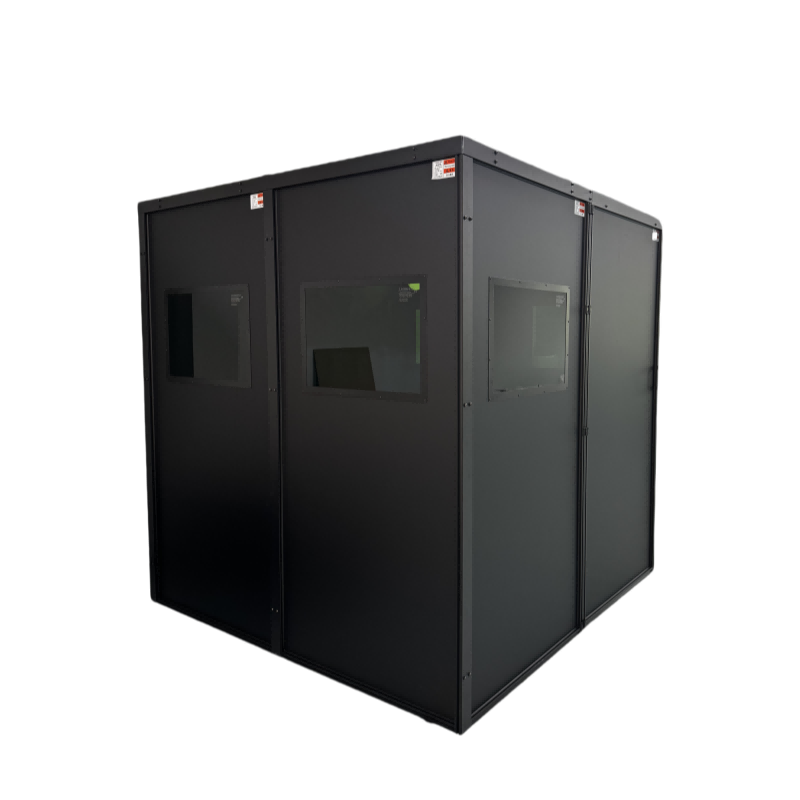
A frame’s strength doesn’t come from bulk alone—it’s built into every intersection, every weld, every precisely angled tube. This is where engineering meets anatomy: just as bones distribute stress across joints and shafts, a well-designed frame channels load along its members, turning raw material into a skeleton that can flex, absorb, and endure. Getting that balance right means controlling wall thickness, grain orientation, and joint fit-up to tolerances that rival surgical instruments.
Fabrication moves from the drawing board to reality through a blend of automated precision and seasoned hands. Laser-cut nodes slot into place with gaps smaller than a human hair, while robotic welding lays down consistent, deep-penetration beads that fuse without distorting the surrounding metal. Human welders still step in for complex clusters, reading heat tint and puddle flow to dial in settings no algorithm can predict. Each completed frame then faces alignment checks and stress simulations, ensuring the final shape isn’t just accurate—it’s alive with the right combination of stiffness and give.
The Shield Takes Shape: Layered Barrier Integration
Building a resilient defense isn't about a single, impenetrable wall; it's about weaving together multiple overlapping layers, each catching what slips past the last. This integration transforms isolated safeguards into a cohesive ecosystem where failure in one line doesn't cascade into catastrophe. From physical barriers and early-warning sensors to protocol anomaly detectors and strict access controls, every component is positioned to complement the others, creating a whole far stronger than the sum of its parts.
As these layers converge, timing and communication become critical. The outer perimeter might flag an unusual vibration pattern, triggering mid-layer cameras to refocus while innermost algorithms rapidly cross-reference behavior against known threat signatures. This orchestrated response turns raw data into actionable intelligence, closing the gap between detection and action. Each tier refines the signal, effectively filtering noise so that human operators see only what truly warrants attention.
Adversaries rarely test just one barrier; they probe for seams and hand-off delays. A well-designed layered shield addresses this by ensuring smooth handshakes between systems—often through standardized interfaces and automated escalation paths. Redundancy is built in not as wasteful duplication, but as adaptive capacity. When one sensor fails or a rule set is bypassed, the adjacent layers flex to cover the gap until the breach is contained, making the entire structure resilient under stress.
Smart Safety: Interlock Systems and Fail-Safe Design
Interlock systems sit at the core of smart safety by directly preventing hazardous operations unless every precondition is met. A simple yet effective example is a safety gate on an industrial press: opening the gate breaks a circuit, immediately cutting power and stopping the ram. More advanced implementations use coded magnetic switches or RFID-based locks that can’t be fooled by tampering, ensuring that only authorized access permits machine reactivation.
Fail-safe design complements interlocks by focusing on how the system behaves when something goes wrong. Rather than assuming perfect components, it mandates that any failure—whether a snapped wire, a stuck contactor, or a sensor glitch—forces the machinery into a benign condition. This often means springs set brakes by default, power loss closes a valve, or a watchdog timer shuts down a process if a control signal vanishes. The goal is to eliminate reliance on active shutdown during a crisis.
Practical smart safety systems weave these two concepts together with layered monitoring. A robotic cell might feature interlocked gates with dual-channel safety relays, plus a programmable safety controller that constantly cross-checks position and speed data. If a discrepancy appears—like an axis moving while the gate is open—the controller triggers an immediate safe torque off, even if a primary sensor has silently failed. Such redundancy moves beyond checkbox compliance, embedding safety into the rhythm of automated production.
Trial by Fire (and Light): Rigorous Testing Protocols
Real-world reliability doesn’t come from simulations alone—it’s earned by exposing every design to extremes that go far beyond typical usage. Our testing philosophy is simple: if a product can survive deliberate abuse in the lab, it can handle whatever the field throws at it. That means thermal chambers cycling from arctic cold to desert heat in minutes, salt-spray corrosion tests that simulate years of coastal exposure in days, and vibration tables that mimic decades of road travel without a single mile driven.
Photometric and optical validation pushes even further. Integrating spheres and goniophotometers map every lumen across full beam patterns, ensuring consistency that the human eye might miss. We don’t just check for brightness—we analyze thermal droop, color shift over time, and performance after deliberate overdriving. Accelerated life testing runs units at twice their rated current for thousands of hours, all while monitoring luminous flux and spectral stability. Failures aren’t setbacks; they’re data points that sharpen the next iteration.
Water and dust ingress protection is verified long before IP ratings are assigned. Custom-built spray rigs subject housing seals to high-pressure jets from every angle, while fine particulate chambers flood gear with talc and silica dust at elevated temperatures. Afterward, each unit is torn down under magnification to inspect for the slightest breach. Every gasket, every potting compound, every fused joint earns its place through this gauntlet—because a product’s reputation is only as solid as its weakest seal.
From Our Floor to Yours: Customization and Deployment
Every project begins with a conversation. We listen to your vision, space requirements, and functional needs to craft a flooring solution that feels deliberate, not off-the-shelf. From grain orientation to finish sheen, every detail is yours to define.
Our team manages the entire journey, from precision manufacturing at our facility to careful onsite coordination. We sweat the small stuff—subfloor preparation, climate acclimation, seam placement—so you don't have to.
The result is a floor that fits your life as much as your layout. Installed with minimal disruption and built to endure, it's a piece of craftsmanship you'll live with, not just walk on.
FAQ
It really depends on the wavelength and power, but a common choice is a multi-layer design. The outer shell is often welded steel or aluminum for structural rigidity, while the inner lining uses materials like black anodized aluminum or specialized absorptive coatings that can take the heat without reflecting stray beams back into the room. For CO2 lasers, you might see acrylic panels because they absorb that wavelength beautifully, but for fiber lasers, you need something like polycarbonate with an optical density coating that specifically blocks near-infrared.
We design for worst-case scenarios. The enclosure walls are tested with the exact laser system they're meant to contain. If the customer runs a 4 kW fiber laser, we'll actually fire a stationary beam at the internal panels for a set duration to check for burn-through or excessive temperature rise. There's also an interlock system that kills the laser instantly if any access panel is opened, so the beam never escapes during operation.
The big one is the American National Standards Institute's Z136 series for laser safety, especially ANSI Z136.1. In Europe, we follow EN 60825 and the Machinery Directive. For Class 4 lasers, the enclosure has to meet specific optical density and structural requirements. We often get third-party labs to certify that a new design passes all the leakage and durability tests, and every unit ships with a compliance certificate and labeling that spells out the hazard class.
It starts in the metal shop where laser-cut steel or aluminum sheets are formed and welded into the base frame and panels. Then they move to surface treatment: chemical cleaning, priming, and sometimes powder coating. Next is the integration station—our team installs the laser-resistant windows, door gaskets with conductive seals for EMI containment, and all the interlock switches. After that, we mount any customer-requested extras like fume extractors or beam dump modules. Finally, electricians wire up the safety circuits and control box, and it goes through a full functional test before being palletized and wrapped.
It's a calculation based on the laser's maximum output and the exposure limit for the eye. We take the worst-case scenario: say it's a 1 kW laser with a 1 mm beam diameter. The irradiance is enormous, so we need a window that attenuates that by a factor of a million or more—that's an OD 6 or higher. We then verify by shooting the actual laser at a sample of the window material in our test lab and measuring the transmitted power behind it. The window gets a label with its OD rating and the wavelength range it covers.
Every enclosure gets a full interlock function check: we open every door and panel while the laser is in a simulated firing mode to make sure the safety relay drops out within milliseconds. We also do a light-tight test with a bright internal lamp to spot any gaps in the seams. If it's a sealed unit for an inert gas purge, we run a pressure decay test. For certain customers, we even do a beam-on test with their laser model if it's available in our facility. Only after all that do we sign off on the inspection sheet.
It's a mix. We have a line of standard enclosures sized for common marking lasers and small engravers, which are usually in stock. But the bulk of our work is custom builds—maybe a pharmaceutical company needs an enclosure with pass-through openings for a conveyor line, or a research lab wants a dual-wavelength enclosure with removable panels for different setups. We start with the laser specs and the physical layout the customer provides and design around that. Even the standard models often get modified with extra filtration or different window placement.
Conclusion
In the controlled chaos of the factory floor, high-power laser safety houses begin as raw sheets of specialized metal. Material selection isn’t a trivial checklist item—engineers obsess over aluminum alloys that shed heat quickly and composite laminates that scoff at relentless beams without turning brittle. Each billet is cut, bent, and welded into precision frames that serve as the skeleton of the enclosure. The frame fabrication bay hums with CNC mills and TIG welders, where a half-millimeter misalignment can compromise the entire structure’s integrity. Here, the mantra is simple: the bones must be flawless, because any warping under thermal load could create a photon leak path.
Once the frame passes inspection, it moves to the shielding station where layers of reflective metal, absorptive polymer, and fire-resistant board are stacked like a high-tech lasagna. The art lies in sequencing these materials to trap and dissipate stray energy before it reaches human skin. But passive armor alone isn’t enough; the enclosure is wired with interlock circuits that kill the beam in microseconds if a door is cracked or a panel shifts. After assembly, every unit faces trial by fire—not with flames, but with the full fury of the customer’s target laser, measured by calibrated sensors to verify zero leakage. The process culminates in a final tailoring phase: custom feedthrough ports, specialized viewing windows, and even color matching to blend into a client’s workspace. What leaves the loading dock isn’t a generic box; it’s a purpose-built guardian, shaped by a marriage of metallurgy, optics, and relentless testing.
Contact Us
Contact Person: Jenny
Email: [email protected]
Tel/WhatsApp: +86 13537713281
Website: https://www.laserpair-safety.com/