

Inside a Tyvek Wristband Factory: Crafting Durable and Secure Event Access
2026-07-23
Step inside the world of high-security event access, where every wristband tells a story of durability and design. At BAOBI, Tyvek wristbands aren’t just printed—they’re engineered to withstand crowds, moisture, and tampering, all while keeping guests moving smoothly. This exclusive behind-the-scenes look reveals the precision and innovation that turn a simple strip of material into the ultimate gatekeeper for festivals, conferences, and beyond.
The Unexpected Origins of Your Event Wristband
The simple wristband you slip on at a concert or festival has roots far removed from today's neon crowds and RFID scanners. It traces back to ancient practices where woven bands served as talismans or marks of status. For instance, early civilizations used dyed threads around the wrist to signify belonging to a tribe or to ward off evil spirits. These early adornments were deeply personal, crafted by hand and charged with meaning—far from the disposable paper slips we know.
Fast forward to the 19th century, and you'll find a surprising link to hospitals. Before patient charts were common, medical staff tied colored strings around patients' wrists to quickly convey vital information—like allergies or prescribed treatments. This practical innovation quietly laid the groundwork for the modern identification wristband, blending utility with a simple, wearable format that could be read at a glance.
It took the counterculture movements of the 1960s and 70s to transform the wristband into a symbol of shared experience. At gatherings like Woodstock, organizers needed a way to manage crowds while fostering a sense of community. Tyvek bands, originally developed for industrial tags, became the go-to—cheap, durable, and tamper-proof. This marriage of material science and hippie idealism birthed the event wristband as we know it: a ticket, a keepsake, and a badge of belonging all in one.
Why Tyvek Outperforms Paper and Plastic Every Time
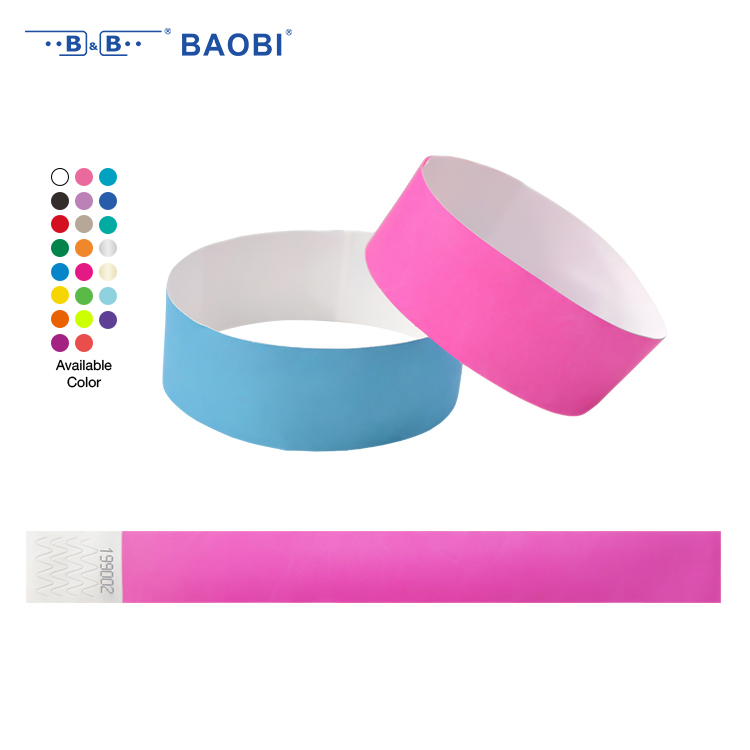
Tyvek isn’t just another material—it’s a category of its own. While paper tears easily and plastic can trap moisture or degrade under UV exposure, Tyvek delivers an unmatched balance of durability, breathability, and resistance. It feels like paper but behaves like a tough fabric, shrugging off punctures, spills, and rough handling that would ruin either of its traditional counterparts. Whether you're protecting medical equipment, shipping critical documents, or creating outdoor tags, Tyvek holds up without adding bulk or weight.
The secret lies in its unique structure: flash-spun high-density polyethylene fibers bonded under heat and pressure. This creates a web that’s both waterproof and vapor-permeable, so contents stay dry while trapped humidity escapes—something neither paper nor plastic can truly offer. Tyvek also resists chemicals, abrasion, and mildew, making it ideal for harsh environments. It won’t turn brittle in the cold or limp in the rain, and you can fold it, crease it, or pull it without losing integrity.
From a sustainability angle, Tyvek bridges a gap. It’s fully recyclable through dedicated programs, lighter than paper for equivalent strength (cutting transport emissions), and often reusable. Unlike plastic, it doesn’t leach harmful additives, and unlike paper, it requires no bleaching or extensive water use. For anyone choosing between fragile paper and environmentally questionable plastic, Tyvek is the third option that simply works better.
How a Tiny Wristband Outsmarts Gate Crashers
It looks like nothing more than a colorful accessory, but woven into that slim band of silicone is a chip so clever it can tell a legitimate ticket holder from a crasher in less than a second. Each wristband carries a unique encrypted ID that gets checked against the event's live database the moment it passes near a scanner at the entrance. Unlike paper tickets or QR codes that can be screenshotted or duplicated, this tiny token is virtually impossible to clone, and once it's activated, it stays linked to a single person for the entire night.
What really sets the wristband apart is how it turns the admission process into an invisible, continuous verification system. Instead of a one-time check at the door, discreet readers positioned throughout the venue can silently confirm that everyone in the VIP lounge or backstage area belongs there. If a band has been reported lost or deactivated, it instantly triggers an alert on the security team's handheld devices, letting them intercept gate crashers without creating chaos or queues.
The wristband's intelligence goes beyond just keeping out the unwanted; it learns crowd flow patterns and adapts in real time. Organizers can spot bottlenecks before they form, redirecting guests via subtle light-up prompts on the band itself, all while maintaining a frictionless experience. In the end, the crasher never sees the quiet war happening at their wrist—they just find themselves politely guided away, leaving the party intact for those who belong.
Turning a Simple Band into a Branding Powerhouse
A simple band has the potential to become so much more than just a musical act. It starts with a clear, recognizable visual identity that goes beyond a logo—think consistent color palettes, fonts, and imagery that mirror the band's personality. Every touchpoint, from album covers to social media posts, should whisper the same story. This visual cohesion plants a seed in people's minds, turning a passing listener into someone who remembers not just the sound, but the feeling the band evokes. It's about crafting a world around the music that fans want to step into and stay.
The true shift happens when a band starts acting less like musicians and more like storytellers. Instead of just promoting new releases, they share the chaos of the creative process, the late-night conversations, the inside jokes that only the tightest circle gets. That raw, unfiltered access builds trust and curiosity. When fans feel like they're part of the journey, they become ambassadors—wearing merch not just as clothing, but as a badge of belonging. A band transforms into a brand the moment their audience can articulate why they matter in a single, unforced sentence.
Consistency is the quiet engine that pushes a band from a niche discovery to a household name. It's not just about frequency; it's about showing up with the same voice across every platform, whether it's a grainy behind-the-scenes clip or a polished lyric drop. That reliability breeds anticipation. Fans start expecting the unexpected within a familiar framework, and that delicate balance keeps them hooked. Over time, a simple band becomes a cultural shorthand—a brand powerful enough to influence how people dress, speak, and even see the world around them.
The Precision Dance of High-Speed Wristband Assembly
In the humming heart of the factory floor, coils of colorful silicone and TPU spring to life, racing through a choreographed series of stations. Each wristband is born in a blur of motion—laser cutters trace perfect contours, robotic grippers twist and pivot with sub-millimeter accuracy, and ultrasonic welders fuse layers in a fraction of a second. It’s not just assembly; it’s a ballet of physics and timing, where a single frame delay could throw off the entire rhythm.
What truly sets this process apart is the invisible hand of real-time vision systems. Tiny cameras snap hundreds of images per second, catching microscopic misalignments and flagging them before the next step engages. The machinery doesn’t just follow a programmed path—it adapts, making hairline adjustments on the fly. There’s a quiet intelligence in the way belts and actuators synchronize, almost as if the line itself knows exactly when to speed up and when to breathe, ensuring each clasp and loop meets tolerances tighter than a human hair.
At the final stage, finished bands glide onto sorting trays in a seamless sweep, ready for packaging within moments of being just raw material. The pace is relentless yet eerily smooth—a testament to engineering that treats fractions of a second as precious currency. Watching it, you understand that this isn’t mere automation; it’s a deliberate, split-second craft where every motor pulse and sensor reading plays its part in a flawless performance.
Where Old Wristbands Go After the Party Ends
Most of them slink into the dark corners of drawers, joining keychains from ex-lovers and forgotten birthday cards. They linger there in a strange limbo, still smelling faintly of sweat and cheap beer, until someone ruthless enough clears them out during a spring clean two years later.
A lucky few get turned into something more permanent—a patch on a denim jacket, a bookmark, or (if they have a sentimental owner) a dusty memento taped into a scrapbook. The truly iconic ones, those fluorescent relics from music festivals long past, might even be resold online to nostalgic strangers hunting for a piece of their youth.
And then there are the ones that never leave the wrist. They fade in showers, fray at the edges, and eventually disintegrate into thin air. No burial, no ceremony—just the quiet unraveling of a memory until it's nothing but a stubborn thread you finally snip off one afternoon.
FAQ
Each wristband starts with high-density polyethylene fibers, which are spun into a tough, paper-like sheet that resists tearing and water.
They use thermal bonding to seal the adhesive closure, creating a bond that withstands showers, sweat, and constant movement without peeling off.
Absolutely. Factories offer sequential numbering, barcodes, and even RFID chips embedded inside for contactless access control.
Once locked, the adhesive strip fuses to the band material, making it impossible to remove intact. Any tampering leaves visible fiber tears.
Most use flexographic printing with durable inks that won’t smudge or fade, while some premium lines employ foil stamping for a metallic sheen.
Tyvek is lightweight and breathable, less likely to cause skin irritation during long wear, and it’s completely recyclable, which appeals to eco-conscious events.
Random samples undergo stretch and peel tests to verify that the closure strength and material integrity meet the required safety standards.
Many factories accommodate smaller runs by using digital printing setups, though the per-unit cost may be slightly higher than bulk orders.
Conclusion
Step inside a bustling Tyvek wristband factory and witness the unexpected journey of that simple band circling your wrist at concerts and festivals. Originally designed for industrial shipping envelopes, Tyvek's spunbond polyethylene fibers were repurposed when event organizers realized its remarkable blend of lightness and strength. Unlike paper wristbands that wilt under sweat or plastic versions that crack and pinch, Tyvek emerges as the undisputed champion—waterproof, tear-resistant, yet breathable enough for all-day comfort. This subtle material science is the first line of defense, as each wristband carries a pattern of unique serial numbers and tamper-evident adhesive closures that leave behind a telltale checkerboard if someone tries to peel and reapply. Suddenly, a humble admission token transforms into a silent security guard, thwarting gate crashers with elegant simplicity.
But the real magic happens on the factory floor, where a precision dance of high-speed assembly converts raw rolls into vibrant, branded assets. Custom logos and event details fly onto the bands through a flurry of inline printing, die-cutting, and adhesive application—all synchronized to churn out thousands per hour without sacrificing the exacting security features. Away from the buzz, the story arcs toward sustainability: after the last encore fades, many wristbands find second life through specialized recycling programs, melting into pellets for new products rather than languishing in landfills. This full-circle process turns a basic entry tool into a branding powerhouse and a quiet statement on responsible manufacturing, proving that even the smallest details can elevate an event from ordinary to unforgettable.
Contact Us
Contact Person: Bill Xu
Email: [email protected]
Tel/WhatsApp: 8618688898707
Website: https://www.baobitech.com/