

Machine Washable Movers Blanket Export Guide for Hassle-Free Moving
2026-11-19
Moving fragile furniture or heavy equipment overseas doesn't have to mean wrestling with single-use wraps and torn fabric scraps. A machine washable movers blanket changes the equation—reusable protection that survives dust, oil, and long-haul handling without turning into landfill waste. In this export guide, we break down what to check before shipping, from fabric weight to binding seams, and why many logistics buyers now source through Top Packaging for consistent batch quality. If you're tired of vague specs and costly freight surprises, the next few sections will give you a clearer path.
What Makes a Moving Blanket Truly Machine Washable and Export Ready
A label that says machine washable means little if the stitching gives out after three cycles. The blankets that actually hold up use a tight, double-needle lock stitch around every edge, and the binding is sewn through all layers rather than glued or lightly hemmed. The fill itself needs to be needle-punched or resin-bonded so it does not bunch into lumps when it spins through a commercial extractor. If the shell shrinks at a different rate than the fill, you get a wavy, misshapen blanket even before it leaves the dryer.
Export readiness is a whole other layer. Buyers in different regions expect a blanket to arrive flat, dry, and free of anything that could attract inspection delays. That means the fabric has to pass colorfastness testing so dyes do not bleed into packaging or other goods, and the moisture content should be low enough to prevent mildew inside a sealed container. Weight tolerance also matters more than most people realize; a blanket listed at 5 kg that arrives at 5.4 kg can trigger customs queries or inventory headaches.
What separates a genuinely washable, export-grade blanket from a basic one is consistency. The best suppliers control shrinkage with a pre-wash or compressive finishing step, then pack the blankets in clear poly with the dimensions and fiber content printed on the insert, not just on the outer carton. That way the product survives repeated wash cycles on the user’s end and the paperwork survives the journey, which is what “export ready” should actually mean.
Fabric Weight and Binding Choices That Handle Freight and Frequent Washes
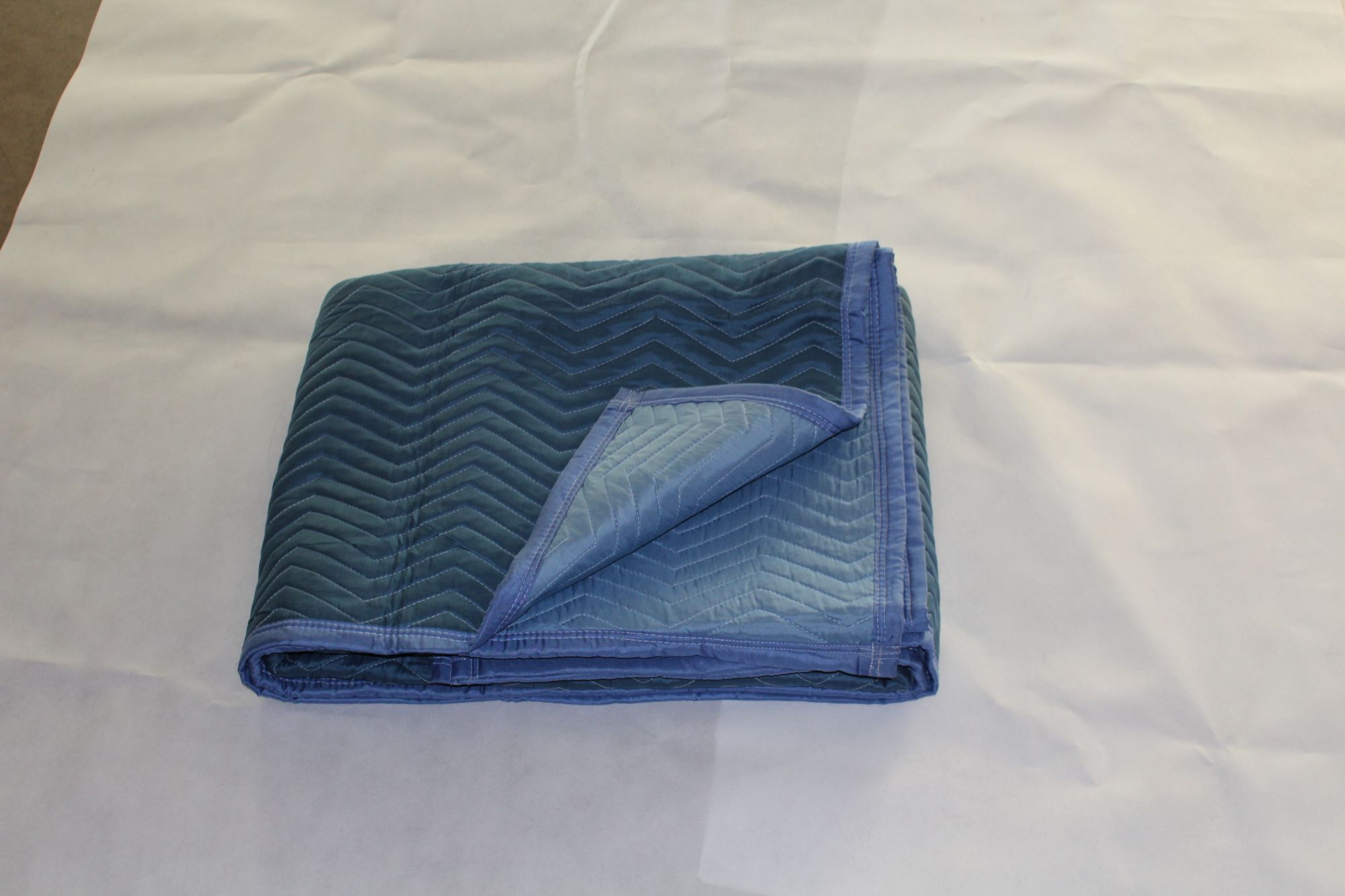
When a bag or cover has to ride in the back of a truck and then go straight into a wash cycle, light fabric and skinny binding fail fast. A heavier base, something in the 18 to 22 ounce range, often a coated polyester or a tight cotton duck, gives the seams something solid to hold. The binding has to match that weight. Thin acetate or flimsy cotton tape will shred along edges where freight shifts rub the folds, and it will pucker after the first hot wash.
For repeated washing, pre-shrunk polyester or poly-cotton binding tends to hold its shape better than untreated cotton. Cotton can be comfortable to sew, but if it shrinks at a different rate than the shell, the edges curl and wear unevenly. Double-folding a wide twill tape over a heavy rolled hem gives more surface for stitching and protects the raw edge from abrasion. Use two or three rows of stitching or a close zigzag instead of a single straight line so stress is distributed across the binding rather than cutting through one thread.
Heavy fabrics and bindings do not need to be stiff or overbuilt, but they do need compatible stretch. If the edge binding is too rigid, it cracks; if too elastic, it lets the seam roll under weight. A slightly stiff polyester binding over a weighted cotton canvas or vinyl laminate is often the right balance for commercial laundry cycles and rough handling. Test a sample by sewing a twelve-inch piece, running it through five hot washes with a towel load, then flexing the edge hard. If thread shows through or the binding shifts, widen the tape or switch to a heavier thread before cutting production.
Order Specifications That Avoid Costly Surprises at the Loading Dock
Most loading dock problems are created weeks before the truck shows up, in the gap between what a buyer pictured and what the supplier actually packed. A purchase order might list twenty cartons, but if it fails to mention that half of them are 72 inches tall or banded to oversize pallets, the receiving team has no way to plan for a forklift, a liftgate, or extra labor.
Use the order notes to replace assumptions with numbers. Give packaged dimensions, stack limits, total cubic volume, pallet footprints, and gross weight instead of relying on catalog descriptions. Flag anything that cannot be double stacked or moved with a standard pallet jack. When a load is not road-ready, the dock is where someone pays for that missing detail in detention time or a refused delivery.
A short set of confirmation lines on the purchase order works better than a dense block of terms. Ask the supplier to verify dock height, delivery hours, phone contact, and whether the carrier must check in before arrival. If the shipment needs flatbed access or a rear door against the dock, put that in the routing notes. The goal is not more paperwork; it is giving the receiving crew enough lead time to stage equipment and staff before the clock starts running.
Packing and Container Methods That Keep Blankets Clean and Damage Free
Before anything goes into a box, give the blanket a full day of airing in a shaded spot. Even a trace of lint, skin oil, or humidity trapped in the fibers can turn into a stale smell or a faint stain over time. Once it feels completely dry, roll it loosely around a cardboard tube or fold it with acid-free tissue paper slipped between the layers. Rolling is usually easier on thick weaves and quilts, while large flat folds work better for lightweight cotton throws; either way, avoid sharp creases by padding the bends with soft paper or muslin.
The container itself matters more than most people expect. Breathable cotton or canvas storage bags let natural fibers release moisture, whereas airtight plastic bins can trap humidity and encourage mildew if the temperature changes. If a hard-sided bin is necessary, choose one made of polypropylene, leave the lid slightly ajar, and place a couple of silica gel packets or a small muslin bag of activated charcoal inside. Keep the blanket off the bottom of the container with a layer of washed cotton sheeting, and never let the fabric touch bare cardboard for long periods because acids from the paper can migrate into the textile.
For added protection, swap chemical-heavy mothballs for cedar rings or lavender sachets placed away from direct contact with the blanket. Check the stored item every few months, refold it along different lines to prevent permanent creases, and let it breathe for an hour or two before returning it to the container. That small routine usually does more to keep a blanket clean and intact than any single packing trick.
Customs Documentation and Labeling Pitfalls Worth Clearing Before Shipment
It is easy to assume that once a shipment is boxed and handed to the forwarder, the paperwork will take care of itself. That assumption tends to break down at the border. A commercial invoice with a vague product description, a harmonized code pulled from an old spreadsheet, or a certificate of origin that lists a different supplier than the packing list can trigger holds that take days to resolve. Even small mismatches between the declared value and the buyer's records invite questions, particularly when customs officials see the same item described one way on the invoice and another way on the bill of lading.
Labeling issues are just as likely to stall a load, and they often surface only after the goods have arrived. Some markets require metric units, some want the country of origin printed directly on the product rather than on the outer carton, and others insist on safety warnings or composition details in the local language. A label that looks complete to the shipper can still fail because the font size is too small, the fiber content is expressed as a percentage range instead of exact values, or the recycling symbol is missing from the packaging. Those details feel minor until they become the reason a container sits at the port.
The practical fix is to clear these points before anything leaves the loading dock. Send the draft commercial invoice, packing list, and label artwork to the importer or a local customs broker for a quick review, and ask specifically about wording, units, and required marks. A half-hour spent reconciling documents and labels against the destination country's current rules tends to cost far less than demurrage, re-labeling, or a shipment returned halfway around the world.
Care and Storage Habits That Keep Every Blanket Reusable for Years
Most blankets don't wear out from being used—they wear out from the way they're cleaned and put away. Washing in cold water on a gentle cycle with a mild detergent keeps fibers from breaking down, and skipping fabric softener actually helps because the residue can mat down fleece and wool over time. Air drying flat or on a low-heat tumble works better than blasting them in a hot dryer, which is where a lot of shrinkage and edge curling starts.
For storage, fold blankets loosely instead of hanging them so the weight doesn't stretch the weave. Keep them in breathable cotton bags or old pillowcases rather than plastic bins, which trap any leftover moisture and lead to mustiness. If they're going into a closet for months, toss in a cedar block or a small lavender sachet, but avoid letting those touch the fabric directly. A quick shake-out and a few hours of air every season keeps them fresh enough to grab without washing again.
FAQ
Focus on fabric weight measured in ounces per square yard, double-stitched or overlocked edges, and binding that will not unravel after repeated washing. Ask for a sample and run it through a hot wash and tumble dry cycle. If the batting shifts or the corners curl badly, that is a sign it will not hold up in commercial use.
A blend of recycled cotton and polyester usually offers a solid balance of cushioning, drying speed, and resistance to tearing. Pure cotton feels softer but takes longer to dry and may shrink more. Woven polypropylene or non-woven felt can work as lighter options, but they do not always handle high heat as gracefully.
Every wash removes some fiber and slightly loosens the weave, so thickness and shock absorption can gradually drop. Choosing a blanket with dense needle punching or stitching helps slow that breakdown. It is also wise to rotate blankets so the same set is not always used for the heaviest items.
Flat-packed bundles on pallets are common for large orders, but vacuum packing reduces volume when freight cost is a major concern. If vacuum packing is used, make sure the blankets can recover their loft after unpacking. Add a moisture barrier inside the carton or wrap to protect against condensation during ocean transit.
Keep the commercial invoice clear about material composition, weight per piece, and country of origin. Vague descriptions can cause holds. If the blankets are treated for flame resistance or other properties, include the relevant test reports only when requested. Consistency between the packing list and invoice matters more than extra paperwork.
For standard sizes and colors, expect roughly 20 to 35 days after final sample approval. Custom dyed fabric, special binding, or unusual dimensions can push that to 45 days or more. Add extra buffer before peak moving seasons, since mills and freight forwarders get backed up quickly.
Request a pre-production sample, then compare it against random pieces from the first bulk shipment. Ask about lot-to-lot variation in fabric weight and color. A dependable supplier should document their cutting and sewing tolerances and send photos or video before dispatch.
Underestimating pallet dimensions, ignoring moisture protection, and ordering only by weight instead of asking for a wash test sample. Some buyers also forget that recycled cotton blends can have slight color variation between batches, so exact shade matching should be agreed on in advance.
Conclusion
Exporting machine washable movers blankets is rarely just about loading heavy fabric into a container. The product has to hold up under both freight handling and repeated laundry cycles, so fabric weight and binding choices deserve attention before samples are approved. Tightly woven blended materials with reinforced lock stitching tend to resist tearing, while loosely packed filler can bunch, shrink, or lose shape after several washes. Order specifications should state exact cut size, finished dimensions, weight per dozen or per piece, and edge style in a way that inspectors can easily verify. When those details are vague, dock checks become slower and disagreements over quality are more likely.
Packing methods matter just as much once the blankets leave the sewing line. Clean, dry blankets should be folded and compressed enough to save container space without creating permanent creases, and simple liners, corner boards, or desiccant packs can keep road dust and moisture away during transit. Before the shipment moves, confirm the destination market's labeling rules, fiber content wording, and any fumigation or certificate requirements, because a small mismatch can hold an entire container at customs. Clear care and storage guidance also helps buyers protect the product after delivery: air blankets before long-term storage, keep them away from damp floors, and avoid sealing them in plastic while moisture is present. These habits extend useful life and strengthen the exporter's reputation for dependable, washable moving blankets.
Contact Us
Contact Person: Shelly
Email: [email protected]
Tel/WhatsApp: 86-577-64286522
Website: https://www.topmovingpad.com/