

Mesh Office Chair Factory: A Look Inside Ergonomic Chair Production
2026-10-13
Ever wondered what really goes into the chairs we spend eight hours a day in? A visit inside a mesh office chair factory reveals far more than rows of plastic and steel. From precision-engineered lumbar curves to breathable mesh tensioned by hand, ergonomic chair production is a quiet mix of craftsmanship and biomechanics. For a closer look at how this plays out, OFCJNS has built its reputation on exactly that attention to detail. In this post, we'll walk the production floor, unpack the key stages, and show how small choices in materials and assembly separate a chair that merely looks ergonomic from one that actually supports the way you work.
Where Steel Tube Becomes Spine
A raw length of steel tube doesn't hint at its future. It arrives straight, hollow, and cold to the touch. But once it passes through the hands of a fabricator who knows how to read its grain, the tube starts to bend, twist, and curve. Each controlled deformation adds a new kind of intention. The metal, which once served as conduit or frame, now adopts the subtle S-shaped logic of a vertebral column. It learns to carry weight not as a column would, but as a spine does: distributing load through a series of gentle, resilient arcs.
This shift is more than a change of geometry. A spine isn't just a stack of rigid parts; it's a system of controlled flexibility. Steel tube, with its hollow core and uniform wall thickness, mimics that balance. When heated and curled into repeated, offset loops, the tube develops a kind of memory—each curve aligning with the next to support tension and compression simultaneously. The result is a structure that doesn't resist movement, but channels it. Sit into a chair built this way, and the frame gives just enough, then holds. That giving is the steel behaving like bone and cartilage together.
In the end, the material loses its original name. Ask the person who uses the finished piece what it's made of, and they won't say steel tube. They'll feel the support at their lower back, the way the lower ribs of the frame angle outward, the way the uppermost bend cradles the neck. They'll describe something alive. The tube has disappeared into its new role: not a part, but a spine. And like any good spine, it works best when you forget it's there.
The Art of Stretching Mesh Without a Single Wrinkle
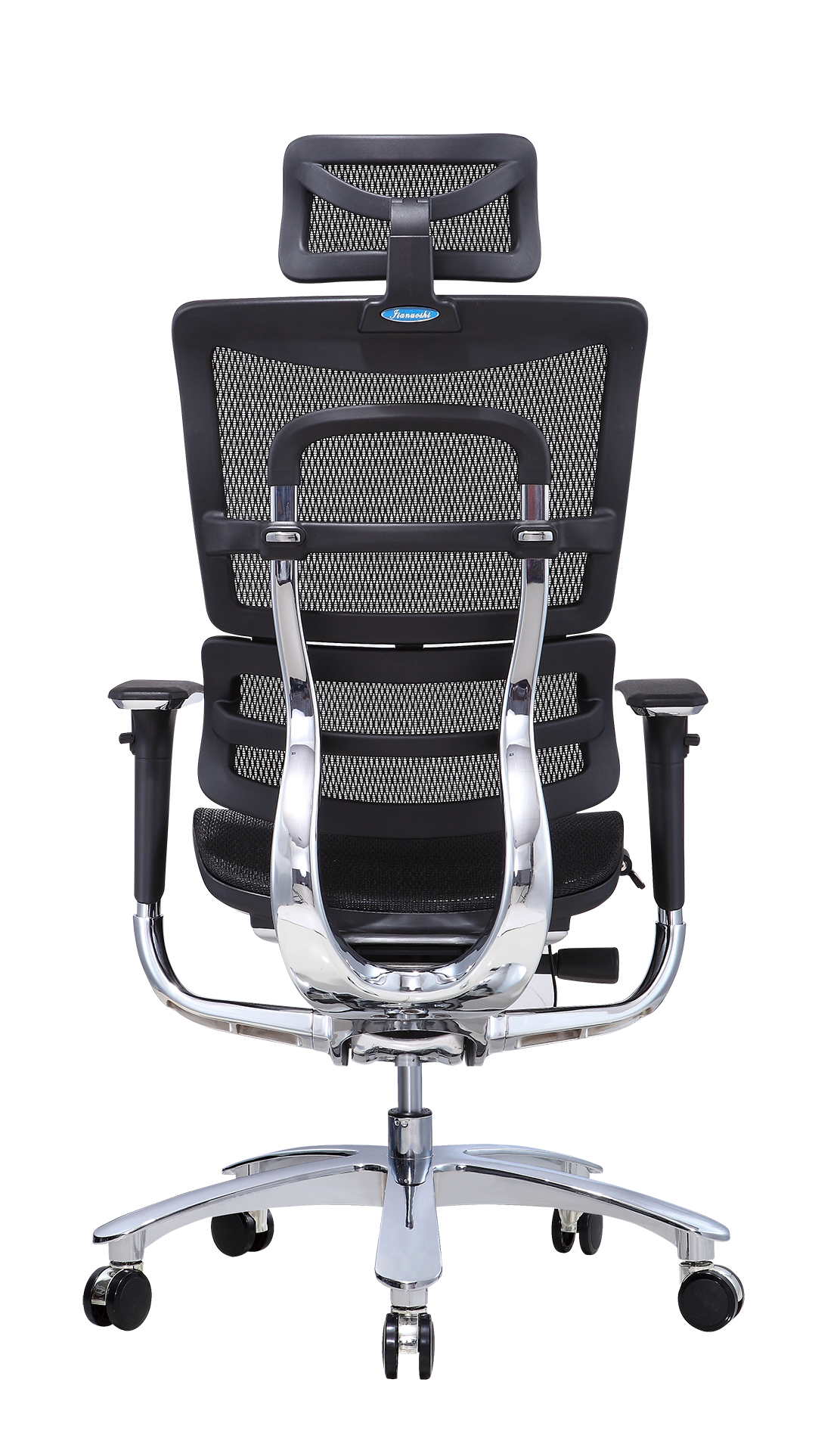
Getting mesh to lie flat starts long before the staple gun comes out. Most wrinkles appear because the material gets pulled unevenly while you're positioning it. Instead of tugging from the corners, work from the center outward in short, deliberate passes. Keep your free hand flat against the mesh just behind the tension point, letting the weave settle into its natural spacing. If you feel the threads bunching, stop and back off a few inches—pulling harder rarely fixes the problem and usually makes it worse.
Temperature makes a surprising difference. Cold mesh tends to hold folds from being rolled or folded in storage. Let the material sit in the sun or a warm room for half an hour before you begin, then start on the longest straight edge. On curved or angled frames, leave the corners for last. Secure the middle of each side first, moving clockwise, and only then work the excess toward the corners with your palm instead of your fingertips. That palm pressure spreads the tension evenly across the weave rather than creating pinch points.
If a stubborn crease still shows up after installation, don't immediately reach for a heat gun. Often a few minutes of firm circular rubbing with a soft cloth will relax the fibers enough to release the line. For synthetic meshes, a light mist of water can help reset the weave, but avoid soaking it—wet mesh stretches unevenly as it dries. The goal is to coax the material into place, not force it flat.
Pouring Foam the Way a Barista Pours Milk
The moment the pitcher tilts, everything changes. Baristas don't dump the milk; they guide it, letting the first thin stream dive through the crema before the foam even thinks about surfacing. That initial high pour keeps the canvas intact, almost lazy, until the cup is half full. Then the wrist drops, the spout comes close, and the real conversation starts between hand and cup.
What makes this different from ordinary pouring is the pressure and angle. You're not just trying to fill a vessel; you're trying to lay a pattern underneath the surface, then pull it up at the last second. Too fast and the foam breaks into a bubbly mess. Too shallow and it never cuts through. The sweet spot lives somewhere between a steady exhale and a controlled spill, and your elbow learns it before your brain does.
Most people fight the foam, trying to spoon it into place. Baristas let it flow, trusting the shape of the spout and the weight of the milk. The final wiggle isn't decoration; it's a structural shift that turns a white blob into a rosetta. Once you feel that rhythm, pouring foam stops being a task and starts feeling like drawing with a liquid pencil.
Assembly Stations That Feel More Like Tailoring Than Factory Work
At these stations, the rhythm of the line gives way to something closer to a tailor's bench. Each worker can adjust the angle of the light, the height of the chair, and the placement of tools within a comfortable sweep. Small choices like where to keep the shears or which side the spool sits become part of a personal rhythm, not a standardized motion study.
Materials move through hands at a pace that allows for a second look and a careful fold. Stitches are checked against the grain, not just against a timer. The difference is in the pause: a moment to realign a seam, to run a thumb along an edge, to decide that a pocket should sit slightly higher. That kind of judgment comes from treating assembly as a craft rather than a sequence of fixed tasks.
Because the stations are arranged more like a tailor's workshop than a conveyor line, people can see the whole garment take shape instead of only their own isolated step. The result is a quieter floor, fewer forced stops, and a kind of quiet pride in the finished piece that factory metrics rarely capture.
The Chair’s Final Exam: 100,000 Cycles of Sitting
Before any chair earns a place in a catalog, it has to survive something most people never think about: a mechanical derriere dropping onto the seat one hundred thousand times in a row. This isn't a casual stress test—it's a relentless simulation of decades of daily use compressed into a few weeks. Hydraulic actuators slam a weighted form down at precisely controlled angles, sometimes with a slight twist to mimic how real bodies slide into place. Foam compresses, joints flex, bolts try to loosen, and the frame absorbs impact after impact. By the halfway point, weaker designs start to groan, squeak, or show visible sagging. The ones that make it to the end have proven they can handle not just occasional sitting, but the cumulative abuse of countless coffee breaks, late-night work sessions, and everything in between.
The hundred-thousand-cycle benchmark isn't arbitrary. It's a rough translation of ten to fifteen years of regular use by a single person—or about five years in a busy office where the chair gets shared across shifts. Test engineers watch for failure modes that don't show up in a single afternoon: fabric pilling at the front edge, foam losing its rebound, gas lift cylinders starting to drift downward, casters developing flat spots. Some chairs pass the visual inspection but fail on acoustics—a new creak at cycle 70,000 often signals a hidden crack in a weld or a screw that's backing out. Modern testing rigs log force curves for every single cycle, so engineers can spot a gradual decline in cushioning support long before there's visible damage. The goal isn't just survival; it's maintaining that original "sit down and sigh with relief" feeling from cycle one to cycle one hundred thousand.
What makes this exam brutal is its monotony. Humans shift weight, stand up, lean back, cross legs. The test machine doesn't care about comfort—it pounds the same spot, same angle, same force, over and over. That repetition exposes material fatigue that varied use would hide. A chair that feels plush on day one might develop a permanent dent right where the tailbone lands, turning softness into a pressure point. High-density foam blends, reinforced spring systems, and layered cushioning all get evaluated under this unflinching sameness. Some manufacturers push beyond the standard, running chairs to 200,000 or even 300,000 cycles for premium lines. But the 100,000 mark remains the litmus test—the point where a prototype either earns its badge or gets sent back to the drawing board with a list of weak spots and a video of its slow-motion collapse.
Boxed and Ready: How Ergonomics Survives the Trip
Shipping an ergonomic chair isn't just about slapping a label on a box. The lumbar curve that cradles your spine can flatten under stacking pressure, and the gas lift that adjusts your seat height is one hard drop away from becoming a leaky liability. To keep these precision parts intact, manufacturers compress foam backrests just enough to fit dense, custom-cut cartons while leaving the adjustable mechanisms locked in their lowest positions. It's a deliberate act of packaging choreography, where every inch of corrugated board earns its place against jolts, humidity, and the occasional forklift driver having a bad day.
The real test happens before a single unit reaches a warehouse. Designers use vibration tables and drop-test rigs to mimic the chaos of cross-country freight, then tweak the insert geometry until the chair emerges ready to roll—not wobble. Some brands double-box the armrests or wrap the seat pan in breathable film instead of plastic bags, reducing trapped moisture without adding bulk. The goal isn't to over-engineer the box; it's to let ergonomics arrive as if it never left the showroom floor.
FAQ
The main components start with nylon or polyester mesh, a steel or aluminum frame, and molded plastic for the armrests and base. The mesh is often knitted to a specific tensile strength so it can support hours of sitting without sagging, while the metal parts are cut, bent, and powder-coated for corrosion resistance.
They run repeated load tests on sample chairs, pressing a weighted form into the seat and back tens of thousands of times. The mesh is also attached using heat bonding or ultrasonic welding rather than simple stitching, which prevents the edges from pulling loose as the fabric flexes.
Beyond static measurements, workers use pressure-mapping sensors to see how weight distributes across the seat pan and lumbar area. Adjustable lumbar supports are checked at multiple height and depth settings, and any chair that shows hot spots or uneven pressure gets sent back for retuning before packaging.
Mesh allows constant airflow, which keeps body temperature down during long work sessions. It also conforms to the user's shape without the slow compression set that foam develops, so the chair maintains its support profile much longer.
It begins with injection molding of the seat frame and armrests, followed by robotic welding of the metal base and column. The mesh is stretched over the back frame and secured, then the mechanism, gas lift, and casters are attached. Finally, each chair goes through a spin-check on the casters and a visual inspection before it's packed flat.
Inspectors use a checklist that covers weld integrity, mesh tension, caster smoothness, and mechanism noise. Random chairs from each batch are pulled for a drop test and a 24-hour load simulation. If a single chair fails, the entire batch is held for rework.
Robots handle repetitive high-force jobs like bending steel tubes and injecting plastic, while human workers focus on tasks that need touch and judgment, like aligning mesh patterns and adjusting lumbar tension. This mix keeps the production line fast but still flexible enough for custom orders.
Conclusion
Walk the floor of a mesh office chair factory and the first thing you notice is how much handwork still decides the outcome. Steel tubing enters as raw lengths and leaves as curved, welded spines—each bend checked against a jig, each joint ground smooth before powder coating. The mesh that becomes the backrest isn't just pulled tight; it's stretched over molds in stages, with workers using heat and tension to ease out every ripple until the weave sits drum-tight and even. Nearby, foam pouring looks less like heavy industry and more like a café ritual: the operator tilts the mixing head, controls the pour rate, and lets the polyurethane rise into the seat form with the same care a barista uses to layer milk. The result is a cushion that's dense where your weight lands and softer at the edges, without hard spots or air pockets.
At the assembly stations, the pace slows again. Upholstery panels are aligned by hand, armrests are shimmed until they match the chair's curve, and every bolt gets a torque check—not just a buzz from an air tool. It feels closer to a tailor's bench than a production line, because small mismatches in a chair show up immediately in how it feels. Before any chair ships, it goes through the final exam: a robotic dummy sits down and stands up 100,000 times, while sensors watch for loosening, squeaks, or mesh sag. Chairs that pass are then packed with foam corner blocks and double-wall cartons, because the ergonomic promise has to survive a bumpy truck ride, not just the showroom floor.
Contact Us
Contact Person: Diff Wang
Email: [email protected]
Tel/WhatsApp: +8613650281199
Website: https://www.ofcmeshchair.com/