

Mesoporous Silica: Top Breakthroughs and Applications Shaping the Future
2026-07-25
Mesoporous silica isn't just another nanomaterial—it's becoming the backbone of tomorrow's medical treatments, cleaner energy, and smarter materials. While many are still catching up, Zhonglian is already engineering the next wave of high-performance silica solutions. Dive in to discover the breakthroughs turning this porous powerhouse into a real game-changer, and why its impact is only beginning.
How Mesoporous Silica’s Nanoarchitecture Redefines Material Science
The remarkable precision of mesoporous silica stems from its highly ordered pore networks, which can be tuned down to the nanoscale. This structural control allows scientists to design materials with surfaces that are both expansive and chemically versatile. Unlike conventional porous substances, the regularity of these channels ensures consistent behavior in applications ranging from catalysis to drug delivery, effectively turning a simple silicate into a platform for innovation.
What sets this material apart is how its physical framework influences interactions at the molecular level. The uniform pores act as selective gateways, enabling precise separations or controlled release kinetics. Researchers have exploited this to create responsive systems—think coatings that change properties under specific conditions or implants that foster tissue integration. The architecture is not just a passive scaffold; it actively shapes performance.
Beyond functionality, the assembly process itself challenges traditional manufacturing paradigms. Using templating techniques, chemists coax silica precursors into organized structures that were once unimaginable outside biological systems. This bottom-up approach blurs lines between synthetic and natural design, opening routes to materials that are lighter, stronger, and more adaptive. Mesoporous silica doesn’t just improve existing technologies—it forces a rethink of what materials can achieve when architecture is engineered from the ground up.
Pioneering Drug Delivery Systems That Outsmart Biological Barriers
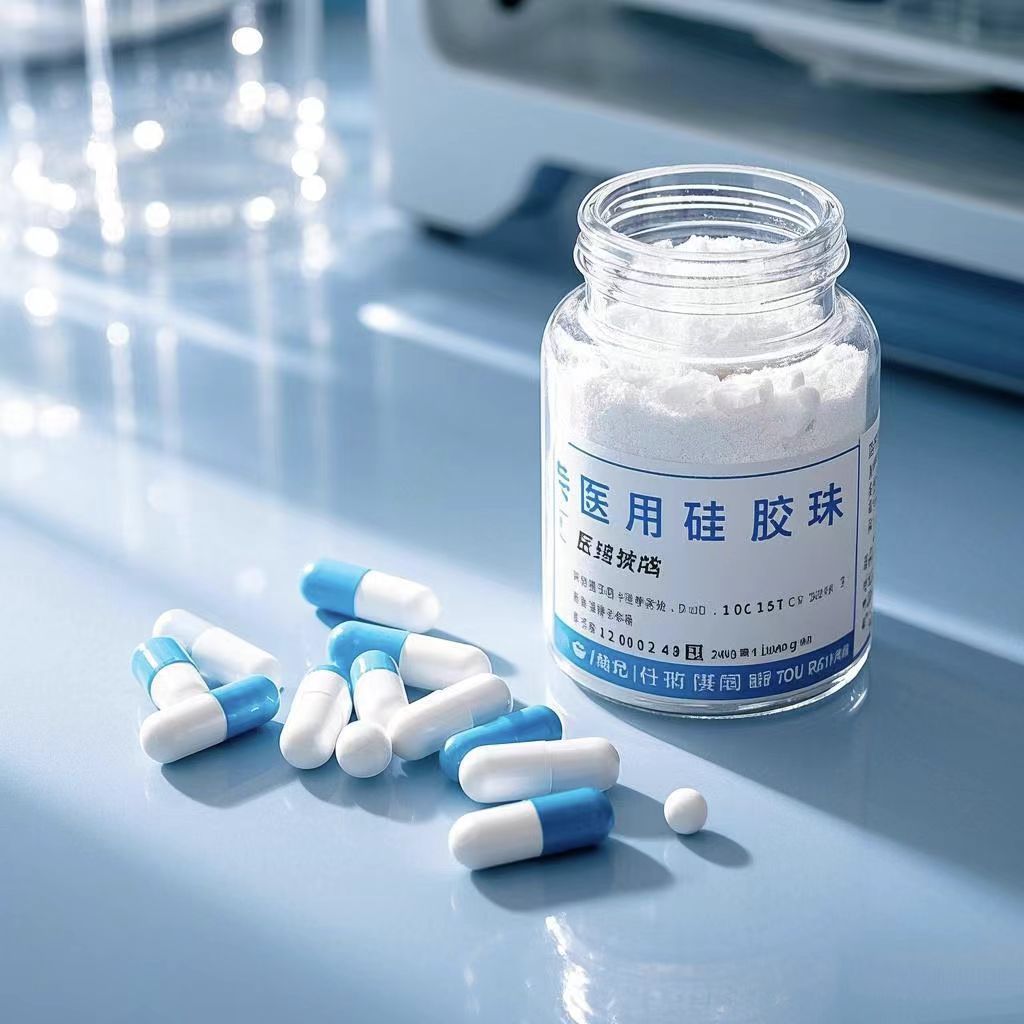
Getting a therapeutic agent to exactly where it needs to go inside the body has always been one of medicine’s toughest puzzles. Biological barriers like the blood-brain barrier, thick mucus layers, and tightly packed cellular walls are brilliant at keeping out invaders—but they also block many lifesaving drugs. What’s exciting now is how researchers are designing delivery systems that essentially learn the secret handshakes of these barriers, slipping past defenses without triggering alarm. Instead of brute force, these platforms use stealthy surface coatings, shape-shifting carriers, and biochemical cues that mimic the body’s own transport mechanisms.
Look at the latest nanocarriers, for example. Some are engineered with lipid bilayers that fuse directly with target cell membranes, offloading their cargo with near-zero leakage. Others exploit receptor-mediated transcytosis, hitching a ride on natural shuttling proteins to cross seemingly impenetrable linings. There’s even work on “swarm” systems where cooperative particles temporarily loosen tight junctions just enough to slip a therapy through, then allow the barrier to reseal. These aren’t just incremental tweaks; they fundamentally rethink how we negotiate with biology rather than fight against it.
What sets the most promising approaches apart is how they adapt in real time. Smart polymeric matrices respond to local pH shifts or enzyme activity, releasing their payload only when they sense the specific microenvironments of diseased tissue. Others use mechanical cues—like the shear force in blood flow—to activate release at precise anatomical sites. By treating barriers not as walls but as dynamic interfaces with language of their own, these delivery systems are finally making hard-to-reach targets treatable, from deep-seated brain tumors to chronically inflamed intestinal pockets.
Catalysis Reimagined: Mesoporous Silica as the Backbone of Green Chemistry
Mesoporous silica is quietly reshaping how we think about catalysis, offering a porous architecture that can be tuned with surgical precision. Its honeycomb-like channels, typically ranging from 2 to 50 nanometers, provide a vast internal landscape where reactions unfold under confinement effects rarely seen in traditional bulk materials. By embedding catalytic sites within these ordered frameworks, we move away from harsh solvents and energy-intensive processes, aligning perfectly with the gentle ethos of green chemistry.
What makes this material particularly compelling is its dual nature—it acts as both a scaffold and a participant. The silanol groups on its surface aren’t mere spectators; they can be functionalized with organic ligands, metal nanoparticles, or enzymes, turning an inert chunk of silica into a finely orchestrated catalytic machine. This adaptability ensures that mesoporous silica isn’t just a one-trick pony but a platform that evolves with the demands of cleaner synthesis, from biomass conversion to pharmaceutical intermediates, all while minimizing waste and maximizing atom economy.
Beyond the lab bench, the real charm lies in how mesoporous silica bridges the gap between academic curiosity and industrial pragmatism. Its robust thermal and mechanical stability means it can endure the rigors of continuous flow reactors, while its ordered pores resist fouling far better than many of their erratic counterparts. As industries inch toward circular models, these materials offer a chance to design catalysts that don’t just speed up reactions but do so with a conscience—reusable, selective, and inherently safer by design.
Environmental Remediation Breakthroughs You Never Saw Coming
Imagine a world where toxic waste simply vanishes, not in a hundred years, but in a matter of weeks. That is the quiet promise of bioremediation advancements that sound more like science fiction than science fact. The cleanup crew isn’t wearing hazmat suits—they’re microscopic, hungry, and shockingly efficient.
Take fungi, for instance. Certain strains have developed an appetite for complex pollutants like petroleum and pesticides, breaking them down into harmless compounds with a metabolic skill that feels almost intentional. In some field tests, contaminated soil treated with oyster mushrooms regained enough purity to support new plant life in a single growing season, a timeline that previously would have required heavy machinery and decades.
Then there’s the electrifying approach: using bacteria that generate electricity as they digest contaminants. These microbial fuel cells do double duty, scrubbing water while producing a tiny current—a reminder that pollution itself can be a resource when you have the right partners. It’s environmental remediation not as a grim chore, but as a series of unexpected alliances with nature’s most overlooked organisms.
Smart Coatings and Sensors: The Invisible Intelligence of Mesoporous Silica
Mesoporous silica operates on a level that most people never notice, yet its impact on smart coatings and sensors is profound. These nanostructured materials, defined by their highly ordered pores and vast internal surface areas, can be engineered to respond to environmental cues such as pH shifts, temperature fluctuations, or the presence of specific molecules. When integrated into coatings, they don’t just sit passively on a surface—they actively monitor, protect, and adapt. This invisible intelligence transforms ordinary surfaces into responsive interfaces, capable of releasing corrosion inhibitors on demand or signaling wear before it becomes visible.
In sensor development, mesoporous silica acts as a versatile scaffold, hosting functional molecules that trigger detectable changes when they encounter target analytes. Unlike traditional bulky sensing systems, these thin-film formats enable real-time, label-free detection directly on materials, whether it’s tracking moisture in concrete or detecting gas leaks in pipelines. The beauty lies in the subtlety: the coating looks nothing like a sensor, yet it constantly gathers data, offering a quiet, continuous awareness that reshapes how we think about intelligent surfaces.
The Next Frontier: Tissue Engineering and Beyond with Mesoporous Silica
Mesoporous silica has quietly reshaped the landscape of tissue engineering, offering a level of control that conventional scaffolds simply cannot match. Its highly ordered pore networks act not just as passive structural supports but as active participants in cellular fate. By fine-tuning pore size, surface chemistry, and particle morphology, researchers can guide cell adhesion, proliferation, and differentiation with unprecedented precision. The material's ability to encapsulate and release growth factors, ions, and even gene-silencing agents in a sustained manner adds a dynamic layer to regenerative strategies, turning static implants into responsive environments that evolve alongside healing tissue.
Beyond mere regeneration, mesoporous silica is catalyzing a shift toward intelligent therapeutic platforms. Functionalized versions now serve as stimulatory interfaces that bridge hard and soft tissue repair, accelerating osteogenesis while modulating inflammation. Hybrid systems incorporating metals or polymers further expand their utility, enabling applications like glucose-responsive insulin delivery, neural guidance conduits, and wound dressings that autonomously adjust drug release based on local pH or enzyme activity. These platforms blur the line between scaffold and smart delivery system, embodying a new therapeutic logic where the material itself becomes an integral part of the treatment protocol.
The real excitement, however, lies in arenas still considered speculative. In 4D bioprinting, mesoporous silica particles are being designed to undergo programmed shape transformations over time, mimicking developmental morphogenesis. Their nanoscale architecture is being leveraged to create synthetic cellular niches that house engineered organelles, opening doors to cell-free metabolic systems and synthetic extracellular matrix proxies. As researchers probe interactions at the bio-nano interface, mesoporous silica is poised to underpin technologies that do not merely repair damaged tissues but fundamentally reprogram biological function, pushing the boundaries of what we consider living material hybrids.
FAQ
Think of it as a molecular Swiss Army knife. Mesoporous silica features a highly ordered pore network with tunable sizes (2–50 nm), an enormous internal surface area that can exceed 1000 m²/g, and a surface chemistry that’s easy to modify. This combination means you can load it with drugs, catalysts, or even genetic material, and then tailor how and when those payloads are released. No other material platform offers quite the same degree of structural control alongside such robust thermal and chemical stability.
Several game-changers stand out. One is the synthesis of hollow mesoporous silica nanoparticles with ultra-large pores, allowing the encapsulation of bulky biomolecules like enzymes and antibodies. Another is the development of stimuli-responsive gatekeepers—molecular lids that open only in response to pH changes, enzymes, or light—giving us precise spatiotemporal control over release. Plus, the integration of mesoporous silica with metal-organic frameworks (MOFs) or carbon dots has spawned hybrid materials with entirely new capabilities, from improved imaging to synergistic therapies.
It’s enabling a new era of theranostics—simultaneous therapy and diagnostics. For instance, dye-doped silica particles can track where a drug goes in real-time via fluorescence or MRI. They’re also being engineered to starve tumors by delivering agents that block nutrient supply or to modulate the immune system. In tissue engineering, mesoporous silica scaffolds loaded with growth factors are showing promise for bone regeneration, with the silica itself gradually dissolving into silica ions that stimulate osteogenesis.
From mopping up heavy metals in water to capturing CO2 from industrial flue gases, it’s quietly becoming a green hero. Scientists have grafted amine groups into the pores to create solid sorbents that rival liquid amines for CO2 capture but with much lower energy penalties. Others have used it to detoxify pesticide runoff or to host bacteria for bioremediation in a protective carrier. Even self-cleaning surfaces and anticorrosion coatings benefit from its ability to store and slowly release active agents.
Confinement effects. When you carry out a catalytic reaction inside a pore just a few nanometers wide, the behavior of molecules changes—reactivity can be boosted, selectivity fine-tuned. Moreover, you can anchor single-atom catalysts or enzyme mimics onto the silica walls without them clumping, maximizing efficiency. In energy devices, mesoporous silica membranes serve as ion-conducting highways in fuel cells, and its high surface area makes it an excellent support for lithium-sulfur battery cathodes, trapping polysulfides that would otherwise kill the battery’s lifespan.
A handful of cosmetic and pharmaceutical products already use it for controlled fragrance or drug release, but mass-market penetration is held back by manufacturing costs and scalability. Making particles with batch-to-batch uniformity at the ton-scale while keeping them stable in suspension is not trivial. There are also open questions about long-term biological fate—most studies point to good biocompatibility, but regulatory agencies demand exhaustive proof. Advances in continuous flow synthesis and food-grade formulations are helping push the bar, so the next decade could bring it into common home items like odor-absorbing textiles or long-lasting disinfectants.
Absolutely. Its low dielectric constant makes it attractive as an insulating layer in microchips, potentially reducing signal delay. And by filling the pores with optoelectronically active guests—quantum dots, conductive polymers—scientists are crafting next-gen light-emitting devices and sensors with record sensitivities. Imagine a contact lens that monitors glucose through a mesoporous silica coating, or a smartphone screen that doubles as an air-quality detector. These concepts are inching out of the lab.
Conclusion
Mesoporous silica has emerged as a cornerstone of advanced materials, its precisely engineered nanoarchitecture redefining what’s possible across multiple frontiers. By fine-tuning pore size, surface chemistry, and morphology, scientists have unlocked drug delivery platforms that navigate biological hurdles with remarkable stealth and precision, releasing therapeutics only where needed. This same structural finesse has reimagined catalysis, turning mesoporous silica into a workhorse for green chemistry—its vast internal surfaces host catalytic sites that accelerate reactions under milder conditions, slashing waste and energy use. Meanwhile, environmental applications have sprung to life in unexpected ways: these materials are now extracting heavy metals and organic pollutants from water with an efficiency that rivals nature’s own filters, all while being regenerable and safe.
Beyond the lab, mesoporous silica is infiltrating everyday life through smart coatings and sensors that respond to environmental cues almost instinctively—imagine surfaces that self-clean, detect corrosion, or change color upon exposure to toxins. But the most audacious leaps are in tissue engineering, where silica scaffolds coax cells into regenerating bone, cartilage, and even neural tissue, blurring the line between inert implant and bioactive seed. From targeted cancer therapies to next-generation biosensors and regenerative matrices, these breakthroughs aren’t mere incremental steps; they signal a paradigm shift where mesoporous silica becomes an invisible intelligence woven into the fabric of future technologies, quietly reshaping medicine, energy, and environmental stewardship.
Contact Us
Contact Person: Levin Wang
Email: [email protected]
Tel/WhatsApp: 8618668999988
Website: https://www.silicaplant.com/