

OEM Activated Carbon: Key Benefits and Smart Selection Tips for Industrial Use
2026-08-20
Most plant managers only think about activated carbon when something goes wrong—a contaminant spike, a failed emissions test, or a clogged filter. But by then, the real cost isn’t just the replacement media; it’s downtime, compliance risk, and wasted energy. That’s why choosing the right OEM activated carbon supplier matters as much as the carbon itself. In this guide, we’ll walk through the key benefits of OEM-grade activated carbon and share practical selection tips for industrial use, including what to look for beyond the spec sheet. Along the way, you’ll see how Tundrr helps teams avoid the usual pitfalls and get a tailored fit for their process.
Why Standard Carbon Often Underperforms in High-Load Industrial Streams
Standard activated carbons, typically designed for potable water or light odor control, struggle when confronted with the concentrated, multi-contaminant reality of industrial effluent. Their pore structure—often dominated by micropores under 2 nm—works beautifully for trace organics, but collapses into rapid saturation once heavy hydrocarbons, emulsified oils, or high molecular weight polymers start competing for those same sites. Within hours, not weeks, the accessible surface area becomes clogged, and pressure drop across the bed spikes as suspended solids and viscous films coat the granules.
Chemical surface interactions also fall short. Most commodity carbons rely on weak van der Waals forces and a modest oxygen content, which proves useless against polar, ionizable, or highly soluble species like short-chain alcohols, certain amines, or chelated metals. In high-load streams, adsorption is no longer a simple partition process—it becomes a kinetic race where slow internal diffusion, unbalanced mesoporosity, and limited surface functionality leave large fractions of the carbon bed unused before breakthrough occurs.
Regeneration, often assumed to restore performance, compounds the problem. Steam or thermal reactivation of standard carbon at industrial scale removes only a portion of the adsorbed mass; heavy tars, inorganics, and polymeric residues remain, permanently fouling the pore network. After just a few cycles, the working capacity drops below economic thresholds, forcing operators to replace the media far more frequently than design estimates predicted. The mismatch isn't a marginal inefficiency—it's a fundamental mismatch between carbon engineered for low-concentration polishing and the relentless, aggressive chemistry of high-load industrial streams.
Matching Pore Volume to Your Contaminant Mix Instead of Guesswork
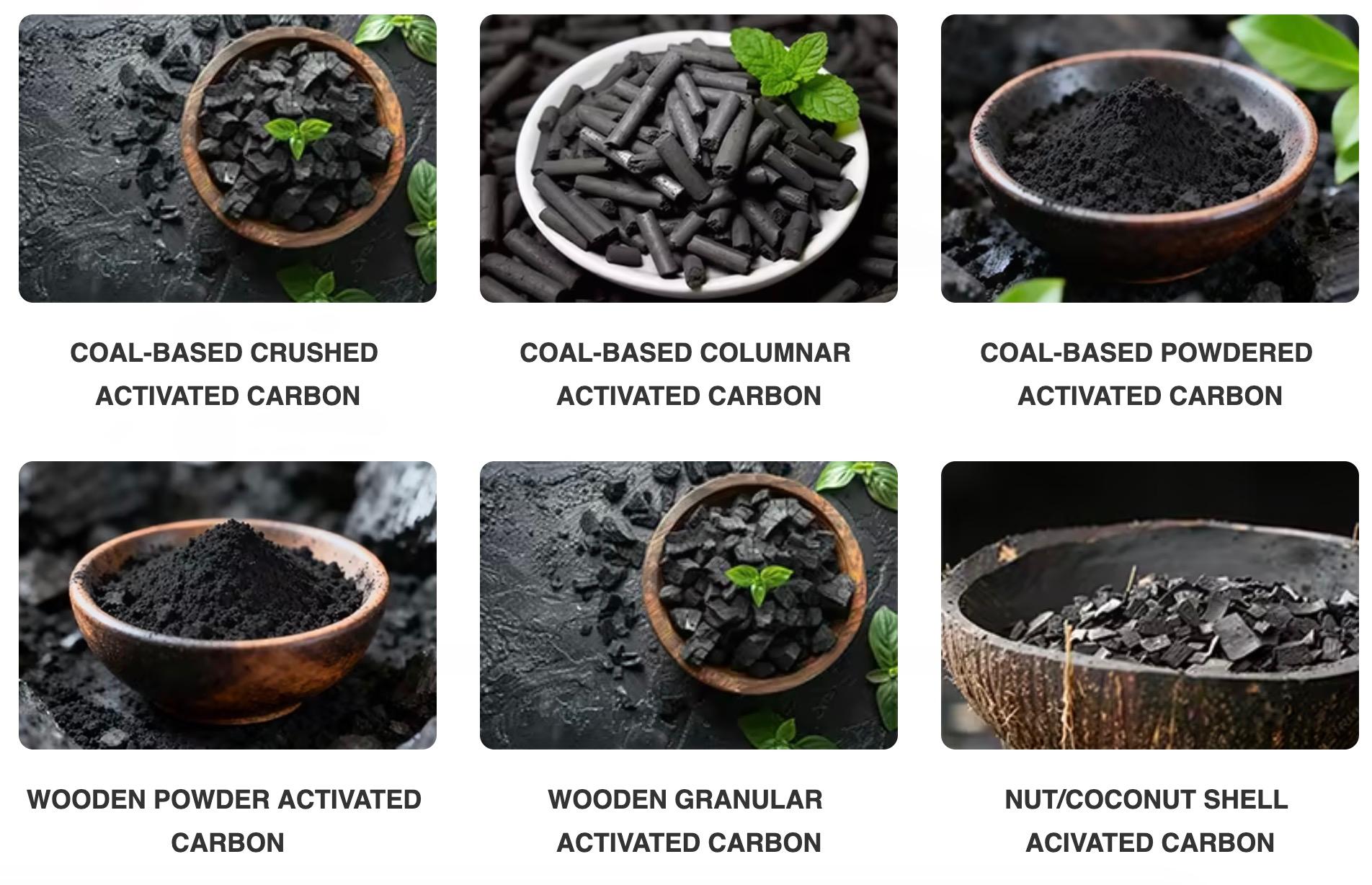
Pore volume isn’t a single number you pick off a datasheet. The mix of contaminants in your stream determines whether you need more micropores for small volatile organics, a healthy share of mesopores for mid-sized molecules like pesticides or humic substances, or larger transport pores to keep fouling from choking the bed. Guessing at a high iodine or molasses number often leaves carbon half-used or lets target compounds slip through.
A better move is to map the molecular weight and polarity of your primary contaminants against the pore size distribution. Run a rapid isotherm or column test with the actual water, not a surrogate. That tells you how much of the pore volume is accessible in practice, because blocked pores and competitive adsorption change everything. Adjust the activated carbon’s activation level or blend different base materials until the pore volume aligns with what you actually need to remove.
What Cheap Bulk Carbon Really Costs You in Downtime and Fines
When a plant switches to the cheapest bulk carbon available, the first thing that disappears is consistency. Low-grade material often arrives with a wider particle size distribution and higher ash content, which means bed packing shifts, flow channels form, and pressure drop climbs faster than expected. That translates into unplanned shutdowns to backwash or replace media—downtime that never shows up on the purchase order but hits the maintenance schedule hard.
The fines are even more predictable. Cheap carbon typically has lower iodine and molasses numbers, so it exhausts sooner against dissolved organics or odor compounds. Discharge limits get breached, and regulators don't care that you saved a few dollars per pound. A single violation can wipe out years of savings, not to mention the legal fees and the time your team spends documenting compliance instead of running the process.
There's also the replacement cycle to consider. You might pay 20% less upfront, but if that media lasts half as long and causes two extra changeouts a year, the real cost is labor, lost production, and disposal fees. Bulk carbon is only cheap if you ignore everything that happens after it enters the system.
Custom Granule Size and Its Direct Effect on Pressure Drop
Granule size isn't just a manufacturing parameter—it directly shapes how fluid moves through a packed bed. When particles get smaller, the void spaces between them shrink, forcing gas or liquid through tighter, more tortuous paths. This creates greater frictional resistance, which shows up as a higher pressure drop across the bed. The relationship isn't linear; halving the average granule diameter can multiply resistance several times over, a nuance that often catches process engineers off guard.
Larger granules, by contrast, leave wider channels that allow flow to pass with less energy loss. But here's the trade-off: bigger particles also reduce the available surface area per unit volume, which can undermine heat transfer or catalytic reactions. So sizing granules for a custom application means balancing acceptable pressure drop against the need for sufficient contact area. Even minor adjustments in size distribution—not just the mean diameter—can produce measurable differences in how the bed behaves under load.
In practice, custom granule sizing often involves iterative testing. A bed packed with slightly irregular granules may behave quite differently from one with uniform spheres, even if their average sizes match. Sharp edges and broad size ranges tend to pack more densely, squeezing the flow path and raising pressure drop beyond what a simple calculation would predict. Understanding this direct link lets designers tune granule dimensions to hit a specific pressure budget without sacrificing throughput or reaction efficiency.
The Overlooked Role of Ash and Hardness in Long-Run Performance
Most performance discussions fixate on filtration ratings, flow rates, or media surface area, yet two quieter characteristics often dictate how a filter behaves months down the road: ash content and structural hardness. Ash, the inert residue left after organic components burn away, might sound like a purity concern, but in long-run filtration it acts as a stabilizer. A carefully controlled ash level prevents media from collapsing under sustained pressure differentials, preserving the tortuous paths that trap contaminants. Think of it not as filler but as the skeletal framework that keeps microscopic channels open when everything else is stressed by heat, vibration, and chemical exposure.
Hardness plays a similarly quiet but decisive part. Filter media that feel rigid out of the box can soften, erode, or deform after weeks of pulsating flow, especially in hydraulic or lubrication circuits. A media structure with calibrated hardness resists fiber shedding and channeling, which are the silent killers of efficiency over time. When hardness and ash content are tuned together, the filter doesn't just survive the first few hundred hours; it maintains a steady pressure drop and contaminant capture rate far beyond the point where cheaper alternatives have already been bypassed or replaced.
In practice, long-run performance is less about initial specs and more about how those specs age. A filter with the right ash-hardness balance will show a flatter degradation curve, fewer premature differential pressure alarms, and more predictable service intervals. Field data from heavy equipment and industrial power units consistently points to the same lesson: skip the ash and hardness conversation, and you inherit a maintenance burden that no amount of nominal micron rating can erase.
Reading Spec Sheets Like an Engineer, Not a Marketer
The first thing an engineer does with a spec sheet is ignore the bold claim at the top and flip directly to the test conditions. A marketer sees '500 W output' and stops there; an engineer asks at what ambient temperature, for how long, and with what cooling airflow. The same part rated for 500 W at 25°C with forced air might barely handle 200 W at 70°C in a sealed enclosure. Those asterisks next to headline numbers are not decoration—they are the boundary between what the part can do in a laboratory demo and what it will do in your actual circuit.
Next, separate typical values from guaranteed limits. Marketers love printing 'typical efficiency 96%' because it looks great in a comparison table. Engineers know that typical means exactly one thing: the middle of a distribution, not a promise. A part with 96% typical efficiency and no minimum spec may arrive in production batches at 93%, and you have no legitimate complaint unless the datasheet lists a hard minimum. Always scan for min/max columns or test graphs across process, voltage, and temperature corners. If the only number is typical, assume the worst and design your thermal and power budget for a part that is several percent worse.
Finally, read the footnotes like a contract lawyer, because that is where the real specifications hide. Pulse ratings often assume a low duty cycle, specific PCB copper area, and a certain pad layout. A '1 A continuous' rating may quietly drop to 0.5 A if you use the recommended land pattern instead of a custom heatsink. Engineers also cross-check the characteristic curves rather than trusting a single printed number: a capacitor's capacitance can fall 80% at rated voltage with DC bias, and an inductor's saturation current may be defined at 30% inductance loss—not at the point it becomes useless. Translate every headline spec into a question: under what conditions, over what tolerance, and for how long?
FAQ
The main difference comes down to specification control. A thoughtful OEM partner adjusts pore size distribution, surface chemistry, particle shape, and hardness to match the exact contaminant profile and flow conditions in your plant. Instead of forcing your process to adapt to a generic product, the carbon is built around your operating window, which usually means longer service life and fewer unexpected changeouts.
There is no universal answer, but the contaminant size and background matrix are good starting points. Coconut shell carbon tends to have a high micropore share and works well for small molecules like VOCs and chlorine. Coal-based grades offer a broader pore range and handle larger organics, while wood-based products often shine in decolorization and liquid purification. Always ask for competitive isotherm data under your actual pH and temperature.
Yes, when the selection is done properly. A higher upfront price can be offset by lower pressure drop, fewer bed replacements, less downtime for media changeout, and better regeneration yield. The real savings come from matching the carbon's working capacity to your specific inlet concentration so you are not paying for unused adsorption potential or suffering early breakthrough.
Many teams fixate on iodine number or surface area alone, but those values do not predict performance in real streams. Moisture content, dust level, particle size distribution, and mechanical hardness often matter more for reliable operation. Another common miss is failing to test with the actual fluid rather than a clean surrogate, which can hide competitive adsorption effects from background organics.
Request batch-to-batch consistency records and ask how they handle raw material variation. A credible supplier will offer application testing, technical support during pilot trials, and clear guidance on regeneration limits. Check whether they can scale from lab samples to full production without shifting the pore structure, and look for evidence of long-term partnerships with plants running similar chemistry.
Yes, even if you start with virgin carbon. Ask about the grade's regeneration behavior: how much working capacity returns after each cycle, whether the hardness survives thermal reactivation, and what happens to trace metals or impregnants. Designing the bed and handling system with reactivation in mind from day one can avoid a costly retrofit later.
Use the actual process stream and mimic the full-scale contact time, bed depth, and flow rate as closely as possible. Run long enough to see the breakthrough curve start to climb, not just the first 48 hours. Compare at least two candidates side by side, and monitor pressure drop and fines carryover along with effluent quality. That approach reveals differences that a simple jar test will miss.
Conclusion
Standard activated carbon frequently falls short in high-load industrial streams because its pore size distribution doesn't align with the mix of large and small molecules that need removing. When pore volume is matched to the actual contaminant profile—not guessed from a generic datasheet—breakthrough time improves sharply and carbon consumption drops. Cheap bulk carbon often looks attractive on purchase orders, but it carries hidden costs: excessive fines clog downstream filters, frequent bed changeouts inflate labor and downtime, and inconsistent adsorption forces oversizing of vessels just to stay compliant. OEM activated carbon eliminates much of this guesswork by offering controlled pore development and consistent lot-to-lot quality. The result is a bed that reaches target removal efficiency sooner, lasts longer between replacements, and produces fewer fines that would otherwise require additional filtration or cause pressure spikes.
Granule size matters more than most plant engineers realize. Coarse grades lower pressure drop but may sacrifice kinetics; fine grades boost speed but drive up energy costs and backwash frequency. A custom mesh cut, tuned to your flow rate and bed depth, keeps differential pressure stable without losing working capacity. Long-run performance also depends on ash content and hardness—low ash means fewer leachable impurities, while high hardness prevents attrition during backwashing and thermal reactivation. When reading a spec sheet, focus on measurable properties like butane activity, abrasion number, moisture content, and particle size distribution, and ask for test data from your actual stream rather than idealized lab conditions. Smart selection means treating carbon as an engineered component, not a commodity. That shift in mindset turns a recurring consumable expense into a stable, predictable part of the process.
Contact Us
Contact Person: Ellen Zhang
Email: [email protected]
Tel/WhatsApp: +86(21) 2287 6756
Website: https://www.tundrr.com/en/