

OEM Angle Steel Lattice Transposition Towers from China: What Buyers Need to Know
2026-09-29
Sourcing OEM angle steel lattice transposition towers from China isn’t just about comparing prices—it’s about knowing which fabrication details will hold up under load, which certifications actually matter, and which suppliers can handle the complexity without cutting corners. If you’re tired of vague sales promises and want a clearer path from spec to delivery, this guide draws on real project experience from Anbang to show you what separates reliable towers from costly surprises.
The Spec Sheet Trap: When Angle Steel Grades Lie
Walk into any steel yard and you'll see racks of angle iron tagged with impressive-sounding grades—A36, S235JR, SS400, Q235B. The spec sheet says each one meets a minimum yield strength and a tidy chemical composition. But on the shop floor, those numbers start to blur. A batch stamped A36 might actually be closer to A283, or a load of S235 could contain enough carbon to crack your weld. The problem isn't always outright fraud; it's the quiet drift of tolerances, the casual mixing of heats, and the optimistic rounding that happens somewhere between the mill and the invoice.
The trap snaps shut when you trust the paperwork more than the metal itself. You design a bracket for a 36 ksi yield, drill your holes, and weld it up—only to have it twist under a load it should have shrugged off. Later, a spark test or a hardness check tells the real story: the material was never what the sheet claimed. Suppliers often don't even know. They buy from a distributor who bought from a trader who bought a mixed lot at auction. Each handoff adds a layer of assumption, and the original mill certificate becomes little more than a decorative PDF.
What makes this lie so persistent is that angle steel forgives a lot of sloppiness. A few extra thousandths of phosphorus, a slightly lower manganese, a missing normalization step—none of it shows up until the part is already in service. By then, the cost of a failed batch far exceeds the savings from buying "certified" material off a truck at 3 a.m. The only honest defense is suspicion: test a sample from every new lot, check the heat number against the physical tags, and never let a glossy spec sheet replace a tensile machine.
Why Lattice Geometry Fails Long Before the Tower Does
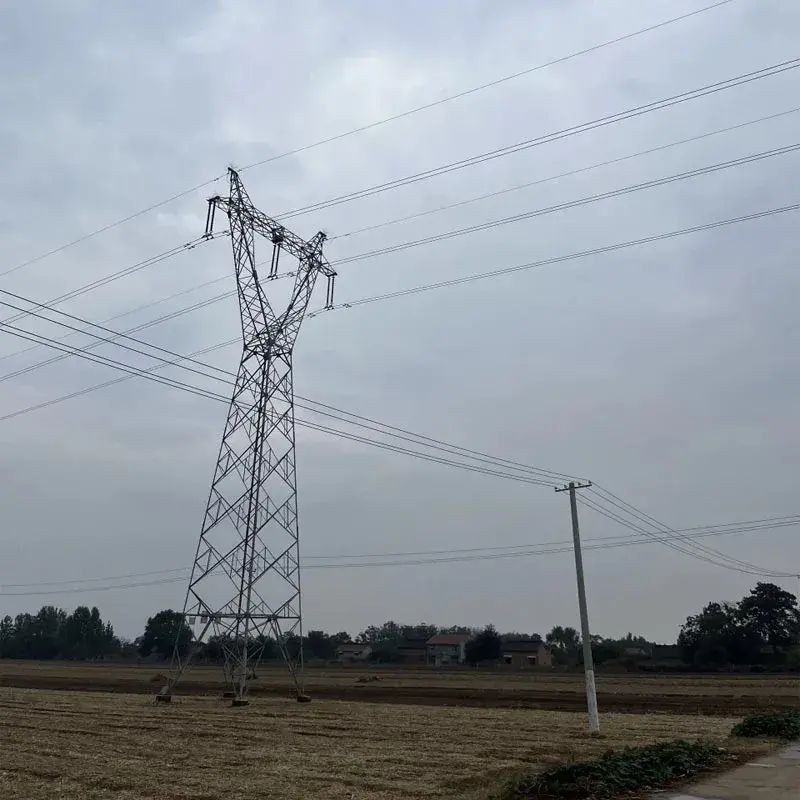
The assumption that a tower's collapse begins with its visible upper structure misses where the real failure takes root. Lattice geometry, with its diagonal bracing and triangulated joints, is often praised for distributing compressive and tensile loads efficiently. But that efficiency depends on a delicate balance of member lengths, connection stiffness, and load paths that remain stable only under a narrow range of conditions. Once one diagonal element loses its designed tension or a node shifts by a fraction of a degree, the entire network of triangles stops behaving as a unified system. The failure is not dramatic at first—just a redistribution of stress that moves silently into members never meant to carry that magnitude of force.
What makes lattice structures particularly vulnerable is that their redundancy works against them in the early stages of distress. A solid beam may crack visibly, but a lattice can hide its deterioration behind dozens of small, interacting members. When one strut buckles, its neighbors absorb the extra load, and for a while the tower appears to be holding. Yet each absorbed load pushes another member closer to its elastic limit, and the pattern repeats faster than visual inspection can track. This cascading transfer is geometric, not material: the angles between members change, the nodes rotate, and the original triangular cells distort into parallelograms that can no longer resist bending moments. By the time the upper tower shows any outward sign of sway or sag, the lower lattice has already lost most of its load-bearing coherence.
The practical lesson is that a lattice tower can be structurally doomed without ever experiencing a single broken weld or snapped diagonal. The failure lies in the accumulated micro-deformations that alter the geometry beyond its designed tolerance. Since the tower's strength comes from geometric form rather than raw material mass, even a modest shift in node positions changes the entire force diagram. Engineers who rely on visual plumb checks or localized strain gauges often miss this because the structure still looks intact from the outside. The real countdown starts not when the tower leans, but when the first triangle stops being a triangle in the mathematical sense that gave it strength.
Inside Chinese OEM Factories: What the Audit Photos Don't Show
The audit photos always look the same: clean aisles, workers in proper PPE, color-coded bins, and a quality control station with a clipboard. They're taken after a week of notice, after the floors have been scrubbed and the night shift got a refresher on which chemicals go where. But those images capture a staged version of production. The real factory exists in the gaps between audits — the improvised jigs made from scrap metal, the handwritten label that replaces a missing barcode, the machine that runs with a slight wobble because the replacement bearing wasn't a perfect fit. These aren't failures of management so much as the daily negotiations between what the spec sheet demands and what the supply chain actually delivers.
Walk through a Chinese OEM plant without the audit checklist in hand, and you start noticing the layered reality that photos can't hold. You see the veteran operator who taps a pressure gauge twice before reading it because she knows it sticks after lunch. You see the stack of rejected housings in the corner, not hiding, just waiting for the rework team that comes in on Sunday. You smell the cutting fluid that's been reused one cycle too many, and you hear the air compressor kick on with a shudder that everyone's learned to ignore. The official documents say defect rate under 0.5 percent, but the informal whiteboard near the break room tracks a different number — the one that includes parts pulled off the line before final inspection, the ones that never make it into the official tally.
What most surprises outside buyers is how much knowledge lives in the bodies and habits of the workers, not in the SOPs or the digital MES screens. The audit photos flatten that expertise into a tidy row of compliant stations. But the real skill shows when a batch of castings arrives with porosity in the same spot every third pallet. The line leader knows to slow the feed rate and bump the coolant pressure before the automatic gauges flag anything. She learned it from a guy who retired before the last software upgrade. That kind of tacit coordination never appears in an audit report, but it's the reason the line keeps running on the days when the photos would show nothing out of place at all.
Galvanizing Thickness: The 10-Micron Mistake That Costs Years
A galvanized coating is only as reliable as its thinnest point. When specifiers trim ten microns off a required zinc layer—often to shave cost or match an incorrect standard—they’re not just adjusting a number. That missing thickness translates directly into lost years of corrosion protection, especially in coastal or industrial environments where chloride and sulfur compounds attack zinc at a predictable rate.
The math is unforgiving. In a C3 medium-corrosivity environment, zinc typically erodes at roughly 1 to 2 microns per year. Remove ten microns and you can expect the steel beneath to see red rust five to ten years sooner than the design intended. What starts as a minor tolerance call on a drawing ends up as premature patching, expensive maintenance, or full replacement long before the asset should have failed.
Field inspectors often spot the problem only after the first signs of base steel corrosion appear—by then, the damage is structural, not cosmetic. The real fix is to treat galvanizing thickness as a performance requirement, not a negotiable line item, and to verify it with a magnetic gauge at multiple points rather than accepting a single batch average.
Freight, Customs, and the Unplanned Budget Line
Most budgets treat freight as a fixed line item—a quoted rate multiplied by container count. Reality starts to diverge the moment a shipment hits the port. Carriers revise surcharges after booking, consolidation delays add storage days, and a missing HS code correction can hold cargo while demurrage clocks run. Those costs rarely appear on the initial logistics quote.
Customs adds another layer of unpredictability. A routine inspection might uncover a valuation question, a missing certificate, or a tariff classification that seemed obvious but triggers a different duty rate. Each clarification eats time, and time in a bonded warehouse is billed daily. Importers who budget only for declared duties often discover an extra five to eight percent in fees they never planned.
The unplanned budget line isn't really about bad forecasting; it's about planning for variance. Building a buffer of ten to fifteen percent over quoted freight and customs estimates sounds conservative, but it prevents painful conversations with finance later. Treat that buffer as a standard cost of global trade, not an exception.
Installation Crews and the Bolts That Never Fit
Every install crew knows the moment: the last panel is lined up, the drill is ready, and then the first bolt refuses to seat. Not because anyone stripped the threads or grabbed the wrong size, but because the hardware simply does not match the bracket. The drawings looked perfect on screen. The supplier promised consistency. Yet here on site, with the wind picking up and the client watching from the doorway, the crew realizes the tolerances were never field-verified.
The real trouble starts when one bad bolt forces improvisation. Someone digs through a bucket of mixed fasteners, someone else suggests tapping the hole wider, and the shift turns into a battle against the material. Good crews develop an instinct for this early on: they dry-fit everything before mounting, they keep a thread gauge in the belt pouch, and they never assume that a packet labeled “compatible” means the pieces will actually marry under load. The ones who skip that step end up drilling out broken bolts at sunset.
What separates a smooth install from a long afternoon is rarely skill with a wrench. It is the willingness to stop, check the mismatch, and call it out before the first turn of the ratchet. Bolts that never fit are not a mystery; they are a signal that someone upstream skipped a step. The crew that catches that signal early keeps its schedule intact and its knuckles unscarred.
FAQ
An OEM angle steel lattice transposition tower is built from hot-rolled angle sections bolted or welded into a lattice frame. It is placed at specific points along high-voltage AC lines, usually 110 kV and above, to rotate phase conductor positions. That rotation balances impedance between phases and helps keep voltage levels stable over long distances.
Many buyers come to China because the domestic angle steel supply chain is deep and costs stay competitive even after freight and import duties. You also get access to manufacturers that run dedicated lines for lattice towers and have experience with unusual transposition designs, which is not always true locally.
You can usually specify nearly everything: tower height, leg slope or straight body, number of cross-arms, conductor and ground wire attachment details, design wind speed, ice load, seismic zone, and hot-dip galvanizing thickness. Chinese OEMs will also often optimize the structure to reduce steel weight while meeting your load cases, if you let them.
Do not just ask for an ISO certificate. Check that the mill certificates for steel match the grade you ordered, Q355 or ASTM A572 for instance, and confirm galvanizing follows ASTM A123 or ISO 1461 with the minimum coating thickness you need. Also request mechanical property test reports and dimensional inspection records before shipment.
Ask for a reference list with similar transposition tower projects, not just regular lattice towers. Then have your engineer review their design calculations or at least the general arrangement drawings. A reputable OEM should be able to provide trial assembly photos or live video and accept third-party inspection at the factory.
Steel grade and total tower weight dominate the price, but galvanizing thickness and any extra coating add cost quickly. Packaging also changes the number: containerized bundles with plywood or steel frames cost more than simple steel-strapped bundles. Order size and inland shipping distance to the port matter, and the price per ton can shift with the steel market.
Most angle steel lattice towers are bundled and shipped either in open-top containers, on flat racks, or as break bulk. If the order is big enough, break bulk from Shanghai or Tianjin often makes sense because you can load long bundles without cutting members. You will need to coordinate customs clearance, port handling, and trucking to site, so clarify whether the supplier quotes FOB, CIF, or DAP.
The biggest trap is picking the lowest bid without pinning down tolerances and inspection hold points. Also confirm whether all bolts, step bolts, and anti-climbing devices are included, and agree on how galvanizing damage during transport will be repaired. If packaging and marking are vague, you can end up with mixed bundles that slow down assembly on site.
Conclusion
Buyers chasing low per-ton prices on Chinese OEM angle steel lattice transposition towers often discover the real cost only after delivery. The spec sheet can claim Q355 or Q420, but mill certificates sometimes drift from what the steel actually tests; a 10-micron shortfall in hot-dip galvanizing may not look like much on paper, yet it quietly strips years off coating life in corrosive or high-humidity corridors. Lattice geometry presents its own failure mode: members sized for one loading assumption can buckle early if wind spans, conductor tensions, or transposition angles are even slightly off, meaning the tower fails long before the steel does. Factory audits provide some comfort, but the photos rarely capture batch-to-batch welding variability, undercut bolt holes, or the quiet substitution of secondary steel when primary stock runs low.
Freight and customs rarely stay within the initial quote. Port congestion, container rollovers, anti-dumping duties, or a last-minute switch from breakbulk to containerized shipping can add a line item no one budgeted. Then comes installation: crews often report that galvanized bolts from one lot bind in holes from another, or that field-drilled corrections void the original protection. Smart buyers stop treating the tower as a commodity purchase and start managing it as a supply-chain quality problem, requiring third-party inspection at the mill, checking coating thickness on every batch, and confirming fit-up of a trial assembly before the containers leave the yard.
Contact Us
Contact Person: antor khan
Email: [email protected]
Tel/WhatsApp: 8613863903569
Website: https://www.qdabtower.com/