

OEM Fuse Holder Manufacturer: How to Choose a Reliable Partner for Custom Projects
2026-09-09
Custom fuse holder projects rarely fail because of a bad design. They fail because the manufacturer you chose couldn't translate that design into a safe, consistent, and certifiable product. If you're sourcing an OEM fuse holder for a new device or upgrading an existing line, the difference between a smooth launch and a costly recall often comes down to one decision: who is actually making the part. That's where SINGI enters the picture. In this guide, we'll break down what separates a reliable OEM fuse holder partner from a risky one, and why custom projects demand more than a catalog spec sheet.
Can They Engineer Around Your Fuse Holder Constraints?
Fuse holder constraints often emerge from board real estate, temperature derating, or mechanical retention demands. Experienced engineers rarely accept those limits at face value. They may specify PCB-mount clips with reinforced solder tabs, shift to in-line holders with factory-crimped leads, or redesign the power input stage to remove heat from the holder entirely. Each choice trades component count against long-term reliability, so the real question isn't whether someone can work around your constraint but how much validation they are willing to invest.
In many designs, the biggest constraint is not current rating but the physical envelope. A standard 5x20mm holder can force awkward board cutouts or block airflow. Common workarounds include using blade-style fuses with integrated holders, moving the fuse to a serviceable panel location, or replacing the discrete holder with a resettable polymer fuse that requires no socket at all. These moves often simplify assembly and reduce the bill of materials, though they shift the failure mode from simple replacement to more complex diagnostics.
Vibration and shock introduce another set of constraints. A fuse holder that works on a bench can fail in the field when spring contacts lose tension or solder joints crack. Engineers often counter this by selecting holders with positive locking mechanisms, applying staking compound to the base, or designing the board so the holder sits near a mounting boss rather than in the middle of a flexible span. Such changes are rarely elegant on the schematic but make a measurable difference in service life.
Beyond the Catalog: Custom Enclosure and Terminal Options
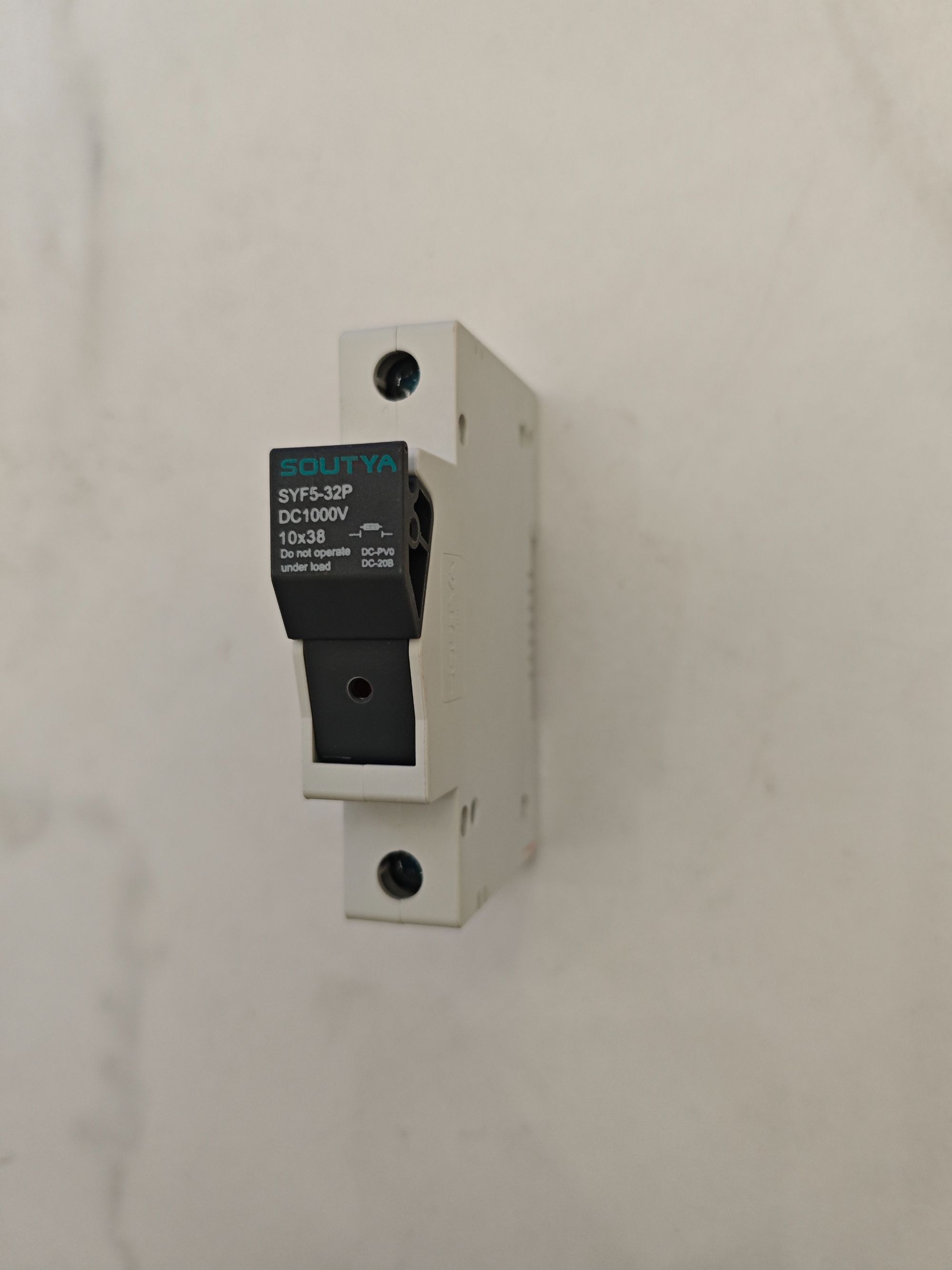
Standard catalogs offer a convenient starting point, but real-world applications rarely fit neatly into predefined boxes. Off-the-shelf enclosures and terminal configurations often force compromises in space, connectivity, or environmental protection. That's where custom options step in, letting you specify exactly what your project demands without reworking an entire design around a stock part.
Custom enclosure services go far beyond simple size tweaks. You can choose from a range of materials—machined aluminum, molded plastic, die-cast zinc—and tailor dimensions, mounting flanges, cable entry points, and surface finishes. Need a sealed housing for washdown environments? Request an IP67-rated gasket and recessed lid. Want a sleek, branded look? Opt for custom powder coating, laser engraving, or a specific texture. These choices aren't add-ons; they're integral to matching the enclosure to both the electronics inside and the world outside.
Terminal options are equally flexible. Instead of settling for a fixed connector layout, you can specify pin counts, spacing, current ratings, and even mixed signal-and-power configurations. Spring-clamp, screw, or push-in terminations? Right-angle or vertical orientation? Custom PCB headers or panel-mount connectors? By combining the right terminal style with a tailored enclosure, you eliminate adapter boards, reduce wiring clutter, and speed up final assembly. The result is a component that drops into your product as if it were designed from scratch—because it was.
Material Choices That Actually Survive Your Environment
Most material failures come down to one simple mistake: picking something for how it looks on day one instead of how it holds up after three seasons of rain, frost, and direct sun. A glossy clear coat might survive on a shelf indoors, but expose it to coastal salt spray and it starts peeling before the year is out. The key is to match the material to the specific stressors it will face. If your area gets intense UV exposure, skip untreated plastics and vinyls that turn brittle. If moisture is constant, avoid bare steel and anything with water-absorbing fibers unless it's been properly sealed or naturally resistant.
For outdoor projects, a few materials consistently outperform the rest. Marine-grade stainless steel—316 rather than 304—resists pitting from salt and humidity, though it costs noticeably more. Powder-coated aluminum handles UV and rain without rusting, and its finish won't flake like traditional paint if the coating was applied correctly. When you need wood, cedar and teak contain natural oils that repel rot and insects, but they still benefit from an annual oil treatment rather than a heavy varnish that cracks under thermal expansion. High-density polyethylene lumber, the kind used in docks and playgrounds, won't warp, splinter, or fade nearly as fast as pressure-treated pine.
Before committing to any material, do a small test patch in the least forgiving spot you can find—north-facing wall, full-sun corner, or right next to a downspout. Check it after six months, not six days. Real-world durability rarely comes from a single miracle ingredient; it comes from choosing a material whose weaknesses don't overlap with the environment's strengths. Spending a bit more upfront on the right alloy, polymer, or species almost always beats doing the job twice.
Don't Just Ask for Certifications—Ask for Test Data
Many procurement teams treat vendor security certifications as checkboxes. But a SOC 2 or ISO 27001 report only offers a narrow snapshot with a limited scope, and it says little about how the product holds up under real stress. If you're evaluating a B2B tool, ask for actual test data: penetration test summaries, load test reports, incident postmortems, and sample security monitoring logs. That's where you'll see whether the vendor truly tests the systems you're about to depend on, or just clears an annual audit.
Certifications also tend to be lagging indicators. A company can earn one and then let things slip until the next audit cycle. Test data, by contrast, is fresh and specific—recent fuzz test results, API security scan findings, disaster recovery drill timings, or red team exercise summaries. Ask for timestamps, scope, and remediation status rather than a glossy attestation. Vendors with nothing to hide will gladly share sanitized evidence, and that willingness is often more revealing than the certificate itself.
From Prototype to Volume: Does Quality Stay Consistent?
A smooth prototype run rarely predicts a smooth production ramp. Prototypes are often built under near-laboratory conditions—experienced technicians, hand-selected components, unlimited time for adjustments. Once the same design hits a production line, different operators, faster cycle times, and supplier variations start to compound. If those variables were never studied during development, small deviations that were invisible in five units can turn into field failures across five thousand.
The real test is not whether the prototype met specification but whether the process can hold it consistently. Many teams discover too late that their prototype relied on undocumented rework or parts that cannot be sourced at scale. Process capability data, gage repeatability studies, and tolerance stack analyses often tell a very different story from a benchtop sample. Without these, you are essentially gambling that every batch will behave like the one-off build.
Quality consistency from prototype to volume requires deliberate engineering. That means locking down supplier agreements before tooling is cut, running pilot lots on production equipment rather than lab fixtures, and monitoring critical characteristics with statistical process control from day one. It is less about heroic troubleshooting and more about removing the conditions that let variation hide.
The Partnership Test: Communication, Responsiveness, and Problem Ownership
Strong working relationships rarely collapse from a single dramatic failure. More often, they erode through small, repeated signals: a question left unanswered for days, a concern brushed aside, a task that falls through the cracks because nobody felt truly responsible for it. The partnership test isn't about scoring perfect interactions every time; it's about noticing patterns in how two sides talk, respond, and own the mess when things go sideways.
Communication in a healthy partnership is less about polished updates and more about clarity under pressure. Do you leave a conversation knowing exactly what was decided, who will do what, and when you'll hear back? Or do you leave with a vague sense of agreement that evaporates by the next morning? Responsiveness follows a similar rhythm: it's not the speed of a single reply, but the reliability of the loop. A partner who answers in two hours consistently beats one who answers in ten minutes once and then goes silent for a week.
Problem ownership is where most partnerships quietly fail. When a deadline slips or a deliverable breaks, does the responsible person step forward without being chased? Or does everyone describe the problem in passive voice—"it got delayed," "the file was corrupted"—as if the issue materialized from nowhere? Real ownership means saying "this is mine, here's what I'm doing, and here's the new date." If that sentence never arrives naturally, the partnership is already running on borrowed trust.
FAQ
A manufacturer worth shortlisting will ask about your operating temperature range, vibration profile, and pollution degree before quoting. They'll also suggest material trade-offs—PBT for cost-sensitive designs, phenolic for high heat—and offer DFM feedback on terminal retention. If they immediately push an off-the-shelf part number, that's a red flag.
Ask for recent test reports from UL or TUV, not just certificates. A good plant will have in-line checks for contact resistance and dielectric strength, ideally with lot traceability down to raw material batches. If you can, visit and watch how they handle incoming plastic resin and metal strip inspection—that's where weak suppliers cut corners.
Expect a DFM review before tooling, plus 3D printed samples for form/fit checks. The manufacturer should confirm plating thickness on terminals, torque limits for mounting, and compatibility with the exact fuse standard (e.g., 5x20mm vs blade). Skipping these steps to rush into mold making usually results in costly mid-project changes.
Low unit price often hides thinner plating, brass instead of phosphor bronze, or regrind plastic. These choices can increase contact resistance and cause premature failures in the field. When you factor in warranty claims and line downtime, the 'cheap' unit is rarely economical.
For North America, UL 4248 or UL 512 are typical; for Europe, IEC 60127-6 matters. Automotive applications may require IATF 16949. Don't just ask for the certificate—verify it covers custom configurations, not just their standard catalog items.
Plan for 8-12 weeks from design freeze to first production run: a few weeks for DFM and prototyping, 4-8 weeks for tooling, then trial runs and testing. If a manufacturer quotes three weeks, they're likely skipping validation or reusing an existing mold.
Use an NDA and a tooling ownership agreement that clearly assigns IP for the design and BOM. Pay for the mold in stages tied to approval milestones, and consider filing a design patent before full production. Also confirm the manufacturer won't show your part at trade shows without permission.
Conclusion
A fuse holder that fits your schematic but can't survive on the factory floor isn't a solution. Before signing anything, ask the manufacturer how they handle real constraints—odd mounting points, restricted space, unusual busbar placements, heat from nearby components. A partner worth keeping will walk through your drawings and suggest modifications without treating every change as a new tooling fee. Custom enclosure shapes, terminal orientations, and cover designs should be part of their standard conversation, not a premium upsell. Then push on materials: if your product lives in salt spray, fine dust, or engine vibration, you need more than a generic UL94 V-0 rating. Ask what happens to the plastic at -40°C and at 85°C after 1,000 cycles. If they hesitate or reply with a brochure, move on.
Certifications matter, but the real question is whether they'll hand over the test reports without you asking twice. A manufacturer that only shows a certificate and hides the curve data for current-carrying capacity or dielectric strength isn't a partner. Prototype samples can be beautiful; the risk is what arrives in month six. Ask about their process control between pilot runs and full production—do they use the same molds, the same material lots, the same torque settings on terminals? Then watch how they communicate when something goes wrong. If your contact disappears after the PO is signed, that's your answer. A reliable OEM fuse holder partner owns the problem from first sketch to last shipment, and they don't make you chase them for updates.
Contact Us
Contact Person: Jack
Email: [email protected]
Tel/WhatsApp: (+86) 13757759651
Website: https://www.singi.com