
Premium OEM Idler Roller Supplier: Durable Solutions for Heavy Machinery
2026-07-24
Heavy machinery demands components that can endure relentless stress. Idler rollers might seem simple, but a failure here can cascade into costly downtime. That's where XAN steps in—not just as a supplier, but as a partner engineering durability into every unit. In this post, we peel back the layers of what makes an OEM idler roller truly built to last.
Engineered for Extreme Conditions: How Our Idlers Withstand the Toughest Jobsites
Every component on a conveyor line takes punishment, but idlers absorb a disproportionate share of the abuse. We’ve moved beyond standard sealed-for-life designs by rethinking the path contaminants take when they attack the bearing housing. Instead of relying on a single lip to keep grit out, our idlers channel debris through a multi-stage purge groove that uses the shaft’s own rotation to spin material away from the seal face. The result isn’t just a longer run time between rebuilds—it’s a measurable drop in peak rolling temperature under belt misalignment, which directly translates to fewer seizures and faster belt tracking recovery.
Jobsites that chew through standard idlers often share one trait: belt wander at the loading zone. We addressed this not by hardening the shell alone, but by engineering the center roll and wing rolls as a matched set with a shared flexural node. When off-center cargo slams into the belt, the wing brackets deflect slightly and return to form without permanent set, effectively isolating the bearing journals from impact shock. Coupled with a deep ball groove geometry that tolerates angular misalignment three times better than the industry norm, these idlers keep turning when others lock up and carve flat spots into the belt cover.
In wet, sticky environments, it’s never just about corrosion—it’s about the tenacious hold of fines that mix with moisture to form an abrasive paste. Our labyrinth shield isn’t simply a metal disc; it’s a non-contact, gravity-assisted flinger profile that works even when the conveyor is coasting to a stop. The cavity behind the shield is filled with a hydrophobic grease that resists washout, yet remains pliable enough to maintain a physical barrier without churning into a high-drag resistance. The difference shows up on scheduled inspections: instead of a ring of hardened slurry around the shaft, you find a clean, dry cavity—idler ready for another thousand hours of operation.
Tailored to Your Specifications: The OEM Advantage in Idler Roller Manufacturing
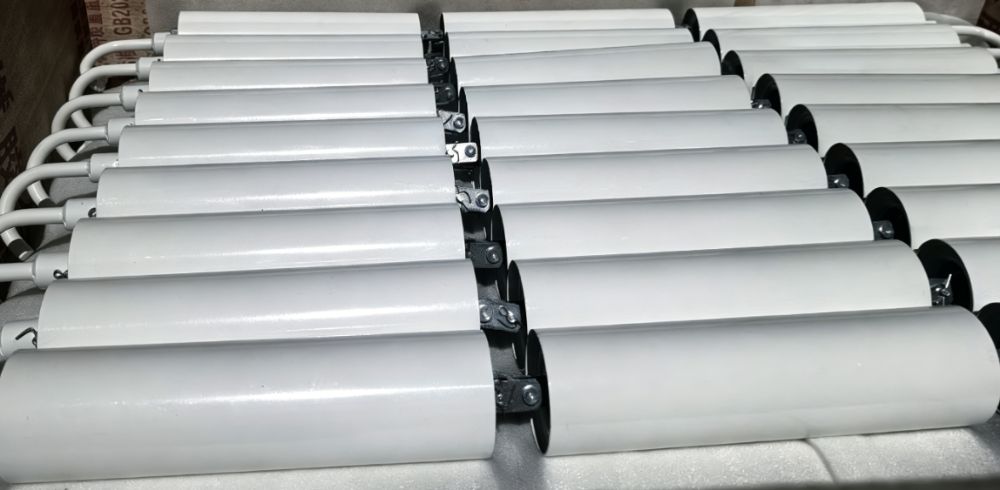
When standard idler rollers fall short of operational demands, OEM customization steps in to bridge the gap. Rather than forcing a one-size-fits-all solution, manufacturers who embrace the OEM model engage directly with your engineering teams to map out every critical parameter—from bearing type and seal design to shaft dimensions and shell thickness. This collaborative approach ensures that each roller is not merely selected from a catalog but engineered to integrate seamlessly with your conveyor system, accommodating unique loads, speeds, and environmental challenges without compromise.
The true advantage emerges in how these tailored components address real-world constraints. Imagine a mining operation where abrasive materials and constant moisture rapidly degrade off-the-shelf rollers. An OEM partner can specify hardened steel shells, advanced labyrinth seals, and proprietary coating technologies that extend service intervals significantly. The result is not just a replacement part but a strategic upgrade that optimizes your entire material handling process, often uncovering opportunities to reduce energy consumption or improve belt tracking that generic components would overlook.
Beyond the physical product, the OEM advantage includes continuity and accountability. Because the manufacturer retains full control over the design, material sourcing, and quality assurance, you gain a reliable supply chain with traceable certifications and responsive aftermarket support. This translates into fewer unexpected failures, consistent performance across multiple orders, and the flexibility to refine the design as your needs evolve—all without the hidden costs of adapting your system to fit someone else's standard.
Beyond Standard Steel: Advanced Materials That Extend Roller Lifespan
Rollers in demanding industrial settings often face premature failure due to wear, corrosion, and fatigue. While standard steel offers a baseline of strength, it rarely holds up under aggressive conditions. Advances in metallurgy and surface engineering have unlocked a new generation of materials—from high‑alloy tool steels to ceramic and cermet composites—that drastically outperform conventional grades. These materials are designed not just to resist surface degradation but to maintain their structural integrity under cyclic loading and chemically active environments, effectively pushing the boundaries of what a roller can endure.
One notable leap is the use of through‑hardened stainless steels with finely dispersed carbides. Unlike plain carbon steel, which relies on a shallow hardened case that wears away, these alloys offer uniform hardness from surface to core. When paired with modern coating technologies such as physical vapor deposition (PVD) or diamond‑like carbon (DLC), the surface hardness can reach levels unattainable by steel alone, while retaining the substrate’s toughness. This hybrid approach allows rollers to shrug off abrasive particles and corrosive agents that would quickly score or pit a standard roller.
Beyond metallic solutions, engineered ceramics like silicon nitride are carving out a niche. Their extreme hardness, low thermal expansion, and natural lubricity reduce friction and eliminate the need for external lubrication in clean‑sensitive or high‑temperature operations. Although more brittle, when integrated as a thin sleeve or hybrid bearing element, they impart a lifespan extension that often justifies the initial cost. The key is matching the material system not just to the load, but to the specific failure mode—abrasion, adhesion, or chemical attack—so the roller lasts longer, operates quieter, and maintains process quality far longer than its steel predecessors.
Minimize Downtime with Self-Lubricating and Sealed Bearing Designs
Traditional bearings demand regular greasing, which forces equipment offline and invites contamination risks during maintenance. Self-lubricating designs change this entirely. By embedding solid lubricants within the bearing material or using sintered polymers that release oil gradually, these components provide continuous lubrication for life. There’s no need for messy re-greasing, no external lubricant reservoirs, and no scheduled stops just to service the bearings. The result is machinery that runs longer between interventions, often eliminating the need for manual lubrication entirely. This shift not only cuts labor but also prevents the common mistake of over- or under-greasing, both of which can lead to premature failure.
Sealing technology plays an equally vital role in sustaining uptime. Advanced contact seals and labyrinth designs keep abrasive particles, moisture, and process chemicals from reaching the rolling elements, even in demanding settings like food processing plants or dusty construction environments. When paired with self-lubricating internals, the bearing becomes a truly closed system—one that maintains its integrity without external care. Some high-performance variants integrate flinger shields or triple-lip seals that dynamically expel contaminants during rotation, which is especially useful in washdown or high-pressure spray applications where water ingress is a constant threat.
The combined effect of these design choices is a sharp reduction in unplanned downtime. Bearings that rarely need attention keep production lines moving, lower total cost of ownership, and simplify machine design by removing complex centralized lubrication systems. In sectors where uptime directly impacts profitability—such as automotive assembly, packaging, or wind energy—these bearings have become a default specification. The technology continues to advance with new polymer composites and seal geometries, further pushing the limits of maintenance-free operation and reliability.
From Mining to Construction: Idler Rollers Proven in Heavy-Duty Applications
In mines where conveyor systems snake through dusty tunnels, idler rollers take a ceaseless pounding from abrasive materials and extreme loads. Their design, often featuring robust seals and deep-groove ball bearings, keeps them spinning reliably even when fines and moisture try to work their way into the bearings. Maintenance teams on site notice the difference when a roller can shrug off the grit and keep the belt tracking true, avoiding the kind of unexpected downtime that throws production schedules into chaos.
On construction sites, the story is similar but the challenges shift. Here, mobile conveyors stack aggregate or feed crushers, and the rollers must handle sharp impacts from large rocks and uneven loading. A roller that cracks under a sudden blow or seizes after rain exposure quickly becomes a bottleneck. The proven designs that survive mining’s relentless demands translate directly to these settings, offering the same resistance to shock and corrosion without requiring constant attention.
What sets these idler rollers apart isn’t just the raw material quality but the understanding that every application has its own rhythm of stress and wear. By testing prototypes in real-world pit and site conditions, manufacturers have refined bearing arrangements, shell thickness, and sealing methods until they deliver a consistent service life that contractors and miners have come to rely on. That field-proven track record means fewer replacements, less downtime, and a smoother flow of material from the pit face to the final pour.
More Than a Supplier: Your Long-Term Reliability Partner in Conveyor Solutions
When you work with us, you gain a team that treats your conveyor system as if it were our own. From the initial design phase to ongoing operational support, we invest in understanding your specific challenges, throughput goals, and uptime requirements. That means you’re not just getting a one-size-fits-most product—you’re getting a solution engineered to perform reliably in your exact environment, year after year.
We know that unplanned downtime can ripple through your entire operation, so we prioritize proactive communication and preventive maintenance. Our field service engineers don’t just show up when something breaks; they work with your team to identify wear patterns, optimize component life, and recommend adjustments before small issues become costly headaches. Many of our clients have been with us for over a decade, not because of a contract, but because they trust us to keep their lines moving.
Partnership means we grow with you. As your production scales or your material handling needs evolve, we’re right there—advising on upgrades, integrating new technologies, and training your staff on best practices. This long-view commitment turns a transactional supplier relationship into a genuine competitive advantage, where you have a dedicated ally focused on your continuous improvement, not just the next order.
FAQ
An idler roller is a non-powered cylindrical component that supports and guides conveyor belts or tracks on heavy equipment. It maintains proper tension and alignment, preventing belt sag and misalignment, which can lead to premature wear or system failure. In mining, construction, and bulk handling, these rollers absorb immense loads and constant friction, keeping the entire material transport system running smoothly and safely.
OEM idler rollers are engineered specifically for a machine's make and model, ensuring exact fit and performance. They match original load ratings, seal designs, and material compositions precisely. Aftermarket rollers may use generic dimensions or lower-grade materials, leading to tolerance issues, faster seal failure, and reduced bearing life. With an OEM roller, you get the same reliability and longevity the equipment manufacturer intended.
You'll find them in tracked excavators, bulldozers, crawler cranes, and undercarriage assemblies of mining shovels. They're also vital in stationary conveyor systems used in quarries, cement plants, steel mills, and large-scale agricultural processing. Any application where heavy bulk materials or substantial vehicle weight rely on belt or track support depends on robust idler rollers.
Premium idler rollers typically use high-grade forged or cast steel shells that are heat-treated for hardness and wear resistance. The bearing housings are precision machined, and seals are often multi-labyrinth or heavy-duty contact types to keep contaminants out. Some manufacturers apply specialized coatings or overmolding for corrosion resistance in aggressive environments like saltwater or acidic mine runoff.
Absolutely. While standard OEM specs cover most needs, customization is common for extreme conditions. This can include adjusting shell thickness, bearing type and preload, seal configuration, and even surface coating. For high-temperature or highly corrosive settings, suppliers can tailor materials and lubrication to maintain performance without sacrificing durability.
Noticeable vibrations or unusual noise from the undercarriage often signal worn bearings. Visual inspection might reveal flat spots, cracks, or excessive wear on the roller shell. If the roller doesn't spin freely or shows signs of seal leakage, it's time. Left unchanged, a failing roller can cause belt misalignment, increased drag, and damage to adjacent components, leading to costly downtime.
A dedicated supplier offers deep technical knowledge and often direct access to original engineering data, ensuring you get a component that meets all dimensional and material specs. They typically provide traceability, warranty support, and can advise on installation and maintenance. This partnership reduces the risk of premature failure and helps you plan for long-term parts availability, which is critical for keeping heavy machinery production on schedule.
Conclusion
Every component in a heavy-duty conveyor system faces relentless stress, but our idler rollers are built to excel where others fail. By combining precision OEM engineering with materials that go far beyond standard steel, we create idlers that resist abrasion, corrosion, and deformation even in mining and construction environments. Our self-lubricating, sealed bearing designs effectively lock out contaminants while eliminating the need for frequent maintenance, drastically cutting unplanned downtime. Each roller is tailored to exact dimensional and load specifications, ensuring a perfect fit that optimizes belt tracking and extends system life. This customized approach means you get a solution formed around your unique operational demands, not a one-size-fits-all compromise.
Beyond the product itself, our commitment runs deeper—we act as a long-term reliability partner invested in your uptime. From initial material selection through field-proven performance in the harshest jobsites, we stand behind every idler with engineering support and a focus on lifecycle value. Whether you need a single replacement roller or a complete conveyor retrofit, our OEM advantage provides consistency, traceability, and a partnership that evolves with your operation. The result is more than a component supplier; it’s a collaborative relationship that keeps your heavy machinery moving efficiently, project after project.
Contact Us
Contact Person: Anna Lu
Email: [email protected]
Tel/WhatsApp: 8618561668850
Website: https://www.x-conveyor.com