

Professional Vehicle Ozone Machine for Deep Car Odor Removal
2026-10-07
Have you ever stepped into your car after a long weekend and been greeted by a stubborn smell that just won't quit? Whether it's from damp upholstery, pet adventures, or last week's forgotten takeout, deep odors can turn every drive into a chore. That's where a professional-grade vehicle ozone machine comes in—and LUFUTATECH is setting a new standard for effective, lasting odor removal. In this post, we'll explore how ozone technology works, what makes LUFUTATECH's approach different, and why it might be the last odor solution your car ever needs.
Where Car Odors Actually Hide (And Why Ozone Gets There)
The usual suspects—floor mats, seats, the trunk—are only the surface layer. Most stubborn car odors burrow into places you rarely touch: the foam inside seat cushions, the fibrous padding under the carpet, the headliner, and the tiny gaps where seat belts retract. Even the HVAC system plays a role. Mold and bacteria can settle on the evaporator core, sending musty air through the vents every time the fan kicks on. Spilled coffee or a forgotten gym bag may have dried, but the residue lingers inside those porous materials, slowly releasing smell molecules.
Ozone works in these hidden spots because it behaves like a gas, not a spray. It doesn't need a direct line of sight. When ozone fills the cabin, it drifts into the same crevices and porous layers where odor particles are trapped. The extra oxygen atom in ozone reacts with odor-causing compounds—breaking them down through oxidation rather than simply covering them up. This is why a thorough ozone treatment can reach the padding under the carpet or the inside of an air vent, places a wipe or shampoo can't physically touch.
That said, ozone is only as effective as the preparation. If the source is still wet or hidden under a thick layer of debris, the gas may not make full contact. Seats should be moved, floor mats lifted, and the HVAC fan run during treatment to pull ozone through the evaporator and ductwork. When those pathways are open, the same properties that let smells hide—porosity, tight gaps, slow air movement—become the routes ozone uses to neutralize them.
What Ozone Actually Does to Odor Molecules
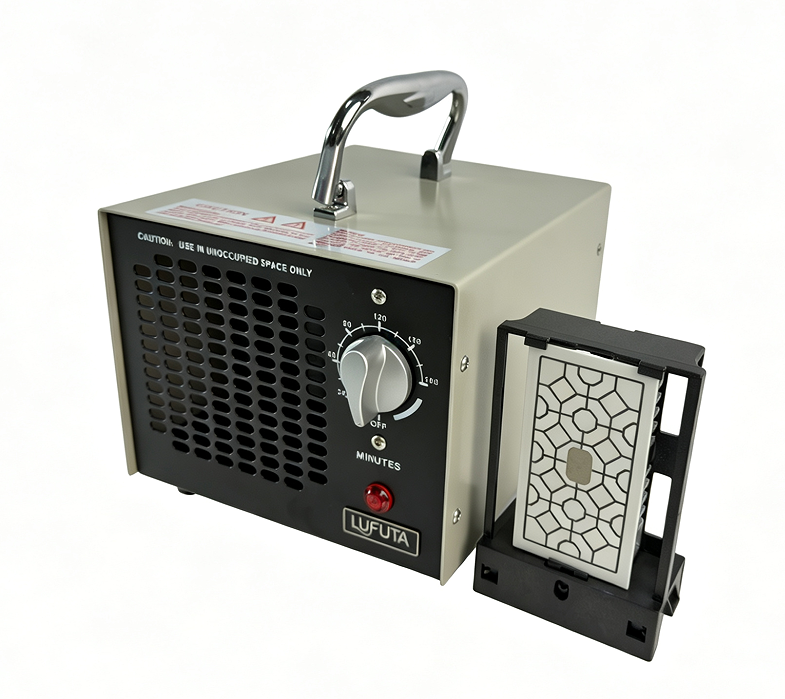
Ozone doesn't just mask foul smells—it goes after the molecular structure behind them. The extra oxygen atom in ozone is highly reactive, especially around double bonds and certain functional groups like thiols or amines. When it collides with a volatile odor molecule, it breaks the molecule apart, often snipping long chains or opening rings. The result is a set of smaller, more oxidized fragments that your nose simply doesn't register as the original stench.
Take the classic rotten-egg smell of hydrogen sulfide. Ozone strips electrons from the sulfur and adds oxygen, converting it into odorless sulfate or sulfur dioxide depending on conditions. Similar reactions happen with amines from fish or urine, and with the aldehydes and ketones that carry many organic odors. Some intermediates might briefly smell different, but a thorough ozone treatment drives the reaction toward compounds too polar or too heavy to linger in the air as smell.
This process isn't instant and effectiveness varies by molecule. Saturated hydrocarbons without reactive sites can be stubborn, which is why ozone works better on cooking smells, smoke residue, and biological odors than on things like gasoline. Humidity and temperature also play a role—moist air helps create hydroxyl radicals that extend ozone's reach. What matters most is that the odor molecule itself is destroyed, not hidden.
Why a Cheap Ozone Generator Won't Save Your Car
The sticker on the box might promise industrial-strength odor elimination, but most budget ozone units are barely powerful enough to freshen a shoebox. Inside a car, the air volume is small, yet the surfaces are vast—every vent, seam, and carpet fiber acts like a sponge for smells. A weak generator produces a thin puff of ozone that dissipates before it ever reaches the mold colony hiding behind the dashboard. You end up with a car that smells faintly of chlorine for an hour, then returns to its old musty self by morning.
Another issue is the lack of any real control. Cheap models often have a single on/off switch and a timer that's more decorative than functional. You can't fine-tune the output, and you definitely can't trust the claimed milligram-per-hour rating. Run it too short and nothing dies; run it too long and you're soaking rubber seals and plastic trim in an oxidizing gas that accelerates cracking. Without a proper sensor or auto-shutoff based on concentration, you're basically playing chemical roulette with your upholstery.
Then there's the matter of what you breathe afterward. A quality ozone treatment requires airing out the vehicle for a long time, but budget devices often leave residual ozone trapped in the cabin because they lack proper off-gassing cycles. You get in, shut the door, and suddenly your eyes water and your throat itches—not exactly the fresh-start feeling you paid for. In the end, you'll likely spend more on repeated attempts and potential interior damage than on one professional-grade unit or a single detailer visit.
Running a High-Output Ozone Machine Without the Risk
High-output ozone generators push out concentrations that can irritate lungs, trigger asthma, or damage materials if you're not careful. The first rule is simple: run the machine only when people, pets, and plants are out of the room. Shut doors and windows to let ozone build up, but don't forget to air the space thoroughly afterwards—open everything up and wait until the sharp smell fades before anyone goes back in.
You don't want to guess when it's safe. Use a handheld ozone meter to check that levels have dropped below 0.05 ppm before re-entering. If you absolutely have to be nearby while the unit runs, wear a respirator rated for ozone, not just a dust mask. Better yet, set a timer and stay out of the building entirely.
Placement matters more than most people think. Keep the machine on a hard, level surface away from curtains, papers, or anything that can degrade under strong oxidizers. Check the output tube and connections for cracks before each cycle, and don't push the unit past its rated duty cycle—overheating shortens the ozone plate's life and can create inconsistent output.
From Smoke to Wet Dog: What Ozone Can and Can't Do
Ozone gets a lot of credit for wiping out stubborn odors, and for good reason. It doesn't just mask smells like smoke, fried food, or that lingering wet dog aroma—it actually breaks down the volatile organic compounds responsible for them. When ozone comes into contact with these odor molecules, a chemical reaction oxidizes them, converting them into simpler, less smelly substances. This makes it especially useful in enclosed spaces where smells have soaked into fabrics, upholstery, or even painted walls.
But ozone has real limits that often get overlooked. It can't reach deep into thick cushions, mattress cores, or subflooring where the source of an odor may be hiding. If urine has soaked through carpet into the padding underneath, for example, ozone may neutralize the surface smell temporarily, but the deeper contamination will keep off-gassing once the ozone dissipates. The same goes for active mold or mildew: ozone can kill some spores in the air, but it won't fix the moisture problem that keeps them coming back.
There's also the safety side to consider. Ozone is a lung irritant, and high enough concentrations can harm people, pets, and even houseplants. That's why treatable spaces need to be empty and well ventilated after treatment. Used correctly, ozone is a powerful tool for knocking down smoke and pet odors, but it works best as a follow-up to thorough cleaning and source removal—not as a magic gas that makes every smell vanish for good.
Making the Freshness Last Longer Than a Week
Keeping produce fresh past the one-week mark often comes down to moisture control. Leafy greens and herbs go limp when trapped condensation turns into slime. Instead of washing everything at once, pat items dry and store them in breathable containers lined with a clean tea towel. For asparagus, scallions, and parsley, trim the ends and stand them upright in a jar with an inch of water, then loosely cover the tops. This simple switch can keep them crisp for several extra days.
Ethylene gas is another quiet culprit behind early spoilage. Apples, bananas, avocados, and tomatoes release it as they ripen, which can push nearby cucumbers, carrots, and greens past their prime. Store these two groups in separate crisper drawers to slow the decay. If you buy berries in bulk, a quick rinse in a mix of one part vinegar to three parts water, followed by thorough drying, knocks back mold spores and often stretches their fridge life to nearly two weeks.
Airflow inside the refrigerator matters just as much as temperature. Overpacked shelves create warm spots that speed up rot, so leave a little breathing room between containers. Delicate items like peaches, lettuce, and fresh herbs do better near the front where the temperature swings less. Tucking a small open box of baking soda in one corner also helps absorb odors that might otherwise soak into porous foods.
FAQ
Vehicle units usually have a compact design, a 12V or portable power option, and lower ozone output calibrated for a small enclosed cabin. Household models often push too much ozone too fast, which can make the cabin harsh to re-enter and can over-treat the air. A car-specific unit lets you run a controlled cycle without overwhelming the interior.
For a moderate smoke smell, 30 to 45 minutes with the doors and windows closed is often enough. If the smoke has soaked into the headliner and seats, repeat a 45-minute cycle for two or three days in a row. Always air the car out thoroughly afterward until the sharp ozone smell disappears.
Yes, if you keep the treatment short and occasional. Ozone can dry out natural leather if you overdo it, so don't run the machine for hours at a time. A quick conditioning wipe on the seats after treatment helps restore moisture and prevents cracking.
Ozone works well for surface mold and the musty smell coming from the vents, but it won't fix a clogged cabin filter or standing water in the evaporator box. Replace the cabin air filter first, then run the ozone machine with the AC set to recirculate for about 30 minutes. That pushes ozone through the ducts and reaches the source of the odor.
Look for a machine that produces around 5,000 to 10,000 mg/h. Less than that can take too long to neutralize deep odors; more than that is overkill for a small cabin and increases the risk of material damage. A mid-range output with a timer gives you the most control.
Brief, occasional treatments are generally safe for modern car electronics and rubber seals. The risk comes from frequent long sessions, which can cause rubber and some plastics to become brittle over time. Keep sessions under an hour and don't treat the car more often than needed.
Yes, but the urine needs to be cleaned out first. If the liquid is still in the foam, ozone alone won't reach it. Use an enzyme cleaner to break down the urine, let the area dry, then run the ozone machine for 45 minutes. For deep penetration, place the machine near the affected seat and keep the car closed.
Conclusion
Car odors seldom live on the surfaces you can see. They burrow into seat foam, headliner fabric, carpet backing, and the HVAC ducts, where conventional sprays and shampoos never reach. A professional vehicle ozone machine addresses this because ozone is a gas that flows into every crevice and cavity, following the same air paths as the original smell. Once there, it doesn’t mask anything—it reacts directly with odor molecules, oxidizing them until their chemical structure breaks apart. This is fundamentally different from air fresheners. It also explains why a cheap ozone generator fails: most underpowered units cannot sustain the concentration or coverage needed to treat an entire cabin, and many lack reliable timers, leaving you with either an ineffective cycle or an unsafe residue. A true high-output machine, used correctly, pushes enough ozone through the interior to reach the hidden reservoirs where smells persist.
Running that level of output comes with responsibility. No one should occupy the vehicle during treatment, and you need to air it out thoroughly afterward to let residual ozone revert to oxygen. The safest routine involves setting the machine on a timer, closing the doors, and waiting before re-entering. Ozone works remarkably well on organic odors—tobacco smoke, wet dog, spilled milk, mildew—but it cannot repair saturated padding, remove visible mold colonies, or undo years of neglect. Think of it as a deep deodorizing step, not a replacement for cleaning. To make the freshness last longer than a week, first eliminate the moisture or debris that fed the odor, replace a clogged cabin filter, and avoid leaving wet gear inside. When the source is gone and the hidden layers have been treated, the clean smell tends to stick around far longer than a quick spray ever would.
Contact Us
Contact Person: Paul Luo
Email: [email protected]
Tel/WhatsApp: 0086-19966314501
Website: https://www.lufutatech.com