

Semiconductor Air Compressor Working Principle Explained
2026-08-06
Compressed air drives countless industrial processes, but traditional pumps often struggle with noise, vibration, and energy waste. Enter the semiconductor air compressor—a solid‑state alternative that leverages precise electronic control to deliver clean, quiet, and efficient pressure. At the core of this technology, Seize Air pushes performance boundaries, turning subtle semiconductor physics into robust airflow. In this post, we’ll demystify how these compressors work, explore what makes them tick, and reveal why they’re quietly transforming modern pneumatics.
Why Clean Air Matters in Chip Manufacturing
In the world of semiconductor fabrication, even a single speck of dust can spell disaster. The transistors on a modern microchip are so minuscule that a particle measuring just a few nanometers across can disrupt the intricate patterns etched into silicon. This is why the air inside a fabrication plant must be hundreds of times cleaner than a hospital operating room, with sophisticated filtration systems constantly scrubbing the atmosphere of contaminants.
Beyond visible particles, airborne molecular contaminants like volatile organic compounds and airborne acids pose a stealthier threat. These can unpredictably alter the chemical reactions during lithography or etching, leading to defects that only become apparent after weeks of processing. The cost of such invisible intruders is staggering, as an entire wafer batch may need to be scrapped, driving up the price of every functional chip that survives the gauntlet.
Clean air management directly shapes the economics and innovation pace of the industry. When yields drop due to contamination, manufacturers face pressure to raise prices or delay next-generation technologies. Maintaining absolute purity isn't just about avoiding failures—it's the foundation that allows engineers to push the boundaries of Moore's Law, enabling the powerful, energy-efficient devices we rely on daily.
How Oil-Free Compression Protects Sensitive Processes
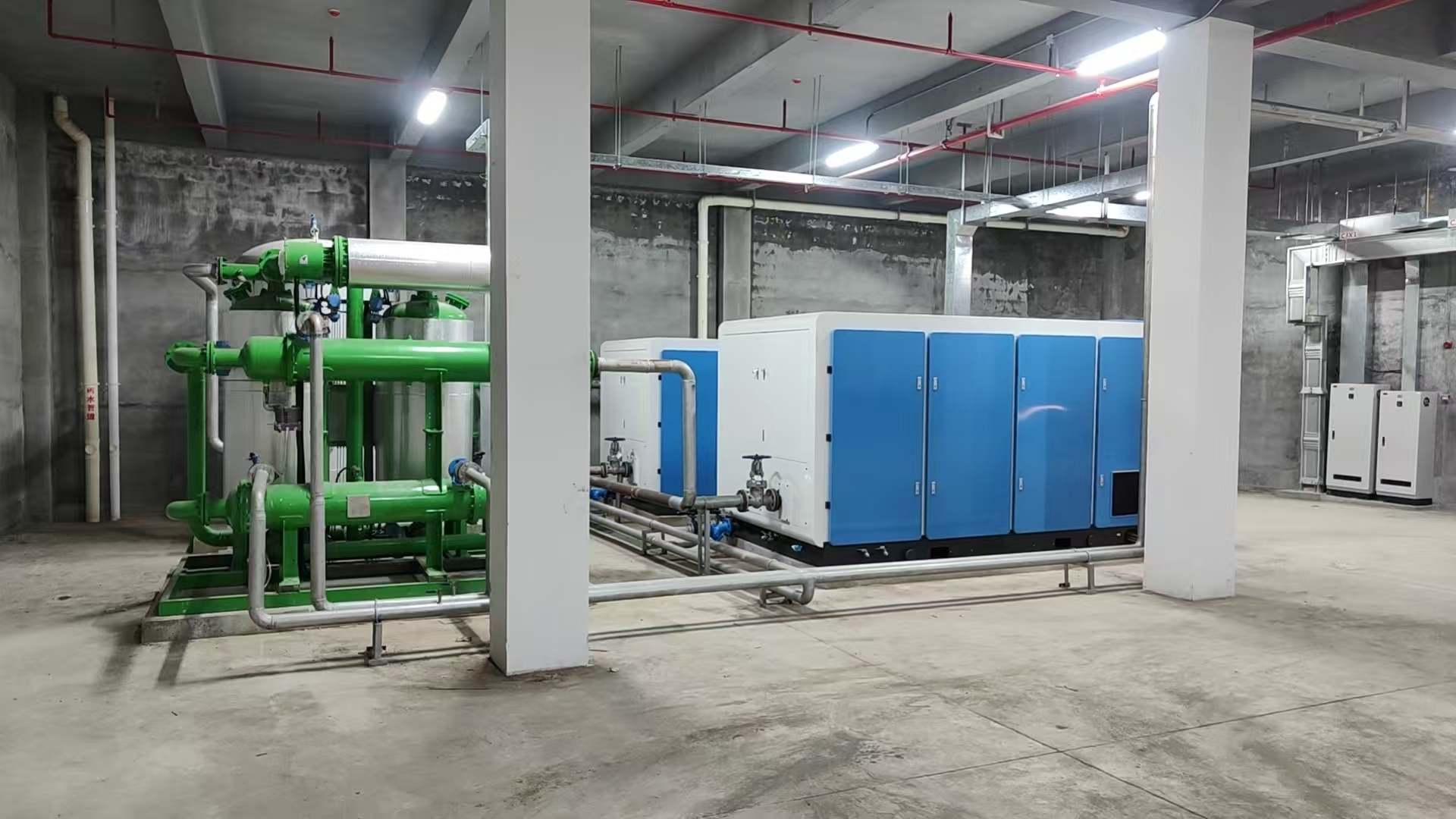
In processes where even a trace of contamination can compromise the entire batch, oil-free compression removes the risk at the source. By eliminating lubricating oil from the compression chamber, these systems prevent vapor or particulate carryover into the air or gas stream. This is critical for industries like pharmaceuticals and food production, where direct contact with compressed air can introduce contaminants that alter product integrity or violate regulatory standards.
Beyond purity, oil-free technology preserves the delicate balance of sensitive equipment. In semiconductor fabrication, for instance, residual oil can form sticky deposits on wafers or photomasks, leading to microscopic defects. Without oil in the air supply, cleanroom environments remain truly clean, and the longevity of precision valves and sensors is extended because there’s no buildup to cause friction or erratic actuation.
The shift to oil-free also simplifies maintenance and reduces unforeseen downtime. Traditional lubricated compressors demand rigorous filtration and frequent oil changes to keep the output acceptable, yet still leave a margin of error. Oil-free models strip away that complexity, offering inherently cleaner output that protects not just the immediate process, but the entire downstream system from cumulative contamination risks.
Inside the Multi-Stage Compression Cycle
Multi-stage compression isn't just about stacking impellers; it's a thoughtfully sequenced process where each stage plays a distinct role. Gas enters the first stage at low pressure and gets a moderate squeeze, raising its temperature along with the pressure. Instead of forcing it through another immediate squeeze, the flow is routed through an intercooler. This step pulls out the heat, shrinks the gas volume, and sets the stage for the next compression with less energy demand.
What happens inside the machine is a rhythm of compression and cooling that echoes through every stage. After the intercooler, the denser gas moves into a second impeller, often smaller than the first because the volumetric flow has dropped. Each stage is designed around a specific pressure ratio, avoiding the thermal stress and inefficiency you'd see in a single giant leap. The cycle repeats—compress, cool, compress again—with the gas volume decreasing and discharge pressure climbing until it hits the target.
The real art lies in balancing stage counts and intercooler placement. Too few stages, and you're fighting high discharge temperatures and wasted power. Too many, and you're dealing with excessive complexity and pressure drops across coolers. Engineers look at gas properties, target pressure, and practical limits to map out a compression path that stays within safe temperature bands while keeping the overall package compact enough to install and maintain.
The Role of Dryers and Filters in Achieving Purity
Few realize how much hinges on the quiet work of dryers and filters. Moisture, oil droplets, and microscopic particles sneak into compressed air systems unnoticed, yet they can compromise entire production lines. Dryers strip away vapor that would otherwise condense and breed contamination, while filters trap debris that could scar precision surfaces or alter chemical balances. Together, they form the unseen first line of defense, turning raw, unstable air into a consistent, trustworthy medium.
The real art lies in selecting and sequencing these components. A refrigerated dryer might suffice for general-purpose applications, but critical processes often demand desiccant drying that pushes dew points far below freezing. Upstream coalescing filters catch bulk liquids and aerosols, while downstream particulate filters provide that final polish. Without this careful layering, even the best dryer would fail against the slow, relentless assault of contaminants. It’s the combination that ensures every cubic foot of air meets the exacting standards required for sensitive environments like food packaging or pharmaceutical manufacturing.
Beyond installation, maintaining purity is an ongoing discipline. Filters load up, dryers lose efficiency, and system pressure drops gradually as elements clog. Regular monitoring and timely replacements prevent small issues from becoming costly contamination events. The payoff is measured not just in product rejection rates, but in the longevity of downstream equipment and the unwavering quality of the final output. In this quiet corner of industrial infrastructure, purity isn’t a one-time achievement—it’s a continuous result of smart design and attentive care.
Energy Recovery and Smart Control Systems
Capturing and reusing energy that would otherwise be lost is becoming a fundamental strategy in modern building operations. Heat from exhaust air, wastewater, or even elevator braking can be redirected to preheat fresh ventilation air or support domestic hot water systems. This cascading approach turns waste streams into valuable inputs, reducing the total energy load on primary heating and cooling equipment. By integrating heat exchangers and thermal storage buffers, facilities can smooth out demand spikes and maintain comfort without overburdening the grid.
Smart control platforms take this concept further by actively coordinating when and where energy is recovered based on real-time conditions. Instead of static setpoints, algorithms adjust recovery rates according to occupancy patterns, indoor air quality readings, and electricity price signals. For instance, on a mild day, the system might prioritize charging a thermal storage tank using waste heat, then discharge it the next morning when heating demands surge. This intelligence prevents simultaneous heating and cooling conflicts that plague many older buildings, while dynamically shifting loads to times when energy is cheaper or cleaner.
The combination of recovery hardware and adaptive controls creates a self-tuning building that learns from its own operation. Sensors continuously map how heat moves through different zones, and machine learning refines predictions of future needs. This means a building can autonomously decide to capture excess solar gain in a south-facing conference room and redistribute it to northern offices requiring warmth. Over time, the system identifies subtle interdependencies—like how a data center’s cooling output can serve as a heat source for adjacent labs—unlocking efficiencies that would be impossible to program manually.
Maintenance Secrets for Long-Term Reliability
Keeping equipment running smoothly for years isn’t about heroic fixes when things break—it’s about the quiet, consistent habits that prevent breakdowns in the first place. Most failures don’t happen suddenly; they build up over time from overlooked details like a slightly loose belt or a dirty filter. The secret is treating maintenance as an ongoing dialogue with your machines, paying attention to the subtle changes in sound, vibration, or performance that hint at trouble ahead.
One often-overlooked strategy is to document everything. A simple log of inspections, part replacements, and odd noises creates a history that makes spotting patterns effortless. Combine that with regular training so your team knows not just what to do, but why it matters. When people understand the cost of a skipped grease point, they’re far less likely to cut corners. And never underestimate the value of original, high-quality components—cheap knock-offs might save a few dollars now, but they routinely slash reliability in the long run.
Finally, move beyond fixed schedules. Use condition-based monitoring where possible, letting actual wear and tear dictate service intervals rather than a calendar. This doesn’t require expensive sensors; often a weekly walk-around with a checklist and a trained eye is enough. The real trick is building a culture where reliability is everyone’s responsibility, not just the maintenance team’s. That shift in mindset turns routine upkeep from a chore into a shared commitment that pays off through years of trouble-free operation.
FAQ
It's a specialized compressor designed to deliver ultra-clean, oil-free compressed air critical for semiconductor fabrication, where even microscopic contaminants can ruin chip production.
It typically uses oil-free compression mechanisms like scroll or centrifugal stages to pressurize air without introducing lubricants, then passes the air through advanced dryers and filters to achieve extremely low dew points and particle counts.
Unlike general-purpose compressors, semiconductor versions eliminate all oil and moisture at the source, often incorporating variable speed drives for precise pressure control, plus multi-stage filtration to remove particles down to the nanometer scale.
Key components include an oil-free compression element (scroll, screw, or centrifugal), high-efficiency air and water coolers, refrigerant or desiccant dryers, and multi-stage filters including coalescing and activated carbon filters.
Because any trace of oil vapor or aerosol in compressed air can deposit on wafers, causing defects in lithography, etching, or deposition steps, leading to expensive yield losses.
Regular replacement of filter elements, dryer desiccant, and inlet filters is standard; also monitoring vibration, checking for air leaks, and analyzing pressure dew point ensures consistent air quality without unplanned downtime.
They supply compressed air to sensitive processes like wafer handling robots, pneumatic valves, air bearings in lithography tools, and purge systems for loading stations and EFEMs (Equipment Front End Modules).
They reduce contamination risk, improve yield stability, lower energy consumption via efficient controls, and avoid costs of oil condensate treatment, while meeting cleanroom compatibility standards.
Conclusion
In the intricate world of chip manufacturing, even microscopic particles can ruin a wafer, making clean, dry, and oil-free compressed air a non-negotiable utility. Semiconductor air compressors are engineered to deliver exactly that, relying on oil-free compression mechanisms like scroll, centrifugal, or dry screw designs to prevent any lubricant contamination from entering sensitive processes. These compressors are the heart of a system that removes moisture, hydrocarbons, and particulates through a meticulously staged process. Ambient air is drawn in and compressed in multiple stages, with intercoolers between each stage to control temperature and reduce energy consumption. The real purification begins downstream: high-efficiency dryers—often refrigerated, desiccant, or membrane types—strip away humidity to dew points as low as -70°C, while a cascade of filters, including coalescing and activated carbon units, trap oil vapors and particles down to 0.01 microns. This ensures that the air contacting wafers during photolithography, etching, and chemical vapor deposition remains at the ISO 8573-1 Class 0 or Class 1 standard.
Modern semiconductor air compressors go beyond basic delivery by integrating energy recovery and smart control systems. Heat exchangers capture compression heat to warm facility water or spaces, while variable-speed drives and intelligent algorithms adjust output to real-time demand, slashing energy costs. Sensors monitor pressure, flow, and air quality continuously, enabling predictive maintenance and remote adjustments. Reliability is sustained through diligent maintenance: scheduled replacement of filter elements, checking dryer performance, and monitoring oil-free components for wear. By combining these elements, the semiconductor air compressor becomes a sophisticated ecosystem that not only protects wafer integrity but also aligns with the industry's push for sustainability and operational efficiency.
Contact Us
Contact Person: Mia
Email: [email protected]
Tel/WhatsApp: +86 19821985894
Website: https://www.seize-air.com