

Substantial PTFE Guidewire: Why It Delivers Superior Performance in Complex Interventions
2026-11-16
In the high-stakes world of complex interventions, the tools you rely on can mean the difference between a smooth procedure and a challenging one. Among these, the PTFE guidewire often goes unnoticed—until it doesn't perform. But what if a guidewire's design could fundamentally change how you navigate tortuous anatomy? INT Medical has rethought the substantial PTFE guidewire from the ground up, delivering a level of pushability, torque response, and lubricity that standard wires simply can't match. Here's why that matters when every millimeter counts.
PTFE Coating Keeps Resistance Low When Every Millimeter Counts
When space gets tight, even a few microns of unwanted friction can turn a smooth glide into a jerky struggle. PTFE coating earns its place by slashing surface resistance without adding meaningful bulk. Its molecular structure creates a slick, non-stick barrier that lets mating components slide past each other with almost no drag—exactly what you need in narrow lumens or densely packed assemblies.
The benefit shows up where clearance is measured in fractions of a millimeter. A thin, uniform PTFE layer keeps moving parts from binding, reduces wear on adjacent surfaces, and helps maintain consistent tactile feedback. Designers don't have to oversize housings or leave extra gaps just to accommodate lubrication; the coating itself handles the friction problem in place.
A Core That Balances Stiffness and Shape Retention in Tight Bends
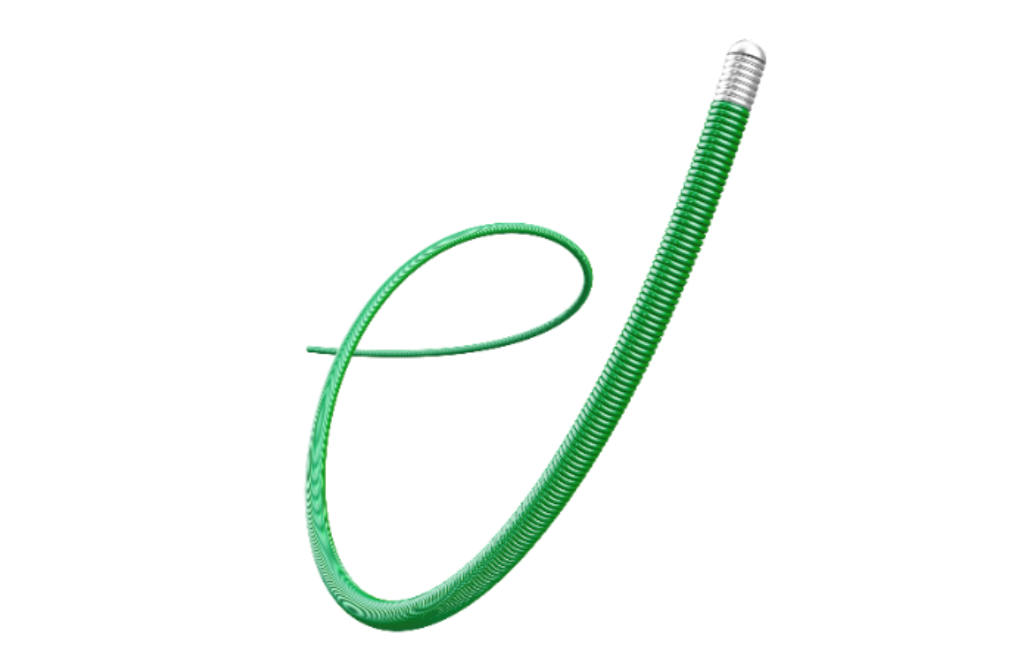
Most flexible cores fail in one of two ways: they're either too rigid to follow a tight radius without flattening, or too soft to spring back after repeated flexing. This core avoids both pitfalls by tuning the relationship between bending stiffness and sectional memory. The material doesn't just bend—it holds its round profile through the curve, which keeps cables or tubes from pinching at the inside radius.
The trick is in the cross-sectional design. A slight increase in wall thickness at the neutral axis, paired with a polymer blend that has a higher yield strain than conventional TPU, lets the core absorb high bending stress without permanent deformation. In practice, that means you can route it through a 180-degree bend with a radius only a few times the core diameter, and it will return to straight without whipping or taking a set.
Torque Transfer That Feels Immediate, Not Mushy
The first hard pull away from a stoplight tells you everything. There’s no rubber-band windup, no pause while the driveline figures out what you just asked for. The pedal moves, the motor answers, and the front tires dig in as the torque hits without a soft edge.
Part of that comes from how tightly the inverter and gear reduction are tuned. Instead of smoothing the initial spike into a polite ramp, the calibration lets the full twist arrive all at once, but without the jerkiness that makes some EVs feel nervous in traffic. It’s direct, yet still easy to meter with your right foot.
Even mid-corner, rolling back into the throttle doesn't unsettle the chassis. The response is quick enough to rotate the car slightly, but never abrupt enough to snap the tires loose. That balance is what makes it feel immediate rather than mushy.
How the Distal Tip Holds Its Own Against Calcified Anatomy
Calcified lesions tend to punish tips that flex too early or too much. The distal section here is built around a short, stiff fulcrum just proximal to the tip, which lets the very end stay nimble while the next few millimeters push back against hardened plaque. That means the tip doesn’t buckle at the first sign of resistance, and it doesn’t skid off the cap when torque is applied. Instead, the force translates almost straight into the lesion, with just enough bend to stay centered in the lumen.
More importantly, the tip’s outer jacket is formulated to maintain surface integrity when scraped across calcium. Repeated passes over eccentric calcified shelves can micro-tear softer coatings, but this one holds its shape and keeps a low-friction glide. The result is that the tip can be driven into a tight, calcified bend without folding back, and it won't catch on plaque edges when you retract or reposition. That combination of a reinforced core and a durable outer layer is what lets the distal tip work through lesions that would stall a conventional design.
Less Vessel Irritation, Smoother Device Exchanges
Friction between the device surface and the vessel wall is one of the most common triggers for endothelial irritation during endovascular procedures. A hydrophilic coating that activates on contact with blood creates a thin, lubricious layer, allowing the catheter or sheath to glide with noticeably less drag. This reduces the mechanical stress placed on the vessel lining, which is particularly important in tortuous anatomies or when repeated passes are required.
Device exchanges often introduce moments of resistance when the new device meets the existing access point or bends sharply. A tapered distal tip, combined with a controlled stiffness transition along the shaft, helps the device track smoothly over the guidewire without abrupt jumps or catches. Operators find that this predictability means fewer corrective maneuvers, lower peak push forces, and less chance of dislodging the access sheath or causing vessel spasm.
In everyday use, the combined effect of reduced surface friction and thoughtful tip geometry is a noticeably smoother exchange sequence. The vessel is exposed to fewer harsh contacts, and the procedure tends to progress with fewer interruptions. Patients may experience less post-procedure discomfort, and the overall workflow becomes more efficient without relying on excessive force or improvisation.
Where This Guidewire Changes the Game Versus Bare Metal Options
Bare metal guidewires tend to read every bend in the vessel as either a dead stop or a spring that wants to unload. This design changes that feel. The core is tapered in a way that lets torque transfer stay true while the tip remains soft enough to glance off plaque instead of digging into it. You notice the difference the first time you push through a calcified, hairpin turn and the wire holds its shape instead of whipping back.
The other place bare metal shows its limits is surface friction. A polished metal wire skips and sticks, especially in long, diseased segments. Here the low-friction outer layer and gradual stiffness transition mean the wire advances with less force, which keeps the vessel wall from being scraped as much. That translates to fewer exchanges and a more predictable crossing when the anatomy is doing everything it can to send you backward.
FAQ
The larger PTFE jacket acts as a durable, low-friction shield between the wire and the vessel wall. This reduces drag without sacrificing the tactile feedback needed to read lesion resistance, so the operator can push through challenging curves with fewer false starts.
PTFE offers consistent lubricity without the slippery, gel-like feel that can mask subtle transitions in vessel tone. It keeps the wire predictable during rotation and advancement, which is especially useful when crossing calcified or previously stented segments.
Because the PTFE layer is bonded tightly to a stiffer core, rotational input at the hub reaches the tip with minimal lag. That one-to-one response lets you redirect the wire precisely inside tortuous branches instead of winding up and then whipping forward.
Cases involving long CTOs, tight renal or mesenteric angles, or heavily diseased femoral runoff benefit the most. The wire holds its shape under load, resists buckling at the lesion entry, and still delivers enough distal flexibility to avoid vessel trauma.
The combination of a substantial PTFE jacket and a carefully tapered core distributes stress over a longer segment. Rather than creating a sharp hinge point, the wire absorbs the twist gradually, so it can be rotated heavily without permanent deformation.
The thicker proximal body provides a stable platform, while the distal segment remains compliant enough to seek the true lumen. That balance means you can apply forward pressure without the wire prolapsing into side branches or collapsing against the cap.
The PTFE surface transmits vibrations from the tip more cleanly than fully hydrophilic wires. You can feel changes in plaque density and vessel curvature earlier, which helps in deciding when to redirect, reshape, or swap for a stiffer device.
Yes, with the right length and tip shape it works across territories. The substantial build supports long peripheral reaches and tortuous coronaries alike, though operators often pair it with a torquer to maximize control in tight angles.
Conclusion
In tortuous vascular pathways where every millimeter of movement counts, the substantial PTFE guidewire distinguishes itself by combining an exceptionally low-friction coating with a core engineered for tactile precision. The polytetrafluoroethylene surface keeps push and track forces minimal, allowing the wire to glide through tight stenoses and around acute bends without the dragging that plagues bare metal designs. Beneath that coating, a carefully tuned core provides enough stiffness to maintain shape in challenging curves while retaining the flexibility needed to navigate distal anatomy. When rotational input is applied, the response is immediate rather than spongy, giving operators the confidence that the distal tip is following their hand movements exactly.
The benefits extend to tissue interaction and procedural efficiency. The smooth PTFE layer reduces mechanical irritation to the vessel wall, lowering the risk of spasm or trauma and making device exchanges less disruptive. In heavily calcified lesions, the distal tip holds its position without prolapsing, allowing the guidewire to support balloons and stents as they cross resistant segments. Compared to bare metal guidewires, this design translates into fewer wire exchanges, less endothelial damage, and more predictable behavior when the anatomy is unforgiving. For complex interventions where control and patient safety are paramount, the substantial PTFE guidewire offers a tangible performance advantage rather than just a marginal improvement.
Contact Us
Contact Person: Jeffrey
Email: [email protected]
Tel/WhatsApp: 86-0633-2230056
Website: https://www.sd-intmedical.com