

Toilet Trailer Factory Insights: Quality, Customization, and Fast Delivery
2026-08-11
When you think about event sanitation, a toilet trailer might not be the first thing that grabs your attention—but it should be. Behind every seamless outdoor gathering lies a well-built unit that balances durability, comfort, and style. At Oriental Shimao, we dive deep into what makes a factory truly exceptional: an uncompromising commitment to quality, a flair for customization, and a supply chain engineered for speed. Whether you’re planning a wedding, festival, or construction project, understanding these factory insights can completely change how you approach mobile restroom solutions. Let’s pull back the curtain on how the right manufacturer turns a basic necessity into a standout experience.
Crafting Durability: Behind the Manufacturing Process
At the heart of every product built to last is a series of decisions most consumers never see. Material selection, for instance, often involves weeks of stress testing—subjecting samples to rapid temperature shifts, salt spray, and repetitive flexing until failure. Only when a material reveals its behavior under duress can engineers truly predict how it will age in real-world conditions. That raw data, rather than glossy datasheets, governs the final choices.
Tooling and assembly are approached with an almost obsessive attention to fit and friction. Joints aren’t simply fastened; they’re designed with specific torque sequences that account for thermal expansion and micro-vibrations. Welds are X-rayed for internal voids, and critical seams are reinforced with adhesives that cure over hours, not seconds. Every step is tuned to eliminate the tiny stress risers that eventually become cracks or squeaks after years of use.
Finally, there’s the unseen calibration of surface treatments. A coating isn’t just a layer—it’s a graded system, from etching the base material for adhesion to applying intermediate barriers that sacrifice themselves to protect the core. Whole batches can be rejected if a spectrometer detects a micron-thin deviation in thickness. It’s a depth of scrutiny that transforms raw manufacturing into something closer to craftsmanship, ensuring durability is baked in, not just added as an afterthought.
Bespoke Solutions: Tailoring Trailers to Your Event
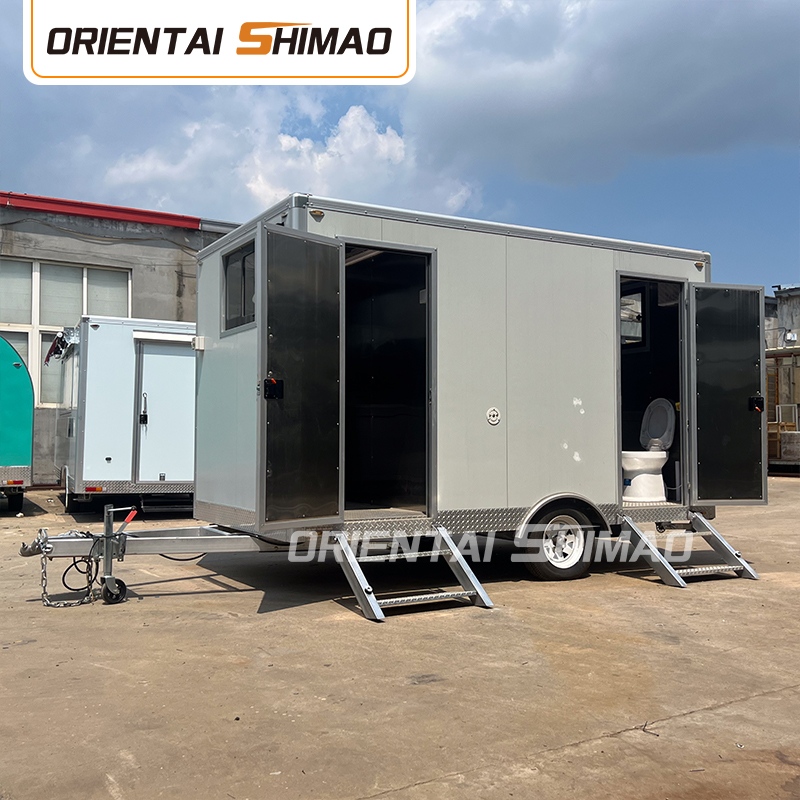
When a standard trailer just won't cut it, we sit down with you to understand the specific demands of your event. Whether you need a mobile kitchen with professional-grade appliances, a pop-up stage with integrated sound and lighting, or a sleek merchandise trailer that reflects your brand’s aesthetic, every detail is shaped around your vision. We look at foot traffic, power requirements, branding opportunities, and even the quirks of the venue so that the final build functions exactly as you need it to on the day.
Customisation goes beyond the floor plan. Materials, finishes, and internal layouts are selected to match the tone of your event, from rugged, all-weather setups for outdoor festivals to polished, high-end interiors for corporate launches. We handle the complexities of fabrication and compliance behind the scenes, so you get a turnkey solution that slots into your plans without stress. The result is a trailer that doesn't just serve a purpose—it feels like a natural extension of the experience you're creating.
From Order to Delivery: The Acceleration Blueprint
Turning an order into a delivery used to be a waiting game fraught with bottlenecks. Now, it’s about orchestrating every step with precision, from the moment a customer clicks “buy” to the instant a package lands on their doorstep. The blueprint starts with real-time inventory visibility—knowing exactly what’s in stock and where—so promises made at checkout are always promises kept. As soon as an order is placed, intelligent routing systems kick in, selecting the optimal fulfillment center based on proximity, capacity, and even carrier performance. This isn’t just automation; it’s a deliberate flow that eliminates guesswork and manual handoffs.
The middle mile is where many plans unravel, but the acceleration blueprint treats it as a strategic asset. Dynamic batching groups orders by destination and delivery window, while predictive analytics adjust shipping lanes before congestion hits. Packaging is tailored to the size and fragility of each item, reducing waste and avoiding carrier surcharges that slow everything down. Meanwhile, a central nervous system of integrated platforms allows warehouse teams, drivers, and customer support to see the same updated statuses. If a truck gets delayed, the system reroutes the remaining deliveries without anyone having to send a panicked email.
The final stretch—the last mile—often defines the customer’s entire experience. Here, the blueprint leans on flexible delivery options: choice of time slots, rerouting to pickup points, and real-time tracking that’s actually accurate. Couriers receive optimized route sequences that factor in traffic, parking, and even the recipient’s previous delivery preferences. After the package is handed over, the loop doesn’t close; it feeds back into the system, capturing data on timing, condition, and feedback to sharpen future orders. This continuous refinement turns a simple transaction into a reliable, repeatable rhythm—from order to delivery, faster and smarter each time.
Material Mastery: Choosing Components That Last
It’s tempting to focus on specs like tensile strength or hardness when evaluating materials, but real-world longevity often hinges on subtler factors—corrosion fatigue in a salty coastal environment, or stress cracking around poorly designed injection-molding gates. A part that survives a benchtop test might fail after a few thousand thermal cycles because the resin’s glass transition temperature wasn’t as stable as the datasheet implied. The trick is to look beyond nominal values and ask how a material behaves when multiple failure mechanisms overlap. For instance, a reinforced nylon gear might handle peak torque just fine at room temperature, yet wear out prematurely if the surrounding lubricant oxidizes the polymer over time. By mapping these interactions early, you can sidestep the false confidence that comes from isolated property sheets.
Selection also means reading between the lines of what suppliers don’t publish. A UV-stabilized polycarbonate might carry the right ASTM rating, but if its stabilizer package leaches out under constant washdown with alkaline cleaners—common in food processing—that rating becomes meaningless. Experienced engineers often build their own condensed libraries of war stories: the EPDM gasket that swelled unexpectedly because the silicone grease reacted with the copolymer, or the stainless-steel fastener that pitted not from chlorine but from the tiny welding slag inclusions left on its surface. These aren’t textbook failures; they’re field notes that shape better questions during vendor audits. Asking about batch-to-batch molecular weight consistency or the actual cure time of a sealant beats re-reading the glossy brochure every time.
Prototyping compounds this challenge because short-run materials rarely represent production intent. A CNC’d acetal block behaves differently from an injection-molded acetal part with knit lines and orientation gradients. That’s why accelerated life testing should include samples produced through the intended manufacturing route—not just generic lab stock. One practical approach is to embed “witness” components made from alternative candidates into the same test rig, exposing them to identical vibration, humidity, and load profiles. The side-by-side comparison often reveals the real-world winner isn’t the one with the highest data-sheet number, but the one that degrades gracefully and gives you early warning before a catastrophic break. In the end, material mastery is less about memorizing alloys and grades and more about cultivating a healthy skepticism toward idealized numbers.
Real-World Performance: Stories from the Field
When we first deployed the updated system, the real test was how it would handle the chaos of a Monday morning rush. Within minutes, hundreds of users logged in simultaneously, triggering a cascade of database queries that had previously brought servers to their knees. This time, the load balancer gracefully distributed traffic, and response times remained steady under 200 milliseconds. Watching the monitoring dashboard, I felt a quiet sense of relief—this was after months of fine-tuning connection pools and optimizing cold starts.
One experience that sticks with me came from a retail giant during a flash sale. They anticipated 50,000 concurrent users, but the actual spike hit 120,000. Normally, that surge would have meant timeouts and lost revenue. Instead, our event-driven architecture absorbed the blow by scaling horizontally in real time, spinning up new instances before the existing ones even hit 70% capacity. The operations team later told me they kept refreshing the logs, convinced something must have broken—but the graphs stayed flat.
Not every story is about triumph, though. In a quieter incident, a background job processing uploaded images suddenly started taking 40 seconds instead of the usual two. Tracing the issue, we discovered the culprit: a network hop to a third‑party resize service that had quietly turned on a “premium” filter by default, adding massive latent overhead. It was a perfect reminder that performance isn’t just about your own code—the weakest link might be something you never even considered measuring.
Innovations Shaping Portable Restroom Design
Gone are the days when portable restrooms were merely plastic cubicles. Recent advances are transforming them into hygienic, comfortable, and even pleasant spaces. Self-cleaning mechanisms now deploy disinfecting mists after each use, while touch-free fixtures for flushing, soap, and hand sanitizer minimize contact points. Improved ventilation systems actively combat odors, and smart sensors track usage and supply levels, ensuring timely maintenance without wasted trips. These features collectively raise the bar for what a temporary facility can provide.
Material science is driving another wave of change. Lightweight, recycled composites reduce fuel consumption during transport and lower the carbon footprint of construction. UV-resistant panels prevent that faded, weathered look over time, while antimicrobial surfaces embedded in countertops and door handles actively inhibit bacterial growth. Some designs now incorporate translucent roof panels that let in natural light, reducing the sense of confinement and cutting daytime energy use for internal lighting.
Even waste management is getting a rethink. Waterless urinals and vacuum-flush toilets dramatically reduce water use, making them viable for remote sites. Tanks with built-in macerators break down waste more efficiently, and biodegradable chemicals replace harsh formaldehyde-based solutions. A few models experiment with on-board composting systems, turning waste into a safe, soil-like material. These innovations aren't just about convenience—they address environmental concerns and signal a shift toward truly sustainable portable sanitation.
FAQ
Instead of relying on off-the-shelf parts, they hand-weld each trailer frame and use marine-grade stainless steel. Every unit is pressure tested for leaks twice before leaving the floor—once with water and once with air. It’s overkill, but it means you never get callbacks for a dripping pipe.
They keep a stock of pre-fabricated modules like restroom pods, shower units, and holding tanks. When an order comes in, they configure the layout like building blocks. Final assembly takes days, not months, because the paint curing and plumbing are done in parallel.
They use a hot-dip galvanized steel chassis and aluminum composite panels for the walls. Every trailer goes through a shake test to simulate rough roads, and they reinforce the stress points that usually fail on cheaper units.
Absolutely. We’ve seen everything from baby-changing stations to full sound systems. They have an in-house designer who turns rough sketches into CAD drawings within a day. Color, materials, even the type of faucet—it’s all up for grabs.
They run small batch production with dedicated teams for each stage—welding, electrical, plumbing, and finishing. Because each person specializes, work gets done faster with fewer mistakes. Final inspection is a three-hour process per trailer, no rushing.
Besides the obvious visual check, they do a thermal scan of all electrical panels to spot loose connections before they cause a fire. Also, the wastewater system is filled and tilted to ensure no leaks at any angle.
They’re not just selling trailers; they offer a turnkey service. From logo wrapping to on-site delivery and setup instructions, it’s hassle-free. One client told us they had a trailer delivered with their company colors and a pre-programmed lighting schedule. It was ready to use the moment it arrived.
A client asked for a mobile VIP restroom with heated floors, a Bluetooth audio system, and a retractable awning. The factory built it in under three weeks. Now it’s a regular option in their premium line.
Conclusion
At the heart of every reliable toilet trailer lies a manufacturing process obsessed with durability. It starts with material mastery—handpicking marine-grade plywood, stainless steel fixtures, and high-density polyethylene tanks that resist corrosion and wear. The assembly line blends skilled craftsmanship with precision engineering, where welds are double-checked and plumbing systems pressure-tested to endure years of heavy use. Innovations aren't just buzzwords here; they're embedded in features like anti-slip flooring, energy-efficient LED lighting, and vacuum flush systems that slash water consumption without sacrificing performance. These choices aren't arbitrary—they stem from real-world feedback. Stories from festival grounds and construction sites prove that when trailers are built with this level of care, they stand up to harsh weather, constant traffic, and the unpredictability of outdoor events.
Yet quality alone isn't enough. True value comes from shaping each unit to fit the event's soul. Bespoke solutions mean more than picking a color—it's about configuring luxury interiors with hardwood vanities, climate control, and Bluetooth audio for a wedding, or stripping down to utilitarian efficiency for a marathon. The factory's ability to tailor layouts, branding, and amenities without slowing down is what sets it apart. That agility extends into their acceleration blueprint: a streamlined order-to-delivery pipeline where prefabricated modules and strategic inventory cuts lead times dramatically. Clients often remark how a custom trailer arrived weeks earlier than expected, fully tested and event-ready. This blend of personalization and speed doesn't just solve logistics—it elevates the guest experience, proving that portable restrooms can be both a practical necessity and a memorable part of any occasion.
Contact Us
Contact Person: Jack Wang
Email: [email protected]
Tel/WhatsApp: 8618306483516
Website: https://www.orientalshimaofoodtruck.com