

Top Autonomous Handling: Mastering Automation for Future-Ready Operations
2026-08-12
In the race toward fully automated warehouses, one name is steering the future of material handling: HANGCHA. But what does it take to truly master autonomous handling and prepare operations for what's next? This post explores the strategies and innovations driving tomorrow's smart logistics.
Beyond the Buzzwords: What Autonomous Handling Actually Means
Autonomous handling often gets painted as a futuristic concept—fleets of robots zipping around warehouses with no human in sight. But stripping away the hype reveals something more nuanced: it's not about replacing people, but about redefining how materials move through a facility. At its core, autonomous handling marries real-time data, environmental awareness, and decision-making logic so that vehicles and systems can adapt to change without constant human reprogramming. Instead of following fixed paths, they respond to inventory fluctuations, layout changes, and even unexpected obstacles, turning the entire operation into a living, breathing organism rather than a rigid assembly line.
What truly sets autonomous handling apart from basic automation is the ability to handle edge cases gracefully. Traditional automated systems excel in predictable, static environments, but throw in a missing pallet, a blocked aisle, or a sudden spike in demand, and they often grind to a halt. Autonomous solutions, on the other hand, leverage on-board sensors and fleet-level intelligence to dynamically reprioritize tasks, find alternative routes, and even coordinate with other equipment in real time. This fluidity means the system can maintain throughput even when conditions shift, making it less about programming every possibility and more about empowering the equipment to think on its feet.
The real-world impact often surprises people: autonomous handling typically results in less equipment, not more. Because the technology enables higher utilization of each vehicle—eliminating idle time spent waiting for instructions or navigating congestion—facilities can often slim down their fleet while hitting the same throughput targets. Add in the safety benefits of removing manual machine operation from busy traffic areas, and it becomes clear that the term isn't just a buzzword. It's a practical approach for facilities that need to remain responsive in a world where yesterday's demand forecasts are increasingly unreliable.
The Invisible Conductor: Orchestrating Seamless Automation
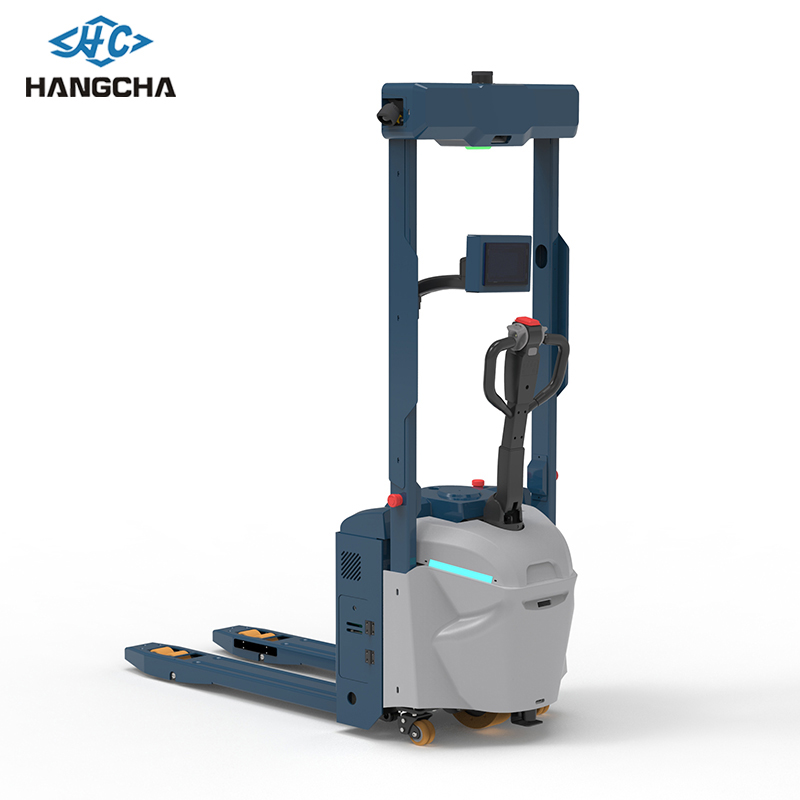
Picture a symphony without a visible maestro—yet every instrument enters precisely on cue, crescendos build together, and the final note hangs in perfect silence. That's the essence of seamless automation when it's truly invisible. It doesn't announce itself with clunky interfaces or constant notifications; it simply ensures that complex sequences unfold with the fluidity of a well-rehearsed orchestra. From intelligently routing data between systems that were never designed to talk to each other, to timing workflows down to the millisecond without human intervention, the invisible conductor turns potential chaos into harmony.
What makes this orchestration so powerful is its ability to adapt in real time, much like a conductor who senses when a section needs more emphasis or when the tempo should shift. It monitors conditions across your entire operational landscape, making split-second decisions that keep processes flowing even when unexpected variables arise. An order spikes beyond forecast? The conductor redistributes resources without missing a beat. A third-party API abruptly changes its response structure? The system compensates by rerouting through alternative pathways. This isn't static programming—it's a dynamic, almost intuitive layer that learns from patterns and adjusts proactively.
Ultimately, the mark of this invisible orchestration is that the people it serves rarely think about it. They experience the results: faster delivery times, fewer errors, and the freedom to focus on creative and strategic work instead of babysitting brittle automations. Like a great conductor who vanishes into the music, seamless automation disappears, leaving behind only the smooth, uninterrupted rhythm of a business in motion.
Breaking the Chain: Liberating Operations from Rigid Processes
Operations often get trapped in a web of rigid procedures that were designed for a different era. The irony is that these processes, initially meant to create order, end up stifling the very adaptability a business needs to survive. Teams spend more energy following the rules than actually solving problems, leading to a culture where checking boxes trumps genuine progress. The result is a slow erosion of initiative—people stop thinking critically and start simply complying.
Freeing operations from this grip starts with a fundamental shift in mindset. Instead of treating processes as unchangeable laws, they should be seen as flexible guidelines that serve the work, not the other way around. When teams are given the autonomy to adjust workflows based on real-world conditions, they move faster and feel a stronger sense of ownership. This doesn’t mean abandoning all structure; it means building systems that are light enough to bend without breaking, so the daily rhythm of work feels more like a conversation than a monologue.
The practical side of this liberation often involves simplifying decision-making and cutting out unnecessary approval layers. It’s about trusting the people closest to the work to make the call, and giving them the tools and context to do it well. Technology can help here, but only if it’s shaped around how humans actually operate, not how a flowchart dictates they should. When operations are freed from rigid chains, the organization breathes easier—ideas flow, bottlenecks ease, and resilience becomes part of the everyday fabric rather than a crisis response.
Trust Fall with Tech: When to Let Go and Let Machines Decide
There’s an odd intimacy in handing over control to a machine, like closing your eyes and falling backward, hoping the arms that catch you aren’t made of code and cold metal. We’ve grown comfortable with technology that predicts our next word or curates our playlists, but trusting it with life-altering decisions—medical diagnoses, financial moves, even judicial rulings—feels like a leap into a void where accountability blurs. The real challenge isn’t the tech itself; it’s the quiet surrender of human intuition, replaced by algorithms trained on past patterns that might not see the unique texture of now.
The decision to let machines take the lead often hinges on how we measure risk. When a system has more data and faster processing than any human could ever hold, like in detecting early-stage cancers or optimizing supply chains in real-time, ceding control is less about faith and more about pragmatism. Yet, that trust erodes when context disappears into the black box of neural networks. People aren’t just numbers, and life isn’t a clean dataset. We start asking uncomfortable questions: Does the machine understand the weight of a false negative? Can it navigate the messy ethics that humans barely manage? These moments force us to redraw the line between augmentation and replacement.
Perhaps the real trust fall isn’t with the machine, but with ourselves—accepting that our judgment is fallible and sometimes inferior to a well-designed system. It’s not about blindly letting go; it’s about knowing which falls are worth taking. The best partnerships with tech emerge when we stop treating it as an oracle and start seeing it as a collaborator with different strengths. We hold the net, but we must decide when to step back and let the machine work its quietly terrifying magic, understanding that the catch might feel different from what human hands provide.
Glitch-Proofing Progress: Building Resilient Autonomous Systems
Autonomous systems don’t get the luxury of a controlled environment once deployed. Whether it’s a self-driving car encountering unexpected road debris or a robotic arm misreading a sensor under factory lighting shifts, glitches are inevitable. The real challenge isn’t avoiding errors entirely—it’s designing systems that degrade gracefully and recover without human intervention. Too often, teams focus on peak performance benchmarks, but resilience is what keeps a system running when those neat lab conditions fall apart.
One approach gaining traction involves layering redundancy not just in hardware, but in decision pathways. Instead of a single planner, you might run multiple lightweight models in parallel and arbitrate their outputs in real time. Pair that with anomaly detection that flags when sensor data drifts outside expected ranges, and you create a safety net that’s more about adaptation than rigid rules. We’ve also seen promising results from using reinforcement learning to train agents that deliberately explore edge cases, building a kind of muscle memory for handling the unpredictable.
Progress in this area is rarely linear. Every deployment reveals new failure modes that simulation alone couldn’t capture, which means resilience has to be treated as a dynamic property rather than a checkbox. Teams that invest in detailed logging, post-incident forensics, and regular chaos engineering exercises tend to build systems that not only survive glitches but get smarter after each one. The goal isn’t a flawless machine—it’s one that knows when it’s out of its depth and can still find a safe harbor.
The Human Advantage: Critical Thinking in an Automated World
Automation excels at crunching numbers and spotting patterns, yet it falters when context shifts or ambiguity arises. Machines follow predefined rules, but critical thinking thrives in the gray areas where data alone isn’t enough. It’s the ability to question assumptions, weigh contradictory evidence, and grasp subtle meanings that keeps human judgment indispensable, even as algorithms grow more sophisticated.
Consider a scenario where customer feedback is overwhelmingly positive, yet a handful of complaints hint at a deeper flaw. An automated system might flag the spike in negative comments, but only a person can probe further, connecting those dots to an underlying design issue that no data set explicitly names. This blend of curiosity and skepticism—the urge to ask why, not just what—turns raw information into actionable insight, a leap no current machine can genuinely make.
In workplaces flooded with dashboards and predictive models, the real edge lies in framing the right questions before seeking answers. Critical thinking isn’t about rejecting technology but about steering it, ensuring that automated outputs are interpreted wisely and ethically. When everyone has access to the same tools, the differentiator becomes the human capacity to discern nuance, challenge conclusions, and imagine possibilities beyond the data’s horizon.
FAQ
Autonomous handling refers to self-governing systems that manage material flow, sorting, and transportation without direct human control. It's vital because it eliminates bottlenecks, reduces error rates, and enables real-time adaptation to shifting demands, making supply chains resilient and future-proof.
Traditional automation follows rigid, pre-programmed routines that break when conditions change. Autonomous handling uses sensors, machine learning, and dynamic decision-making to adjust on the fly—think a robot that reroutes itself when an aisle is blocked, rather than stopping and waiting for help.
Core technologies include advanced vision systems, lidar and radar for environmental perception, edge computing for instant data processing, and collaborative robots that safely work alongside people. Software-wise, distributed control architectures and AI-powered fleet orchestration are game changers.
Absolutely. Modern solutions are scalable by design—modular robots and cloud-based control platforms let smaller players start with a few units and expand as needed. They often see quicker ROI through reduced labor dependencies and space optimization, even in constrained footprints.
Integration with legacy systems and data silos is a top hurdle. Workforce reskilling and cultural acceptance are equally critical; people need to trust the machines. Also, defining clear, measurable objectives from day one prevents the famous 'pilot purgatory' where projects never scale.
By optimizing routes and energy usage, autonomous systems cut power consumption significantly. They also reduce waste by preventing product damage through precise handling and enable higher-density storage, lowering a facility's overall carbon footprint per unit handled.
Data is the lifeblood. Sensors generate streams that train AI models to recognize patterns and predict failures. Over time, shared operational data across fleets creates a compounding intelligence effect, where the system becomes collectively smarter and more adaptive than any single unit could alone.
Expect a shift from handling goods to handling entire workflows—dynamic, facility-wide orchestration where everything from receiving to shipping is autonomously coordinated. Human roles will pivot toward strategic oversight and exception management, amplified by cellular connectivity and more collaborative, mobile platforms.
Conclusion
Autonomous handling cuts through the hype by delivering systems that truly understand their environment—rather than following pre-scripted routines, they sense disruptions, weigh options, and act with precision. It’s not just robotic arms picking boxes; it’s an invisible conductor seamlessly blending data from cameras, lidar, and enterprise software to orchestrate every movement like a well-tuned symphony. This breaks the chain of rigid workflows: operations become fluid, with machines rerouting tasks in real time when bottlenecks appear, without waiting for human approval. The result is a living, breathing fulfillment floor where change is absorbed rather than resisted.
Building such capability demands a calculated trust fall: we define safe boundaries and then step back, letting algorithms optimize load balancing or routing without constant oversight. Yet systems must also be glitch-proofed—layered redundancy and real-time monitoring catch faults before they cascade, turning potential disasters into graceful recoveries. Amid all this automation, the human advantage remains irreplaceable. People provide the critical thinking to handle edge cases, refine ethical guidelines, and dream up the next innovation that no machine would conceive. Mastering autonomous handling means turning over routine decisions while reserving the truly strategic moments for human judgment—creating operations that are not just efficient, but future-ready.
Contact Us
Contact Person: Liuxue
Email: [email protected]
Tel/WhatsApp: +86-19084200370
Website: https://www.hf-ec.com/