

Top Chain Link Fence Factories in China to Consider
2026-10-03
Sourcing chain link fencing from China can feel like wading through a sea of lookalike catalogs—until you know which factories actually hold up under real-world use. Whether you need standard galvanized mesh, PVC-coated panels, or custom heights for commercial fencing, the supplier you choose determines whether your project stays on budget or becomes a costly reorder. Topfencesolar has earned steady interest from international buyers for its consistent wire gauge and corrosion-resistant finishes, but it's not the only name worth a shortlist. Here are the top chain link fence factories in China to consider, based on production capacity, export reliability, and on-the-ground quality control.
Where China's Chain Link Fence Production Actually Concentrates
If you drive through the flatlands of Hebei province, particularly around Anping County, you'll notice the landscape dotted with low-slung factory buildings and yards stacked with rolls of galvanized wire mesh. This isn't a random clustering. Anping has been the gravitational center of China's chain link fence industry for decades, a place where the clatter of weaving looms and the tang of zinc coating hang in the air. The concentration here is so dense that local supply chains for wire drawing, weaving, and post manufacturing all sit within a short truck ride of each other, cutting down on transport costs and turnaround times in ways that scattered competitors simply cannot match.
Beyond Anping, significant pockets of production have also taken root in the neighboring counties of Raoyang and Shenzhou, extending the regional footprint into what industry insiders sometimes call the "wire mesh belt." These areas benefit from the same underlying advantages: a deep pool of skilled labor that has grown up around the trade, access to domestic steel mills in Tangshan and Handan, and a dense network of small-scale subcontractors who specialize in everything from PVC coating to custom gate fabrication. The result is a production ecosystem that can shift quickly from standard residential fencing to heavy industrial security mesh without missing a beat.
What surprises many outside buyers is that this concentration isn't driven by a handful of mega factories. Instead, it's a sprawling web of hundreds of small and mid-sized workshops, each focused on a narrow slice of the process. One shop might only draw wire from rod stock, while another only weaves the mesh, and a third handles the hot-dip galvanizing. This fragmentation looks chaotic from the outside, but it creates remarkable flexibility. A buyer who needs 40 containers of chain link with a specific wire gauge and coating thickness can have multiple shops working in parallel, often shaving weeks off the timeline compared to a vertically integrated plant elsewhere.
Reading a Factory's Galvanizing Setup Before You Send an Inquiry
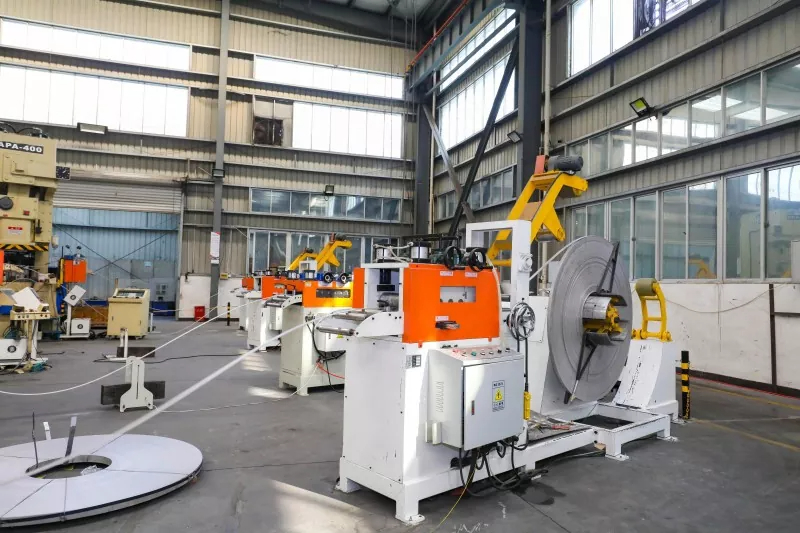
When you start comparing suppliers, the galvanizing line itself tells you more than a price list ever could. Look past the stated capacity and check whether the kettle length matches your longest part. A shop that runs a 6-meter kettle will rarely handle an 8-meter beam without awkward workarounds, and you will see the evidence in the quotes and lead times.
Pay attention to how the pretreatment and flux systems are arranged. Some factories use a simple acid bath and skip a dedicated rinse stage, which can leave residues that affect coating adhesion. Others run a closed-loop rinse or a heated flux tank that keeps iron levels low. These details are not usually in the brochure, but a quick question about daily bath maintenance often reveals the truth.
Also ask about material handling. A galvanizer with overhead cranes and a clear floor plan can process heavier fabrications without dinging edges, while a cramped setup may force manual hook flipping that leads to uneven coverage. If you send an inquiry after reading the setup, your questions become sharper and the factory is less likely to offer generic answers.
Custom Mesh Openings and Coating Colors Worth Asking For
Standard mesh specs tend to lock you into a handful of square or rectangular openings that don't always match the job. Asking for a custom punch pattern—like elongated hexagons, offset slots, or a tighter weave with wider margins—changes how light passes through, how much wind gets blocked, and how much of the view you keep. A slight adjustment to open area percentage can cut glare on a west-facing facade without killing the breeze, and that's the kind of detail worth pushing for early in the design phase.
Coating color gets treated as an afterthought, but it does more than look good in a brochure. Darker powder coats absorb heat and can warm the air behind a rainscreen, while lighter or metallic finishes reduce surface temperature and hide dust longer. If you have a specific brand palette or need a match for existing trim, don't settle for a generic black or silver—request a small batch of custom-coated swatches and check them in direct sun before committing.
A few suppliers will quietly offer non-catalog options if you ask, including dual-tone finishes, anti-graffiti clear coats, or textured colors that read differently at distance. The trick is to frame the request around performance, not just preference. For example, a muted olive mesh may blend into a hillside better than bright galvanized steel, while a deep bronze opening pattern can make a parking structure feel less industrial from the street.
Why Northern and Southern Lead Times Rarely Match
Supply chains north and south operate on different clocks, and it starts with geography. Northern regions often contend with colder months that slow trucking and rail schedules, while southern hubs benefit from milder weather and denser port networks. This isn't a minor delay—it's a structural difference in how goods move from factory to dock.
The supplier base tells another story. In southern manufacturing belts, component makers cluster tightly, letting a buyer source parts within hours. Northern facilities frequently rely on longer-haul deliveries from those same clusters, adding days to every order. When a northern plant promises a lead time, it's really promising a southern lead time plus transit—and that math rarely lines up.
Inventory philosophy widens the gap. Southern operations often run lean, restocking fast and adjusting on the fly, while northern counterparts favor buffer stock to guard against weather or distance. As a result, two factories making the same product can quote lead times that differ by weeks, not because one is slower, but because their entire rhythm is built around different constraints.
Packaging Choices That Avoid Rust Claims After Container Unloading
Metal parts face a constant threat during ocean transit: moisture condensation. When warm, humid air meets the cooler metal surfaces inside a container, water droplets form and can lead to rust by the time the shipment is unloaded. Choosing packaging that blocks this moisture path is the most direct way to prevent rust-related claims from customers or insurers. The goal is to keep the internal humidity low and isolate the metal from any corrosive atmosphere.
A practical approach starts with wrapping each component in VCI (volatile corrosion inhibitor) paper or film. These materials release molecules that settle on the metal surface and form an invisible protective layer, even in hard-to-reach areas. For added protection, place desiccant packs inside sealed polyethylene bags with the parts to absorb residual moisture trapped during packing. For larger machinery or bulk shipments, consider adding VCI emitters or desiccant strips directly inside the container. Also pay attention to the pallets—untreated wood can release moisture over time and undo all your other efforts, so use plastic pallets or kiln-dried wood instead.
Sealing is just as important as the materials themselves. A small tear in a plastic liner or an improperly closed bag can let humid air seep in over weeks at sea. Before loading, inspect every packaged unit for holes or weak seals, and make sure the container door gaskets are intact. After unloading, check the outer packaging for any signs of condensation or dampness. If you find moisture, photograph the evidence and notify the carrier or supplier before opening the package. This step-by-step attention to packaging choices can drastically cut down on rust claims and the costly disputes that follow.
Signs a Supplier Runs Its Own Wire Drawing Line
A supplier that truly operates its own wire drawing line often leaves subtle but telling clues in daily communication. They can speak with unusual precision about die wear, reduction sequences, and lubricant temperatures—details no reseller would have at hand. When you ask about a custom diameter or an unusual alloy, their turn around doesn't hinge on checking a third-party catalog; instead, they quote a feasible range and offer to send a short trial coil. Watch for small things, like shipping labels that originate from the drawing plant itself, or production photos that show actual drawing machines in the background, not just warehouse shelves.
Another reliable signal is how they handle quality issues. A supplier running its own line can trace a surface defect to a specific die or a particular annealing batch within hours, not days. They may mention process limits honestly—for example, explaining that drawing to 0.08 mm in a single pass would over-stress the wire, so they recommend a two-pass route. This kind of factory-floor logic rarely appears in middleman language. If the supplier invites you to visit and watch the drawing process from rod payoff to final spooling, that's as close to proof as you can get without seeing an audit report.
Finally, pricing behavior often reveals the truth. A wire drawer controls raw material consumption and scrap yield directly, so they can offer better pricing on large runs or oddball diameters without waiting for a quote from an upstream mill. They might also propose alternative materials—like substituting a slightly different carbon content to hit the same tensile strength at lower cost—which a pure distributor would rarely do. Over time, you'll notice their lead times align tightly with actual drawing schedules, not vague shipping windows. These patterns, taken together, mark the difference between a broker and a true manufacturer.
FAQ
Focus on factories that have their own galvanizing lines rather than outsourcing. Check if they offer both hot-dip and electro-galvanizing, and ask for videos of the production process. A reliable factory will be upfront about wire diameter tolerances and coating thickness.
Hebei's Anping County has been a hub for wire mesh products for decades. Many factories there specialize in chain link fencing and have built up experience with export packaging and surface treatments. You'll also find clusters in Tianjin and Jiangsu, but Anping is where most serious buyers start looking.
Top-tier factories usually keep multiple weaving machines with different diamond sizes and can adjust wire thickness, roll length, and selvage style on request. They may also offer custom colors for PVC coating and can match RAL shades for larger orders.
MOQs often depend on whether the fence is galvanized or PVC-coated and the roll height. For standard 4-foot rolls, some factories accept 200-300 rolls per size, while custom colors or non-standard mesh openings might push the requirement to a full container load.
Ask for recent bills of lading or references from buyers in your region. You can also request a video call where they walk you through the production floor and packaging area. Factories that regularly ship to your country will know the relevant import standards.
Yes, most will send small swatches of the mesh and coated wire for a courier fee. If you need a full roll sample, you may have to pay the freight, but that's a small price to avoid quality surprises on a bulk order.
Standard galvanized rolls can be ready in 15-25 days after deposit, assuming the factory isn't in peak season. PVC-coated or custom colors usually add another week or two. Always factor in shipping time and possible congestion at the port.
Certifications like ISO 9001 or CE marking can indicate a factory has basic quality management in place, but they aren't a guarantee. It's better to combine certification checks with sample testing for zinc coating weight and tensile strength.
Conclusion
When sourcing chain link fence from China, most buyers quickly learn that production clusters around Anping in Hebei Province, though a smaller yet capable group of manufacturers operates further south. Before sending a single inquiry, it pays to ask how a factory handles galvanizing—hot-dip lines produce a thicker, more durable zinc layer than electro-galvanizing, and the difference shows up years later in coastal or humid environments. You can also request custom mesh openings beyond the standard 50mm or 60mm diamond, and ask for PVC coating in colors that match local landscape or security codes. One often overlooked variable is lead time: northern factories sometimes face winter slowdowns or raw material bottlenecks that southern plants don't, so a 30-day quote from each region can mean very different things.
Packaging is where many complaints start, not because the fence is bad, but because moisture trapped inside shrink wrap turns into white rust after a long container journey. Suppliers who use VCI paper, wooden pallets, and vented wrap are easier to work with when rust claims appear. Another signal worth checking before you place an order is whether the factory runs its own wire drawing line. If they draw their own wire from rod, they control diameter consistency, tensile strength, and zinc adhesion far better than a plant buying pre-drawn wire. That kind of vertical integration usually shows up in smoother edges, fewer breakages during installation, and a supplier that actually understands the full production chain. Combining these checks—galvanizing depth, packaging detail, and in-house drawing—gives you a shortlist of Chinese factories that are more likely to deliver what they promise.
Contact Us
Contact Person: Nancy
Email: [email protected]
Tel/WhatsApp: +86-13365923720
Website: https://www.topfencesolar.com/