

Top Heterocyclic Intermediates Powering Next-Generation Drug Development
2026-10-22
The molecules behind tomorrow’s breakthrough therapies aren’t built overnight. Before a kinase inhibitor or antiviral makes headlines, chemists spend months wrestling with heterocyclic scaffolds—pyridines, pyrimidines, piperidines—where a single nitrogen shift can change bioavailability or toxicity. Yet suppliers often treat these intermediates as commodity items, leaving discovery teams to fix inconsistent quality on their own. That’s where DSL Chemicals comes in. In this post, we’re unpacking the top heterocyclic intermediates that are quietly powering next-generation drug development—and why choosing the right partner for them matters more than most medicinal chemistry discussions admit.
Why Heterocyclic Intermediates, Not Final APIs, Are Driving Pipeline Timelines
In most small-molecule programs, the final API gets all the attention, but the actual schedule risk sits earlier in the synthesis. A pyrimidine or indole core with the right substitution pattern can take six to eight steps to build, often requiring low-temperature lithiation, transition-metal coupling, or protecting-group juggling that doesn't scale cleanly. When that single intermediate stalls—because a batch fails impurity specs or a key catalyst lot underperforms—every downstream step, including final salt formation and formulation, waits. The API step itself is frequently a straightforward coupling or deprotection, so its duration is rarely what determines the critical path.
The reason this pattern repeats across pipelines is that heterocyclic intermediates serve as the linchpin for route design. Once a team commits to a particular substituted pyridine or oxadiazole, the remaining chemistry is largely fixed: changing suppliers or tweaking the route late in development is prohibitively expensive because it triggers new impurity profiles, revalidation, and possible changes to the regulatory starting material. Suppliers who can deliver these intermediates with tight control over regioisomers and metal residues become de facto partners in the timeline, yet their capacity is often booked months in advance. That constraint, not the final API synthesis, is what tends to push Phase II or Phase III start dates.
Quality testing adds another layer of delay that final APIs don't face to the same degree. A heterocyclic intermediate may need extended studies for genotoxic impurities, especially if it contains nitro groups or halogenated positions that can form reactive species. Meanwhile, the final API's release testing is comparatively routine once the intermediate has been cleared. So when a project director says the timeline slipped due to API manufacturing, the truth is usually a failed azaindole batch or a delayed quinazoline shipment weeks earlier.
The Quiet Takeover of Spirocyclic Amines in Kinase-Targeted Therapies
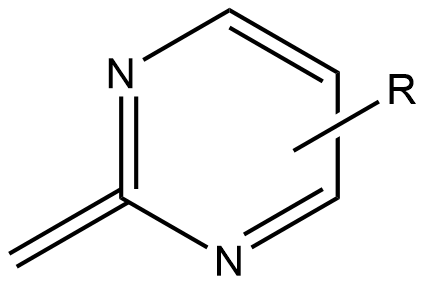
The rise of spirocyclic amines in kinase drug discovery has been anything but loud. These rigid, three-dimensional scaffolds slip into inhibitor backbones almost unnoticed, yet they keep solving problems that flat aromatic rings cannot. By locking conformation and filling hydrophobic pockets more efficiently, they reduce off-target kinase binding without sacrificing potency.
Part of their appeal lies in how they alter physicochemical properties. A spirocyclic amine adds sp3 character, lowers logP, and improves solubility, which translates into better oral absorption and fewer metabolic liabilities. Medicinal chemists have quietly adopted them to escape the aromatic flatland that still dominates many ATP-competitive scaffolds.
What began as a curiosity in a few clinical candidates has now become a standard design element. From selective BTK and EGFR inhibitors to next-generation CDK agents, spirocyclic amines appear wherever selectivity demands are high and resistance mutations threaten long-term efficacy. The takeover is quiet because it works—one nitrogen, two rings, and a geometry that biology finds hard to ignore.
Fluorinated Azoles and Pyrimidines Now Decide Oncology Lead Success
Fluorine substitution in azole and pyrimidine scaffolds has quietly reshaped how lead compounds behave in oncology pipelines. A single fluorine atom can shift metabolic stability, tweak binding pocket interactions, or lock a bioactive conformation that a hydrogen never could. Teams now treat fluorination not as a late-stage garnish but as a core design parameter, screening early fluorinated analogues alongside their non-fluorinated parents. This shift means the difference between a series that stalls in PK studies and one that advances with a clean, predictable profile.
The real advantage emerges in how these fluorinated heterocycles handle tough tumor microenvironments. Azoles with a fluorine at the 2-position often resist oxidative degradation by CYP enzymes, keeping plasma concentrations above the threshold longer. Pyrimidines benefit differently—fluorine at the 5-position can enhance stacking with kinase hinge regions or improve selectivity against off-target receptors. When both motifs appear in the same molecule, the combined effect can tip a mediocre hit into a viable development candidate without adding molecular weight or synthetic complexity.
Discovery groups now lean on this pattern to prioritize leads earlier, using fluorine placement as a quick filter before committing to costly in vivo work. The result is fewer dead ends: compounds that enter efficacy models already carry the pharmacokinetic and selectivity traits needed to survive. For oncology programs where time and attrition are brutal, fluorinated azoles and pyrimidines have become the quiet arbiters of what moves forward and what gets shelved.
Oxetanes, Azetidines, and the Push for More Drug-Like CNS Candidates
The persistent struggle to keep CNS candidates from failing late in development has pushed medicinal chemists toward smaller, more polar fragments that still slip past the blood-brain barrier. Oxetanes and azetidines have surfaced as practical tools in this effort, not because they solve every problem, but because they let teams tune properties like solubility, metabolic stability, and basicity without resorting to heavy structural overhauls. Their appeal lies partly in their ability to replace common yet troublesome motifs such as carbonyl groups or gem-dimethyl units while preserving enough three-dimensional shape to maintain target binding.
One of the quieter advantages of these four-membered rings is how they modulate amine basicity. A piperidine or pyrrolidine nitrogen often carries a pKa that undermines brain penetration or invites hERG liability, yet swapping in an azetidine can drop that pKa by a meaningful margin, sometimes by more than two log units. Oxetanes, on the other hand, act as metabolically robust surrogates for carbonyls or tert-butyl groups, reducing lipophilicity just enough to improve aqueous solubility and slow oxidative clearance. Neither ring is a magic bullet, but their compact size and predictable electronic effects give discovery teams a more refined dial rather than a blunt instrument.
What has changed in the past decade is the willingness to use these fragments early in hit-to-lead campaigns rather than as last-ditch fixes. The result is a growing collection of CNS candidates that look less like traditional lipophilic amines and more like balanced, low-aromatic-ring-count molecules with better developability profiles. That shift may not grab headlines, but it reflects a practical recognition that drug-likeness for the brain is not about avoiding all polarity; it is about controlling where that polarity sits and how it interacts with metabolic machinery.
Suzuki-Ready Boronic Esters Keep Next-Gen Heterocycle Assembly Moving
Boronic esters have quietly become the linchpin for anyone assembling nitrogen-rich heterocycles under real-world constraints. Plain boronic acids are prone to protodeboronation and awkward purification, but pinacol- and MIDA-derived esters stay intact through multi-step sequences and still transmetalate cleanly when the Suzuki step finally arrives. That reliability is why fragment libraries and late-stage functionalization campaigns now treat “Suzuki-ready” as a standard requirement rather than a nice-to-have.
What really moves next-gen heterocycle work forward is the way these masked boronates enable iterative coupling without isolating fragile intermediates. A pyrazole or pyridine core can be carried through halogenation, cyclization, and protecting-group swaps while the boronic ester waits dormant; then one palladium cycle installs the desired aryl or heteroaryl fragment. This has opened practical routes to azaindoles, pyrazolopyrimidines, and other scaffolds that were once considered too unstable for conventional Suzuki chemistry.
What Continuous Flow Demands from Today's Heterocyclic Building Blocks
The short residence times and efficient mixing in continuous flow reactors may appear to lower the barrier for many transformations, but they actually place stricter demands on the solubility and pumpability of heterocyclic building blocks. Many classic intermediates that can be coaxed into solution in batch by prolonged stirring or elevated temperature will, in a microchannel or tubular reactor, cause rapid back-pressure fluctuations or outright clogging if even minor crystallization or viscosity increases occur. Consequently, modern building block design must prioritize solubility in flow-friendly solvents such as acetonitrile, tetrahydrofuran, and dimethylformamide, and ensure the formation of stable, low-viscosity solutions at ambient temperature.
Beyond dissolution behavior, thermal stability and chemical compatibility are equally non-negotiable. Continuous flow processes frequently operate above the boiling point of the solvent under elevated pressure, or involve strong bases, oxidants, and reactive metal catalysts. If a heterocyclic building block undergoes ring opening, polymerization, or tar formation under these conditions, it not only lowers yield but also leaves difficult-to-remove deposits on reactor walls. For azide-, diazo-, or strained-ring-containing building blocks, therefore, in situ generation or just-in-time activation strategies are often necessary rather than relying on pre-formed high-energy intermediates that spend extended time in the feed stream.
Moreover, flow scale-up is far more sensitive to purity and batch-to-batch consistency of building blocks than batch synthesis. Trace metal residues or uncharacterized oligomeric impurities can accumulate inside microreactors, altering catalytic activity or gradually increasing system back pressure. This pushes suppliers to offer flow-validated building block specifications that include solubility profiles, thermal data, and recommended operating windows, rather than simply extending traditional batch purity standards. Building blocks that come with such data often shorten the optimization cycle dramatically during real continuous flow process development.
FAQ
Heterocyclic intermediates embed nitrogen, oxygen, or sulfur atoms into ring systems, which changes electron distribution and molecular shape. That versatility lets medicinal chemists fine-tune binding affinity, solubility, and metabolic stability early in a project. Without these scaffolds, many kinase inhibitors, antivirals, and CNS agents would simply not exist.
A few stand out: pyridine and pyrimidine derivatives for kinase programs, azetidine and oxetane rings for replacing metabolically fragile carbonyls, and fused bicyclic motifs like imidazopyridines or pyrazolopyrimidines. Boronic ester-substituted heterocycles are also gaining traction because they slot directly into late-stage functionalization workflows.
By offering rigid, three-dimensional shapes and tunable hydrogen-bonding patterns, heterocyclic intermediates reduce off-target binding compared with flat aromatic systems. A well-chosen heterocycle can lock a molecule into its bioactive conformation, lowering the dose needed and minimizing interaction with unrelated receptors or ion channels.
Many routes still depend on palladium-catalyzed cross-coupling, which can be costly and sensitive to trace impurities. Regioselectivity is another recurring issue, especially when installing substituents on electron-poor rings. Process chemists often have to redesign routes to avoid cryogenic conditions, toxic solvents, or unstable diazonium species.
Consider ibrutinib, a BTK inhibitor for B-cell malignancies. Its piperidine and pyrazolopyrimidine units are built through heterocyclic intermediates that control the geometry of the acrylamide warhead. Without reliable access to those intermediates, the covalent binding to cysteine 481 would be far harder to achieve consistently at scale.
Photoredox catalysis and electrochemistry now enable C–H functionalization directly on heterocycles, bypassing pre-functionalized starting materials. That means fewer steps, less waste, and access to substitution patterns that were previously considered impractical. Suppliers are also using continuous flow to handle hazardous reagents safely, making exotic intermediates more widely available.
Targeted protein degradation and covalent fragment screening rely heavily on heterocyclic linkers that balance reactivity and stability. In antivirals, fused pyrimidine and triazine intermediates are key for polymerase inhibitors. Antibody-drug conjugate payloads also depend on stable heterocyclic cores that survive circulation but release the toxic agent inside the tumor microenvironment.
Conclusion
The real currency in modern drug pipelines has shifted from bulk APIs to the heterocyclic intermediates that determine whether a candidate ever reaches late-stage testing. Medicinal chemists now spend as much time sourcing spirocyclic amines as designing final molecules, because these rigid, three-dimensional scaffolds have quietly displaced flat piperidines and piperazines in kinase-targeted therapies. Their conformational restraint often translates into better selectivity and metabolic stability, which directly compresses preclinical timelines. In oncology, fluorinated azoles and pyrimidines have become the make-or-break elements of lead optimization; a single fluorine on the right ring position can rescue solubility, sharpen binding affinity, or block a metabolic soft spot, turning a mediocre series into a clinical contender.
For CNS programs, oxetanes and azetidines are doing the heavy lifting, lowering lipophilicity and hERG risk while preserving potency in ways traditional heterocycles cannot. Meanwhile, Suzuki-ready boronic esters have become the assembly-line workhorses, letting teams swap heteroaryl fragments in days rather than weeks and keeping structure–activity relationships moving at a pace that matches investor expectations. The quiet revolution, though, is happening in continuous flow, where today's heterocyclic building blocks must tolerate rapid heat transfer, precise stoichiometry, and narrow residence times. Suppliers who can deliver intermediates with predictable solubility, thermal stability, and low metal content are now shaping which next-generation drug candidates get funded — and which never leave the drawing board.
Contact Us
Contact Person: Wei Zhang
Email: [email protected]
Tel/WhatsApp: 862163529955
Website: https://www.dslchem.com