

Top Steel Pipe Tower Solutions for Durable and Efficient Structures
2026-10-22
Steel pipe towers quietly carry the weight of power lines, communication networks, and industrial infrastructure—yet not all are built to last. Anbang’s steel pipe tower solutions cut through the noise with a focus on durability and efficiency that engineers and project managers can actually see in the field. From material selection to precision fabrication, every detail is geared toward structures that withstand harsh conditions while keeping installation and maintenance straightforward. In this article, we’ll explore what sets top-tier steel pipe towers apart and why Anbang has become a go-to name for projects that refuse to compromise.
Where Steel Pipe Towers Stand Strong When Weather Turns Hostile
Steel pipe towers earn their keep when the forecast turns ugly. Unlike lattice or concrete alternatives, their smooth, closed cross-sections shed wind loads instead of fighting them. A 100 mph gust that rattles bolt connections on other designs simply flows around the curved steel surface, leaving the tower’s core geometry undisturbed. This aerodynamic advantage isn’t theoretical—coastal monitoring stations in hurricane zones consistently report fewer stress fractures and less fatigue cracking on pipe structures after major storms pass through.
Corrosion resistance is where the material itself steps up. Hot-dip galvanizing or a well-applied zinc-rich coating creates a barrier that shrugs off salt spray, driving rain, and even abrasive sand carried by desert winds. In freeze-thaw climates, the seamless construction means fewer crevices for water to seep into and expand, so ice buildup doesn’t slowly pry the tower apart from the inside. Maintenance crews often note that these towers need little more than a visual check after a harsh winter, while other structures require immediate bolt tightening or rust remediation.
Foundations get a break too. The relatively light weight of a steel pipe tower compared to its height reduces overturning moments, which means a smaller concrete pad can do the same job. That’s not just a cost saving—it’s a resilience boost, because less buried steel and concrete means fewer anchors to corrode or loosen under repeated lateral loading. When the ground heaves from frost or saturates after a flood, the tower flexes slightly with the soil instead of fighting it, maintaining plumb without the sudden stress concentrations that snap anchor bolts on rigid bases.
The Case for Slim Profiles and Serious Load-Bearing Capacity
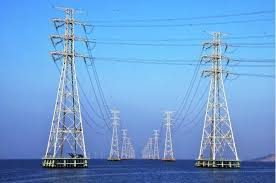
Thin doesn't have to mean fragile. A slim profile in structural design often gets dismissed as a compromise, but modern engineering flips that assumption on its head. By using high-strength alloys and clever cross-sectional geometry, a component can stay visually light while quietly handling loads that would embarrass bulkier alternatives. The trick lies in distributing stress along optimized paths rather than simply piling on material. This approach doesn't just save space—it opens up design possibilities where clearance is tight but demands are unforgiving.
Consider the everyday examples: cantilevered shelves that hold heavy books without visible brackets, or low-profile casters that support industrial carts rolling over rough floors. These aren't magic; they're the result of thoughtful load analysis and material selection. A slim frame can out-perform a thick one if the load path is direct and the connections are engineered for shear and moment transfer. That's why architects and mechanical designers increasingly favor lean profiles—they deliver the same or better capacity while freeing up room for other systems, reducing dead weight, and often cutting cost without cutting corners.
Of course, serious load-bearing capacity demands more than a slender silhouette. It requires rigorous testing, precise tolerances, and a refusal to accept the false choice between elegance and strength. When a thin beam carries a heavy point load without deflecting beyond spec, it's a quiet victory for engineering discipline. The case for slim profiles isn't about chasing aesthetics alone—it's about proving that smart design can make less material do more work, and do it reliably over years of service. That's a value proposition no bulky, overbuilt alternative can match.
Cutting Construction Time with Pre-Fabricated Pipe Modules
Pre-fabricated pipe modules shift the bulk of fabrication off the muddy, congested job site and into a shop where cutting, welding, and coating happen under controlled conditions. This alone removes many of the weather delays and space conflicts that typically slow down mechanical installation. A rack that would take three weeks to assemble in the field can often be delivered and set in a matter of days, with only a handful of tie-in welds left for the site crew.
The schedule gains come from overlapping work that used to be strictly sequential. While civil crews are still pouring foundations, pipe fitters in the shop can be building and testing complete modules against the same isometrics. By the time the steel is up, the modules are already on trucks. On one recent project, this approach cut the piping installation window by nearly 40 percent, mostly because field rework dropped sharply once shop-level quality checks caught dimensional errors before they ever reached the site.
It also reduces the number of trades stacked in a single area. Instead of welders, scaffolders, insulators, and painters all waiting for the same pipe run to progress, much of that work is completed inside the module before delivery. Site labor then focuses on setting, bolting, and final alignment. The result is not just a faster schedule but a cleaner, safer site with fewer handoffs.
Field Notes from Sites That Pushed Pipe Towers to the Limit
At a refinery expansion near the Gulf Coast, we watched a 40-meter pipe tower sway noticeably under a 90 km/h crosswind. The as-built drawings called for three intermediate guides, but only two were installed because a cable tray interfered. Over six months, the missing guide allowed enough movement that the schedule 40 riser showed fretting at a welded lug. We added a custom clamp with a PTFE pad, which brought peak deflection down from 22 mm to under 7 mm.
In a high-desert mining site, daily temperature swings of 35°C caused repeated expansion cycles on a long vertical run. The original anchor at the base was over-tightened, transferring too much load into the field weld. We saw micro-cracks starting at the toe of the weld after two winters. The fix was counterintuitive: loosening the base bolts slightly and adding a spring can at the first guide to absorb axial growth. That single change eliminated the cracking and cut vibration during startup by roughly half.
Bolted or Welded? Matching Joint Type to Maintenance Realities
Maintenance crews often learn the hard way that a joint which looks cheaper on paper can become a recurring cost once access, inspection, and repair time are factored in. Bolted connections shine where parts need to be swapped, aligned, or inspected frequently, because they can be undone with standard tools and reassembled without cutting or heating. Welded joints, by contrast, offer a cleaner load path and fewer loose parts, but every repair starts with grinding, gouging, or full replacement, which tends to extend downtime and demands certified welders.
The real decision is less about strength and more about how the equipment ages in the field. If a connection sits in a hard-to-reach area and rarely needs attention, a well-made weld can be the lower-maintenance option. But if corrosion, impact damage, or routine wear means parts are expected to come apart during the asset's life, bolting usually pays off by reducing the labor burden and allowing individual components to be replaced without disturbing the surrounding structure.
A practical approach is to map each joint against its expected failure modes and inspection schedule before choosing. Where cracks or fatigue are a concern, bolted joints can be easier to monitor and repair in place, while welds demand more careful non-destructive testing. Matching the joint type to the maintenance reality, rather than defaulting to one method, helps keep total lifecycle costs down and keeps maintenance tasks predictable.
Galvanized Coatings and the Fight Against Coastal Corrosion
Coastal environments are notoriously harsh on steel structures, where salt-laden air and constant moisture accelerate rust and deterioration. Galvanized coatings offer a proven defense by bonding a layer of zinc to the steel surface, creating a barrier that actively resists corrosion. Unlike painted surfaces that can chip or peel, the zinc sacrificially protects the underlying metal—even if scratched, the surrounding coating continues to guard the exposed area. This makes galvanizing a preferred choice for piers, handrails, and marine hardware that face relentless exposure to sea spray and high humidity.
The real advantage in coastal settings lies in how zinc reacts with the saline atmosphere. Over time, it forms a dense, tightly adherent patina of zinc carbonate, which slows further reaction and provides long-term durability. Field experience shows that properly galvanized components can last decades without major maintenance, significantly reducing the need for frequent repainting or replacement. For project managers and engineers, this translates into lower lifecycle costs and fewer disruptions in environments where access is difficult and weather conditions limit repair windows.
Still, not all galvanized coatings perform identically. Factors such as coating thickness, steel composition, and the presence of industrial pollutants can influence longevity. In particularly aggressive splash zones, additional measures like duplex systems—galvanizing plus a topcoat—are often recommended. By understanding these nuances, specifiers can tailor protection strategies that hold up under the unique stresses of coastal corrosion, ensuring infrastructure remains safe and functional for years to come.
FAQ
Their hollow cylindrical shape handles wind and torsional forces better than open lattice designs, so the tower sways less and experiences less fatigue over time. With a proper protective coating, they can shrug off decades of rain, salt spray, and UV exposure.
Tight tolerances during rolling and welding ensure that the pipe walls are uniform, eliminating weak spots that could fail under load. Automated welding paired with ultrasonic inspection catches subsurface defects that visual checks might miss.
Soil bearing capacity, maximum wind gusts, elevation, and even local corrosion rates from nearby industry all shape the final design. Adjusting thickness, diameter, and base plate details lets the tower fit its environment rather than fighting it.
Steel pipe towers are lighter and easier to transport and erect, which speeds up construction and reduces the need for heavy foundations. They also offer a high strength-to-weight ratio, so more height can be achieved with less material.
Dual-layer systems like a zinc-rich primer under a polyurethane topcoat provide both galvanic and barrier protection. Some newer nano-ceramic coatings are being tested for offshore environments where salt and humidity are relentless.
The quality of the initial coating, the environment's corrosivity, and whether minor damage is repaired quickly all play a role. A well-maintained tower in a mild climate can easily last 60 to 80 years before major refurbishment.
Yes, they can be engineered to carry microwave dishes, surveillance cameras, or even small wind turbines, as long as the mounting brackets and internal reinforcement are designed for the extra weight and vibration.
Prefabricated sections that bolt together on site reduce the need for specialized welding crews and heavy cranes. This approach also allows towers to be disassembled and relocated if requirements change, adding long-term flexibility.
Conclusion
When storms whip off the coast or winter ice builds on ridgelines, ordinary support structures can buckle—yet steel pipe towers with properly specified galvanized coatings routinely shrug off salt spray, high winds, and freeze-thaw cycles. What makes them stand out isn't just heavy steel; it's the combination of a slim, aerodynamic silhouette that sheds wind load and a tube cross-section that delivers remarkable compressive and torsional strength per kilogram. Field crews from hurricane-prone Gulf sites to northern wind farms repeatedly report the same pattern: after extreme weather, the pipe towers remain plumb and functional while box-section or angle-iron towers need realignment or reinforcement. The fight against coastal corrosion is won or lost before the tower ever leaves the galvanizing bath, where coating thickness and edge protection determine whether a structure lasts 20 years or 60.
Speed of assembly often decides project viability, which is why pre-fabricated pipe modules—cut, drilled, and trial-fitted in the shop—have become the go-to solution for operators who can't afford weeks of on-site welding. These modules arrive with connection plates and bolt holes already matched, reducing crane time and field labor dramatically. But the choice between bolted and welded joints isn't one-size-fits-all: bolted connections shine where future disassembly, inspection, or coating touch-ups matter, while welded joints can offer a cleaner look and fewer crevices in highly corrosive splash zones—at the cost of more skilled field work and post-weld coating repair. Smart teams match the joint type to their own maintenance crew's reality, not just initial cost. The result is a tower that goes up faster, stays straight longer, and demands less attention over its service life.
Contact Us
Contact Person: antor khan
Email: [email protected]
Tel/WhatsApp: 8613863903569
Website: https://www.qdabtower.com/