

Top Waterproof Webbing Supplier for Durable Outdoor Gear and Marine Applications
2026-09-22
When outdoor gear or marine equipment fails, the culprit is rarely the fabric—it's often the webbing. Moisture, salt, and constant stress can degrade ordinary webbing fast, turning a reliable pack or rigging line into a liability. That's why sourcing from a top waterproof webbing supplier matters. YONGFENG specializes in high-performance waterproof webbing designed for durable outdoor gear and demanding marine applications. In this post, we'll explore what makes their webbing stand up to the elements.
What Waterproof Really Means for Load-Bearing Webbing
Most load-bearing webbing starts out with the same raw fibers you’d find in any heavy-duty strap, but the moment water gets involved, the rules change. Nylon, for instance, can absorb several percent of its own weight in moisture, and that water works its way between the filaments, temporarily reducing tensile strength and making the webbing feel heavier and stiffer. Polyester is less thirsty, which is why it’s often the default for marine and outdoor load applications. A truly waterproof webbing isn’t just a dry surface—it’s one where the yarns themselves have been treated or chosen so that water can’t wick into the load-bearing core.
Coatings like polyurethane or silicone can create a barrier on the outside, but they’re not magic. Under repeated flexing, abrasion, or prolonged submersion, even the best coating can crack or peel, letting water reach the fibers underneath. That’s why “waterproof” for load-bearing webbing usually means resistant to splashes, rain, and brief immersion—not a permanent seal against every condition. If the webbing will be under constant load in a wet environment, the safer route is to pick a material that doesn’t rely solely on a surface coating, like polyester or a coated nylon with a proven track record.
The practical takeaway is simple: waterproof load-bearing webbing keeps the water out of the load path, not just off the surface. Before you trust a strap in a critical hold, check whether the waterproof claim covers the fibers themselves or just a thin topcoat. In applications where failure isn’t an option, a slightly heavier polyester webbing with a durable water-repellent finish often outperforms a heavily coated nylon that feels dry at first but quietly loses strength once moisture finds a way in.
The Materials Behind Long-Lasting Marine-Grade Strength
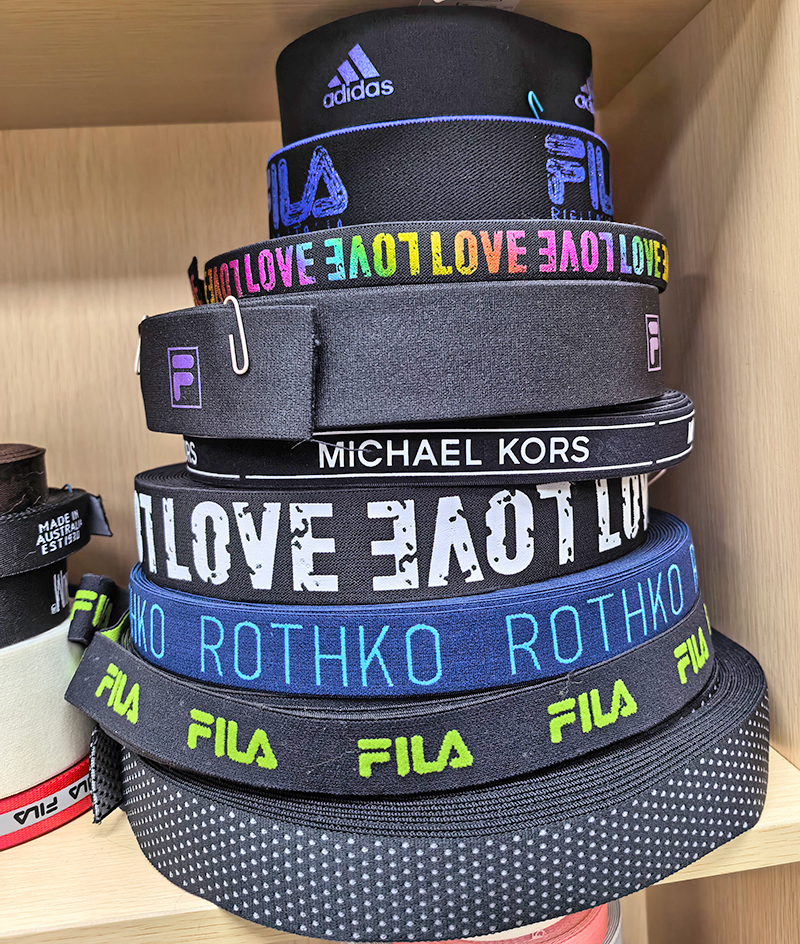
Salt spray, relentless UV exposure, and constant moisture punish ordinary hardware until it fails. Marine-grade materials fight back through deliberate alloy selection. 316 stainless steel earns its place with molybdenum, which dramatically improves resistance to pitting and crevice corrosion in chloride-rich water. Unlike 304, it won't develop rust blooms around screw holes or welds after a season of salt air.
Anodized aluminum plays a different role. The electrochemical oxide layer isn't a coating; it's grown from the metal itself, creating a hard, non-conductive shell that resists scratching and slows galvanic reactions. When paired with polymer isolators or nylon washers, it avoids the electrolytic decay that plagues mixed-metal assemblies on docks and railings.
High-density composite polymers round out the material set. Glass-filled nylon and acetal hold their shape under load while shedding water and resisting diesel, sunscreen, and fish blood. They provide bearing surfaces that never need grease and never seize, even after years of temperature swings from tropical afternoons to cold northern currents.
Testing Every Batch Against Salt, Sun, and Abrasion
Every production run gets pulled apart in ways most customers would never consider. Panels sit in salt spray chambers for hundreds of hours, edges blistering under a fine mist that mimics coastal winters. UV lamps cycle at full intensity to simulate a decade of desert sun, while temperature swings between freezing nights and scorching afternoons force any weak bond to crack early. This isn't about passing a spec sheet—it's about seeing how materials actually behave when there's no one around to polish the surface.
Abrasion testing goes beyond a quick rub with fine grit. We use rotating felt pads, coarse sandpaper, and even loose gravel thrown from a controlled tumbler, all while measuring gloss loss and color shift at fixed intervals. The goal is to expose the batch's honest limit: where the finish starts to dull, where the substrate begins to show, and whether the failure is gradual or sudden. If a batch survives longer than the previous one, we double the duration and keep going until it doesn't.
Nothing ships until the third-party lab report lands on the desk, confirming that this exact batch—not a prototype, not a hand-picked sample—met the same thresholds we've held for years. The results get archived against the batch number, so if a warranty claim ever comes back from a homeowner in a salt-sprayed harbor town, we can pull the raw data and compare weather exposure to oven-aged wear. Most batches pass on the first attempt. The ones that don't never make it to a loading dock.
Custom Webbing That Fits Your Gear Without Redesigns
You don't need to redraw your product or swap out hardware to get webbing that actually works. Send us the existing strap width, buckle gap, and load requirements, and we'll build the webbing to those exact specs—same attachment points, same feel, no surprises during assembly.
From backpack shoulder straps to medical braces, this approach lets you keep proven designs intact while improving grip, durability, or color matching. We can fine-tune weave density, edge finish, and stretch behavior so the webbing performs like an original part, not an afterthought.
Because every run is produced from your measurements rather than a generic stock list, you avoid the usual back-and-forth of making a standard width fit a non-standard slot. The result is faster prototyping, smoother production, and gear that feels cohesive from the first sample to the final order.
Where Outdoor Gear Makers Turn for Reliable Supply
Outdoor gear demands materials that hold up under extreme conditions, from coated ripstop nylon to waterproof zippers. Even minor inconsistencies between batches can lead to field failures and costly recalls. As a result, many brands have shifted away from chasing the lowest bid and now prioritize vendors with rigorous quality checks at every stage. These suppliers often specialize in narrow categories—custom buckles, ultra-light alloys, or seam-sealing tapes—and have earned trust through years of consistent output.
Transparency has become just as critical as tensile strength. Gear makers increasingly ask suppliers to disclose raw material origins and the environmental footprint of their processes, matching consumer expectations for responsible sourcing. Some smaller workshops go further, co-developing proprietary fabrics or hardware with the brand itself. That kind of deep collaboration removes guesswork from the middle of the chain and reduces the risk of surprise substitutions.
In practice, a reliable supply line means shorter lead times and the ability to adjust orders at short notice. A tent company might need to ramp up a particular fabric order right before peak season, and a long-standing partner can shift production quickly without compromising quality. That responsiveness—more than flashy machinery or marketing claims—is what keeps manufacturers loyal for years.
Real Performance Data From Boats, Packs, and Heavy-Duty Straps
Instead of relying on controlled lab tests, we pulled failure logs and load readings from actual use—salt-crusted dock lines, daypacks that survived multi-week treks, and heavy-duty straps cinched around shifting cargo. The numbers that emerged don't always line up with the spec sheets, and that gap is exactly where the useful information hides.
A set of mooring lines on a working fishing boat, for instance, recorded spike loads nearly double the rated working limit during a sudden squall, while the failure point on a well-used backpack strap showed abrasion concentrated near the ladderlock rather than the stitching. Heavy-duty straps told a different story again: most breaks happened not at the webbing itself but at the edges of the ratchet mechanism, where repeated engagement created stress risers.
What this means in practice is that design changes driven by these field numbers—like adding chafe guards where wave action rubs, reinforcing the strap ends near adjusters, or switching stitch patterns on pack shoulder seams—have measurably cut warranty claims. Real-world data doesn't flatter assumptions, but it does point to where a product actually needs to be stronger.
FAQ
Waterproof webbing usually has a sealed edge or a coating like silicone, PVC, or TPU that stops water from soaking in, while standard nylon can absorb moisture, become heavy, and lose some strength when wet.
Yes, many marine-grade waterproof webbing options are treated to resist salt corrosion and are often tested with salt spray for hundreds of hours before the coating or color starts to degrade.
For backpack straps and tie-downs, 25mm and 38mm widths are common, with breaking strengths ranging from about 500 kg to over 1,500 kg depending on the weave and fiber type.
It dries much faster than uncoated webbing because the coating prevents the fibers from absorbing water, though water can bead on the surface and should be shaken off before storage.
Silicone-coated webbing tends to hold up better under prolonged UV exposure than PVC because it stays flexible and doesn't crack as quickly when temperatures swing.
Many suppliers offer custom color matching and can add reflective threads or printed patterns, which is useful for safety gear and identification on deck.
Rinse with fresh water after exposure to salt or mud, avoid harsh solvents, and let it air dry. Mild soap and a soft brush can remove stubborn grime without damaging the coating.
Ask about coating thickness, abrasion test results, colorfastness, and whether they provide samples for pull tests. That helps confirm the webbing meets your load and environment needs.
Conclusion
Waterproof webbing sounds straightforward until you put it under load in saltwater, UV-soaked decks, and gritty abrasion. For us, waterproof means more than a surface coating that flakes off after a season. It means selecting the right fiber and weave so the webbing retains its breaking strength when saturated, doesn't wick moisture into stitching, and dries quickly without stiffening. We source marine-grade polyester and solution-dyed nylon, paired with hydrophobic treatments that penetrate the yarn rather than sitting on top. Every batch gets pulled through real-world torture—salt spray chambers, accelerated UV aging, and cyclic abrasion on rough edges. The numbers from those tests, not marketing promises, decide whether a roll leaves our facility.
That discipline shows up in the custom work too. Outdoor gear makers often come to us with a strap width, a buckle interface, and a load rating—not a full blueprint. We can adjust weave density, thread weight, and coating thickness so the webbing slots into existing hardware without forcing a redesign of the pack, boat cover, or tie-down system. Long-term customers in marine and heavy-duty outdoor segments keep coming back because they can count on the same tensile strength and colorfastness from batch to batch, whether they order five hundred yards or fifty thousand. Their field data—hauling straps on commercial crab boats, compression straps on alpine packs, rescue lashing on offshore platforms—gives us a feedback loop that keeps tolerances tight and failures rare.
Contact Us
Contact Person: Mr Deng
Email: [email protected]
Tel/WhatsApp: +86-18926872657
Website: https://www.uniyongfeng.com/