

Why ODM Stainless Steel Fasteners Are Essential for Your Next Project
2026-10-14
Every project has a weak link—often it's the smallest component. When corrosion, vibration, or mismatched specs turn your design into a costly rework, you'll wish you'd chosen smarter hardware from the start. ODM stainless steel fasteners from BOYIKUN aren't just bolts and nuts; they're engineered to fit your exact application, resisting rust and fatigue where standard parts fail. In this post, we'll break down why these custom fasteners can make or break your next build—and how to avoid the hidden pitfalls that send budgets spiraling.
Where Corrosion Quietly Eats Away at Cheaper Metals
Cheap steel has a way of failing exactly where nobody bothers to look. Inside a door panel, under a plastic wheel arch, or along the back edge of a galvanized bracket, moisture settles into micro-scratches and starts its slow work. There is no dramatic crumbling, no sudden hole, just a faint orange bloom that spreads beneath the paint until the metal underneath turns flaky and weak.
The process speeds up wherever two different metals touch, especially in budget hardware. A zinc-plated screw driven into mild steel or aluminum can set up a tiny galvanic cell, and the less noble material gives itself away one ion at a time. Salt spray and condensation feed the reaction, while the damage stays hidden behind a fastener head or inside a threaded insert. By the time the rust stains appear, the cross-section has often lost more strength than it looks.
Even indoor environments are not as forgiving as they seem. Warehouses with poor ventilation, swimming pool equipment rooms, and laundry spaces carry enough chlorides or humidity to keep corrosion moving on exposed edges. Cheaper alloys rarely have the nickel or chromium content to form a truly protective oxide layer, so every scratch becomes a fresh starting point. The metal does not need to be wet all day; it only needs to stay damp long enough for the reaction to restart night after night.
When Your Blueprint Needs a Fastener You Can't Order from a Catalog
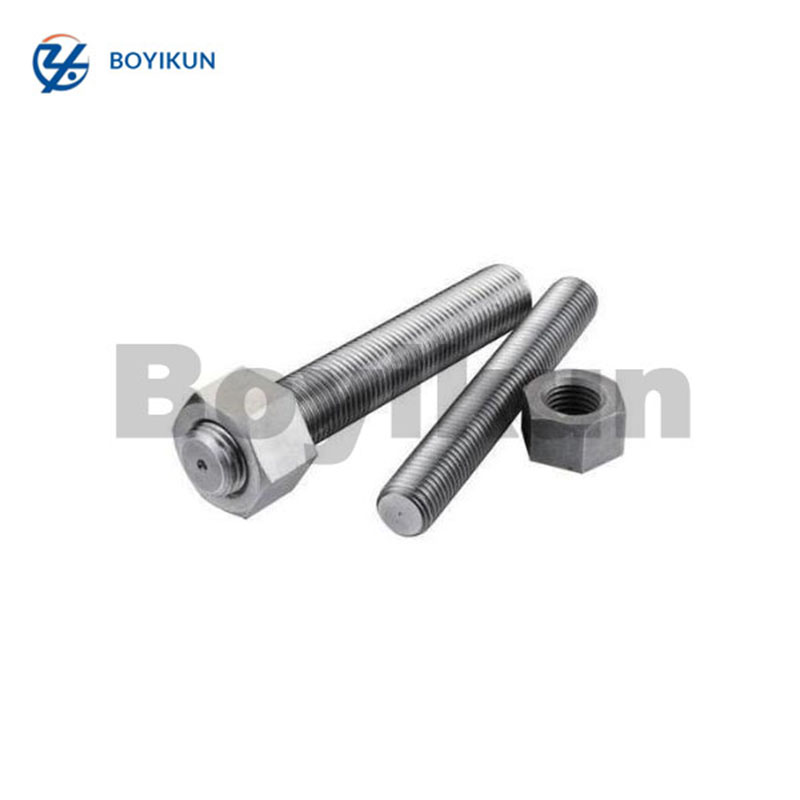
The drawing calls for a shoulder bolt with a 17.2 mm grip length and a hex head that fits inside a recess no one seems to stock. You check three suppliers, then four, and every catalog page shows the same family of standard lengths. That's the moment a blueprint stops being a plan and starts being a negotiation with reality. A custom fastener isn't a compromise; it's the component your design actually specified.
Working with a manufacturer that handles small-batch runs changes the timeline dramatically. Instead of redesigning the joint around an off-the-shelf part, you send the geometry, choose the alloy—maybe 17-4 PH stainless for corrosion resistance or alloy steel with a specific case depth—and get back a machined or cold-headed part that matches the print within a few thousandths. Prototypes often arrive in days, not weeks, because the bottleneck isn't the making, it's the waiting for someone to decide it's possible.
There's also a quiet advantage in the details that never appear in a catalog photo. A custom fastener can carry a rolled thread with a specified root radius, a dry-film lubricant already applied, or a head marking that helps your assembly team avoid mix-ups. When the part is made to your note, not the distributor's general-purpose inventory, the assembly goes together the way the CAD model always promised.
Tight Tolerances That Don't Drift After the First Torque
The mating threads and seating surfaces are held to a few microns of variation, so the first application of torque creates a uniform clamp load without localized yielding. This isn't a generic precision claim—it comes from grinding the thread flanks after heat treatment and checking every batch against a certified master gauge.
Once that initial torque is applied, the joint settles into a stable state. The controlled surface finish prevents micro-welding or galling, and the residual stress from forming operations is already relieved before assembly. There's no slow creep in the first hours or days because the material has been pre-conditioned to resist dimensional change under load.
In practice, that means you don't have to re-torque after a break-in period or worry about clamp load fading as temperatures swing. The connection holds its designed preload from the first installation, which keeps vibration loosening and fatigue failures out of the picture without adding extra locking hardware.
A Manufacturing Partner Who Reads Past Page One of the Spec Sheet
Most contract manufacturers stop at the dimensions, tolerances, and material callouts printed on the first page of a technical drawing. They quote the part, build the tooling, and ship the order without ever questioning why a radius is specified as 0.8 mm or why a surface finish matters more on one face than another. That approach works until something subtle goes wrong in assembly, or until a product fails in the field because a seemingly minor detail was overlooked.
A true manufacturing partner reads beyond the obvious. They study the notes buried in the corner of page three, the revision history that hints at past problems, and the mating part interfaces that never appear on the same drawing. They ask about the end-use environment, the expected cycle life, and the downstream processes that might affect dimensional stability. This curiosity isn't about over-engineering; it's about preventing expensive surprises and ensuring the part performs as intended long after the purchase order is closed.
When we receive a new project, our engineers review every sheet, every annotation, and every past revision before the first toolpath is generated. We probe for missing information, flag potential weaknesses, and propose alternatives only when they genuinely improve manufacturability or durability. That deeper reading turns a simple fabrication job into a collaborative engineering effort, and it's exactly what keeps our clients coming back for parts that work right the first time.
Fewer Callbacks, Because the Fasteners Didn't Let You Down
When a bolt shears or a nut backs off, the result is rarely just a quick fix. It means a truck rolling back to the shop, a crew pulled off another job, and a supervisor explaining to a client why the warranty claim just got filed. Fewer callbacks start with fasteners that hold the first time—threads that engage cleanly, heads that don't strip under real torque, and coatings that shrug off corrosion instead of inviting it. It's the difference between a part that meets a spec sheet and one that survives what the field actually throws at it.
Most fastener failures don't announce themselves at installation. They creep in later—vibration loosens a bolt just enough, moisture works into a micro-gap, or a cheap alloy fatigues under cyclic load. That's why choosing fasteners engineered for the full service life, not just the assembly line, changes the math. When every joint stays tight through temperature swings, road salt, and thousands of load cycles, the callback list shrinks to nearly nothing. You stop budgeting for "just in case" rework because the case never shows up.
In practice, that reliability shows up in quiet ways: a maintenance schedule that holds without surprise visits, a finished project that closes out on the first inspection, and a reputation that doesn't need defending. Teams stop double-checking torque markers because the fasteners' track record does the talking. That's what "didn't let you down" really means—not a marketing promise, but a pattern of zero comebacks that lets you quote the next job with confidence.
The Total Cost Nobody Quotes, but Every Project Feels
You never see it on the invoice, and no one mentions it during kickoff, but it's there from the first sketch to the final walkthrough. It's the weight of decisions made at 11 p.m., the quiet hours spent redoing something that was already approved, the mental load of juggling three different versions of the same floor plan. This cost doesn't have a line item, yet it shapes how you feel about the project long after the paperwork is filed away.
Contractors call it rework, but that word feels too clinical. Homeowners feel it as frustration when the tile arrives three shades off. Designers absorb it as the gap between what was imagined and what actually fits. Builders carry it in the subtle tension of keeping everyone aligned while deadlines slip. It's the tax on communication gaps, the interest on assumptions, and the premium for every “quick fix” that wasn't quick at all.
You can't budget for it with a spreadsheet, because it doesn't follow a formula. But you can reduce it by slowing down at the start, asking the uncomfortable questions, and refusing to mistake motion for progress. The projects that feel light at the end are not the ones with perfect drawings—they're the ones where this hidden cost was acknowledged early, shared honestly, and paid in attention rather than in regret.
FAQ
Custom design adapts to specific project needs, including non-standard sizes, special head shapes, or surface treatments, while standard parts often force compromises. ODM means the manufacturer produces to your exact specifications, adjusting everything from material grade to thread precision, which is crucial for tight assembly tolerances.
Yes, especially grade 316 stainless offers excellent resistance to chloride corrosion, maintaining strength through salt spray, humidity, and temperature swings. But matching the alloy to the environment matters: 304 works for general outdoor use, while 316 is better for coastal or chemical exposure.
If your project has unusual load requirements, space constraints, brand consistency, or needs integrated features like sealing washers or anti-vibration threads, ODM is the smarter route. Standard parts might seem cheaper upfront, but the cost of retrofitting, replacing, and downtime often exceeds the initial custom investment.
Usually yes, because custom parts reduce inventory waste and assembly time. Many suppliers now support low-volume trial runs, and tooling costs can be amortized once quantities hit a modest threshold, so customization is no longer just for large enterprises.
Check their material certifications, heat treatment processes, tolerance control, and surface finishing experience. Request samples for salt spray and torque testing, and ask for case studies from similar projects to gauge their real-world performance.
They significantly lower the risk of corrosion-induced loosening, breakage, and visual degradation, which stretches maintenance intervals. In high-vibration or thermal cycling environments, the right alloy and design also reduce fatigue failure odds.
Yes, that risk exists, particularly when paired with aluminum or carbon steel. But it can be managed with insulating washers, careful alloy selection, or protective coatings. A good ODM supplier will help you design a compatible fastener system.
Conclusion
Cheap fasteners tend to fail in places you never inspect—under gaskets, inside threaded holes, anywhere moisture lingers. ODM stainless steel fasteners eliminate that slow-motion corrosion because the alloy is chosen for the actual environment, not just a generic “stainless” label. And when your blueprint calls for a diameter, length, or head style that no catalog stock matches, an ODM partner can produce exactly what's specified without forcing you to redesign around an off-the-shelf compromise. Tight tolerances hold after repeated torque cycles, so the assembly stays rigid instead of loosening.
A good ODM manufacturer reads past page one of the spec sheet. They notice the surface finish callout, the thread engagement requirement, the heat-treatment note—details that get skipped by volume suppliers. That attention means fewer callbacks and less rework because the fasteners don't let you down mid-project. The upfront price might be higher than commodity stainless, but when you add up replacement labor, shipping delays, and the cost of a failed connection, the total project cost is usually lower. ODM stainless fasteners don't just meet the drawing; they fit the entire job.
Contact Us
Contact Person: Xianchen Hu
Email: [email protected]
Tel/WhatsApp: 86-13248645200
Website: https://www.hexnb.com/