
Yunnan Yushui Village: Exploring the Living Heritage of Dongba Culture
2026-07-18
Tucked away in the lush foothills of Jade Dragon Snow Mountain, Jade Water Village offers more than just scenic beauty—it is a living, breathing museum of Dongba culture. As one of the last places where the ancient Naxi traditions are still practiced daily, this enchanting village invites you to walk among centuries-old rituals, mysterious pictographs, and timeless legends. Step beyond the typical tourist trail and discover how a community keeps its heritage alive, one ceremony at a time.
Whispers of the Dongba: An Ancient Script Still Alive in Stone and Soil
Tucked away in the craggy foothills of the Himalayas, the Dongba script refuses to become a museum piece. While most pictographic writing systems long ago surrendered to the convenience of alphabets, these elegantly simple symbols still dance across handmade paper and weather-beaten rocks. Each character carries a miniature world: a mountain becomes a jagged triangle, a bird takes flight with a curved beak, and the sun rises as a circle with rays branching out like a child's drawing. It is a language where meaning is not just read but seen, a direct line to a time when words were images and stories were carved into the earth.
The script's endurance owes much to the Dongba priests, the tradition bearers who for centuries have copied sacred texts by hand, their brushes laden with ink made from pine soot. These manuscripts, often bound with hemp thread, detail everything from cosmology to herbal remedies, yet they are not locked away in libraries. In the village of Baisha, you can still find stone tablets incised with Dongba glyphs, half-buried along mountain paths, serving as both trail markers and prayers for safe passage. The soil itself becomes a keeper of memory, as new carvings appear on rocks during annual rituals, a quiet act of renewal that keeps the script breathing.
Today, Dongba is not merely surviving—it is softly reinventing itself. Young Naxi artisans mix ancient motifs into contemporary jewelry, while schoolchildren learn to write their names in symbols that their grandparents once used for divination. There’s a modest thrill in seeing a 1,000-year-old character suddenly pop up on a hand-painted sign or a ceramic cup, proof that this script has no intention of fading into the archives. It exists in a delicate balance between preservation and everyday life, proving that a written tradition can be both rooted in stone and as lively as soil after spring rain.
Where Water Speaks: The Sacred Springs and Rituals of Yushui Village
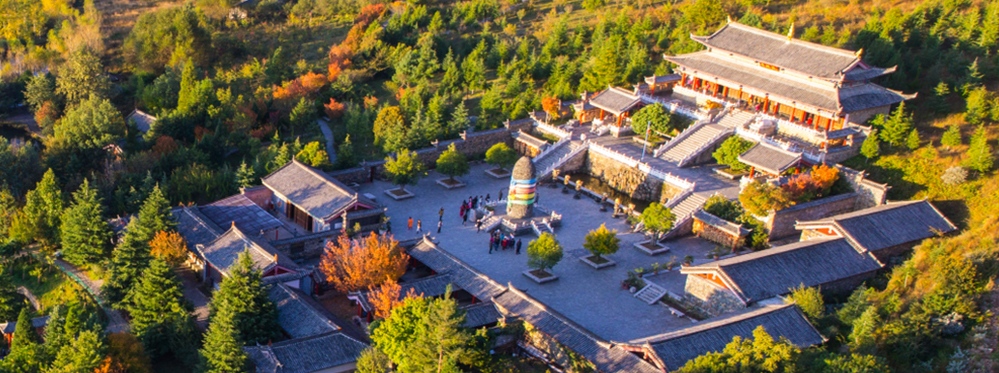
In Yushui Village, water is never just a resource—it is a living presence, a keeper of memory. The village is woven around a cluster of ancient springs, each with its own personality. One spring gurgles softly near the old banyan tree, believed to whisper the names of ancestors to those who listen at dawn. Another, tucked behind moss-covered stones, is said to hold the tears of a mountain spirit. Villagers treat these waters with reverence, never drawing from them without a silent greeting or a small offering of rice or flowers. It’s a relationship built on reciprocity, not extraction.
Rituals here follow the rhythm of water itself. During the Spring Awakening festival, elders lead the community in songs that mimic the flow of streams, their voices rising and falling like ripples. A clay bowl filled with sacred spring water is passed hand to hand, each person adding a wish or a whispered promise before placing a floating petal on its surface. In the dry season, a more intimate ceremony takes place at midnight: only the sound of water dripping into a stone basin breaks the silence, a quiet pact between the village and the unseen forces that sustain it. These acts aren’t performed for spectacle; they’re woven into daily life as naturally as the springs bubble up through the earth.
For those who visit, the sacred springs of Yushui offer a rare invitation to slow down and listen. The water doesn’t just flow—it speaks through the rustle of bamboo, the coolness on your skin, the sudden clarity that comes when you sit beside it. There are no ornate temples here, no fixed doctrines; divinity seeps through the ground, uncontained and patient. You might leave with damp shoes and a quiet mind, understanding that some stories can only be told by the sound of water meeting stone.
Echoes on the Wind: Daily Life Shaped by Centuries of Naxi Wisdom
In the shadow of the Jade Dragon Snow Mountain, the Naxi people move through their days accompanied by a quiet rhythm born from centuries of adaptation. Morning markets stir to life not with the blare of horns, but with the shuffle of feet on cobblestone, the murmur of bargain and greeting in a language that carries the inflections of ancient traders. Women in indigo aprons arrange sun-dried chilies and black truffles alongside hand-stitched pouches, their movements automatic yet graceful, as though each gesture were a note in a song learned at their grandmothers' knees. The air smells of yak butter tea and roasted barley, scents that have flavored Lijiang's alleyways since long before the motorcar arrived.
At the heart of this daily dance is Dongba culture, not a relic behind museum glass but a living thread woven through decisions both mundane and profound. A farmer consulting a pictographic calendar before breaking soil, a family adjusting their door's orientation to invite benevolent winds—these are not superstitions but a deep-seated language of connection. The same script that records epic creation myths on handmade paper also guides a chef in balancing the five flavors of a medicinal soup. Even the young, who tap smartphones with the ease of any city dweller, pause to watch a shaman chant over a patient, the cadence pulling them, if only for a moment, into a continuum that stretches back to the time when humans and spirits shared the same hearth.
As dusk settles and the last tourists retreat down Lion Hill, the town exhales. Lanterns flicker on outside courtyards where elderly men huddle over Xiangqi boards, clicking tiles in companionable silence. From a nearby kitchen comes the rhythmic thud of a pestle grinding chilies—a sound that will outlast any passing trend. This is not a people preserved in amber but a fluid society that has chosen which footprints to follow. Their wisdom whispers in the choice to cook with seasonal herbs rather than imported vitamins, in the decision to teach children Dongba characters alongside Mandarin, in the instinct to greet the mountain each dawn with an unspoken thank-you. Here, the wind doesn't just carry echoes—it carries forward a way of life.
Beyond the Script: The Hidden Symbols Etched into Village Life
Every lane and lintel tells a story that few pause to read. In older villages, the angle of a roof beam or the choice of a particular flower carved above a doorway wasn't mere decoration—it was a quiet language. A wheat sheaf etched into a gatepost might signal a family's hope for a fruitful harvest, while a serpentine line chiseled along a window ledge could ward off misfortune. These marks were subtle, never shouted, because they weren't meant for outsiders; they were a visual murmur shared among those who understood the rhythm of the seasons and the weight of ancestral hands.
Look closer at the communal spaces, and the symbols deepen. Village wells often bear rings or crosses that seem purely functional, yet their placement and number once marked moments of collective memory—a year of drought, a birth, a reconciliation. Even footpaths carry residue of deliberate arrangement: a sharp bend might be shaped not by topography but by a belief that straight lines invite unwelcome spirits. Over time, the original meanings fade, but the physical gestures remain, worn into stone and soil by repetition. They're not relics frozen in a museum case; they're active threads in a living fabric, still influencing how elders position a new door or which tree is planted at a crossroads.
Younger generations often walk past without noticing, yet the symbols persist in fragments—a painted lintel here, a scratched threshold there. They resist neat decoding because they were never meant to form a single narrative. A diamond pattern on a barn wall in one hamlet might link to luck in livestock, while the same shape a few miles away could mark a craftsman's guild. This local variation is precisely what makes them endure: they are idiosyncratic, tied to a particular hill’s light and a specific river’s flood line. To read them truly means stepping beyond the written word into a more layered kind of literacy, one composed of texture, placement, and the patient weathering of time.
Threads of Continuity: How Oral Traditions Weave Through Modern Days
Before the written word anchored memory to the page, knowledge traveled on the breath—stories layered with the warmth of human voices. These spoken legacies never truly vanished; they simply learned to inhabit new frequencies. The campfire has become a podcast microphone, the village elder a spoken word poet streaming from a city apartment. What remains constant is the impulse: to transmit wisdom not as cold data, but as living experience, shaped by tone, pause, and the immediate presence of a listener.
Today’s digital landscape echoes with the same call-and-response patterns our ancestors knew. Comment sections become communal story circles, viral audio clips carry the cadence of folktale refrains, and family group chats preserve gossip and genealogy as meticulously as any griot. Even the ritual of retelling—once reserved for seasonal gatherings—now thrives in anniversary podcast episodes, TikTok series unpacking cultural lore, and the intimate rhythm of bedtime stories transmitted across video calls. The technology changes, but the human need to hear, remember, and retell remains stubbornly primal.
In this hybridization, something deeper endures: the understanding that certain truths only fully materialize in the speaking and the hearing. An oral culture’s insistence on adaptability becomes crucial in an era of information churn—stories meant for repetition are designed to evolve, absorbing new details while preserving an essential core. From a grandmother’s kitchen to a meme’s infinite remix, the thread holds. The modern day doesn’t replace the old song; it simply adds a few verses of its own.
A Living Museum Unframed: Why Yushui Village Defies Ordinary Travel Narratives
It’s not that Yushui Village lacks stories—it’s that it refuses to hang them on walls. Instead of hushed corridors and velvet ropes, you get stone paths worn smooth by centuries of footsteps, not signage. The exhibits are alive: a farmer singing the same planting song his grandfather did, a copper pot bubbling with tea over an open fire, the scent of fermented bean paste that drifts from kitchens like an olfactory timeline. This isn’t a curated experience; it’s an immersion into a rhythm that predates the very concept of tourism.
What confounds the typical travel narrative is the absence of a singular highlight. There’s no iconic landmark to frame for a postcard, no marquee event around which to plan a visit. Instead, meaning accumulates in the quiet moments—the way light falls on the ancestral hall’s carved eaves at dusk, the gnarled hands of a woman spinning hemp, the sudden laughter of children chasing a cricket through an alley. These aren’t staged performances for outsiders; they’re the continuous threads of daily existence. The village doesn’t perform its heritage; it simply carries on, making you a momentary witness rather than an audience.
This unframed authenticity can feel disorienting. Without the familiar cues of a guided tour, you’re forced to recalibrate how you see. The museum here has no boundary—it spills into the rice terraces, the bamboo groves, the conversations on doorsteps. It’s a place where history isn’t preserved under glass but is breathed, adapted, and passed forward imperfectly. And maybe that’s why it stays with you: not as a checklist of sights, but as a lingering sense that you’ve brushed against something unsimplified, still alive, and wholly resistant to being framed.
FAQ
The village sits at the foot of Jade Dragon Snow Mountain, fed by crystal-clear springs, and many families still practice rituals passed down for centuries. Rather than a staged exhibit, Dongba life here unfolds in daily moments—prayers murmured at dawn, paper charms drying on doorframes, and elders patiently teaching pictographs to curious children.
Unlike abstract alphabets, Dongba symbols visually echo what they represent—a jagged line for a mountain, a curved stroke for the moon. Remaining deeply tied to ritual, it was historically reserved for sacred texts recited by shaman-priests. Today, fewer than a handful of true masters can both write and chant the intricate manuscripts with full meaning.
Yes, though they feel more like privileged glimpses than performances. With permission, you might see a small ceremony to honor mountain spirits or a blessing using burning pine branches. The key is patience and respectful curiosity; genuine moments arise when you linger near family courtyards or the murmuring springs rather than on a set schedule.
Stone-paved lanes follow water channels believed to be living veins of the land. Doors bear hand-painted talismans for protection, and villagers tie colorful threads on bridges during seasonal shifts. Even the local tea-serving custom stems from old beliefs about balancing nature's elements through shared drink.
Because it adapts without severing roots. Farmers still consult moon cycles for planting, healers mix herbs using ancient rhymes, and teenagers learn ritual songs not as museum pieces but as part of family identity. The culture breathes through new challenges—like water conservation—that villagers solve with age-old principles of harmony.
Locals call them the 'Source of Ten Thousand Souls,' believing they carry the mountain's protective energy. Three interconnected pools cascade down the slope, each linked to a stage of purification. Even now, you'll see visitors cupping the water to their foreheads in a gesture that blends reverence with the simple joy of coolness on a warm day.
It often begins with grandmothers telling flood myths while grinding corn, or fathers carving tiny wooden ritual tools as toys. Some households keep handwritten Dongba diaries, mixing script with sketches for daily events. Crucial knowledge is slipped into chores and festivals rather than formal lessons, so it seeps in as naturally as the spring water that defines the village.
Conclusion
Yushui Village in Yunnan is not just a picturesque destination; it is a place where the ancient Dongba culture breathes through every stone and stream. The Dongba script, one of the world's few remaining pictographic writing systems, is still etched into rocks and whispered in rituals. Here, water is more than a resource—it is a sacred voice, channeling blessings through springs and guiding ceremonies that have persisted for centuries. The village’s layout, its canals and pools, mirrors a cosmology where nature and spirit are intertwined, making every drop a keeper of memory.
Daily life in Yushui unfolds like a living manuscript, with Naxi wisdom shaping everything from architecture to farming cycles. Beyond the written symbols, a hidden language of customs, patterns on textiles, and the rhythm of oral epics weaves continuity between past and present. Elders still recount creation myths that echo off the mountainsides, while younger generations reinterpret these traditions in subtle, everyday ways. This is not a museum frozen in time; it is an unframed, breathing landscape where visitors don’t just observe heritage—they step into a story that is still being told. Yushui defies the usual travel narrative, offering instead an intimate encounter with a culture that lives in the soil, the water, and the wind.
Contact Us
Contact Person: Changhong He
Email: [email protected]
Tel/WhatsApp: 086-0888-5190152
Website: https://vip.e-baixing.com/ysh